Get Full Government Meeting Transcripts, Videos, & Alerts Forever!
Get email alerts on the Archaeology Ceramic Sourcing topic
No spam. Unsubscribe anytime.
Researchers send Chinese ceramic fragments from Terrace, Utah, to Missouri reactor for elemental 'fingerprint' testing
Summary
An unidentified speaker at Utah Libraries and History described a project sending Chinese ceramic fragments recovered from Transcontinental Railroad-era excavations in Terrace, Utah, to a Missouri reactor lab for neutron activation analysis to identify clay 'fingerprints' and link pieces to specific Chinese kilns.
Unidentified Speaker said researchers have been excavating materials from Transcontinental Railroad contexts and are "piecing together the past" by assembling fragments to determine how many vessels are present and how artifacts moved within the site.
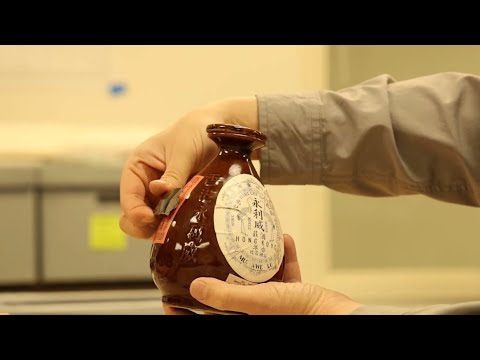
The project includes an effort, described by the speaker as "the first project of its type in the country," to submit samples of Chinese ceramics to a reactor lab in Missouri for neutron activation analysis. "A reactor lab can actually use neutron activation analysis to determine that fingerprint," the speaker said, referring to the unique mineral signatures in clay such as iron and manganese.
The speaker said elemental fingerprints can distinguish clay sources in China and that the team plans to "connect with our friends in China and start getting samples from there." The goal is to be able to link an unknown fragment — for example, "a fragment of an unknown Chinese liquor jar from Terrace, Utah" — to a particular kiln or county in Guangdong province, which would allow researchers to tell more specific stories about past people and trade connections rather than only categorizing broad vessel types.
In addition to chemical sourcing, the speaker noted visual and tactile evidence on sherds offers information about production. "You can actually see on the inside face of the liquor jar ... the fingers of the potter swirling the pot in a mold," the speaker said, adding that such traces show the individual hand of the potter.
The speaker also emphasized why mending fragments matters: joining matching pieces across excavation units helps establish the number of vessels and clarifies whether artifacts were displaced by natural processes or human action. The transcript does not specify the lab's name in Missouri, funding sources for the analysis, or a timeline for when results are expected.
Next steps described in the talk include submitting samples for analysis and coordinating with contacts in China to obtain comparative clay samples. No formal institutional vote, funding decision, or named project director appears in the transcript.