Get Full Government Meeting Transcripts, Videos, & Alerts Forever!
Get email alerts on the Code Enforcement Policy topic
No spam. Unsubscribe anytime.
Prattville mayor rolls out new code-enforcement notification policy; councilors express concern
Summary
Mayor Gillespie announced an internal code-enforcement policy requiring staff to notify the district councilor and other officials; if there is no response in 14 days, staff may proceed with abatement. Councilors and residents raised worries about politicization, delays and privacy.
Mayor Gillespie told the Prattville City Council on Feb. 3 that the city will adopt an internal policy requiring code-enforcement staff to notify municipal elected officials and the district council representative when a complaint or potential code violation is identified. "If no response is received within 14 days, violation will be deemed approved for code enforcement to proceed," Gillespie said.
The mayor framed the change as a way to "remove our professional city staff from the political crosshairs and ensure consistency, transparency, and accountability" in how code enforcement is handled. He said staff and the city attorney will be copied along with the district representative so elected officials can provide direction on whether the city should proceed, and that a written explanation will be required if a council member advises not to proceed.
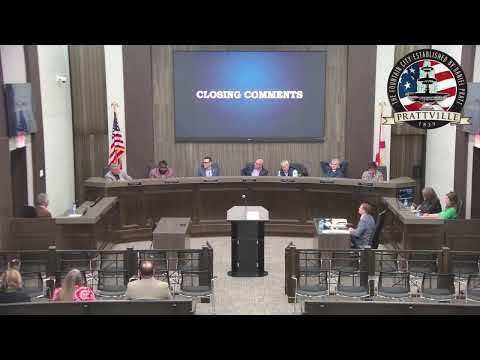
Several councilors pressed for more detail on how the policy will work in practice. One councilor asked whether the change requires an ordinance or formal council approval and who decides whether a case is political. Councilors warned the 14-day response window could slow routine enforcement and make a single councilor a de facto decision-maker for issues ranging from tall grass to potentially hazardous dilapidated structures. "My concerns around this new process are the process itself," Councilor Newman said in closing remarks, adding that he wanted to "see how it plays out" and requested more clarity and possible staff education sessions for the council.
Members of the public raised related concerns during the comment period. Leah Muir (301 Wetumpka Street) said she has seen code enforcers take photos by leaning over fences and warned that such practices could lead to legal challenges: "They cannot reach over a fence and take pictures of something even if they've had a complaint," she told the council. Reverend Dr. L. White II urged the council to pursue grant-writing and regional matching funds to address housing needs, a separate issue he said the council should coordinate as part of community support.
Gillespie and staff said the policy is designed to build a clear paper trail, give council members an opportunity to engage, and protect employees who must prepare cases that may ultimately go to court. The council did not take a formal vote to adopt an ordinance; the mayor described this as an internal policy and said staff will notify the city attorney and district council representative as outlined. Councilors asked for a future briefing from code-enforcement staff to clarify steps and avoid unintended delays.
Next steps: Council members requested a follow-up staff presentation and workshop to explain procedural steps for different violation types (e.g., tall grass vs. dilapidated structures) and to clarify how the 14-day timeline would operate in practice.