Get Full Government Meeting Transcripts, Videos, & Alerts Forever!
Get email alerts on the Historic Preservation topic
No spam. Unsubscribe anytime.
Utah historic preservation officer: Section 106 monitoring uncovered 1870s foundation, 19th-century artifacts at Alta
Summary
Utah State Historic Preservation Officer Chris Merritt said Section 106 monitoring during a waterline trenching project at Alta uncovered a stone foundation from the 1870s and abundant 19th-century artifacts, including large cow bones and drinking-related debris; the utility work will continue while archaeologists document finds.
Chris Merritt, Utah State Historic Preservation Officer, said Section 106 of the National Historic Preservation Act guided archaeological monitoring during a waterline project at Alta in Little Cottonwood Canyon. "I wanna talk briefly today about the importance of section 106 of the National Historic Preservation Act," Merritt said, describing the federal process that requires agencies to consider impacts to cultural resources.
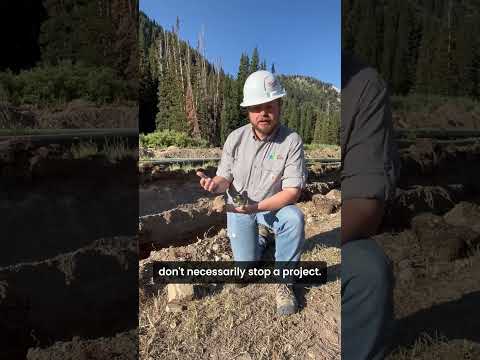
Merritt said crews from Alta Ski Area, working with the U.S. Forest Service and the Uinta-Wasatch-Cache National Forest administration, trenched a corridor for a waterline with an archaeological monitor on site. "What this archaeology monitor was looking for were intact, what we call features, such as building foundations, trash deposits," he said.
During excavation, the backhoe encountered a stone foundation that Merritt dated to Alta's "heyday in the 1870s." He said comparing the foundation to historic photographs places the find on the outskirts of what was once downtown Alta, a silver-mining boom town. "This now gives us an anchor point to think about the rest of Alta and where the rest of that mining town was," Merritt said.
Merritt described the kinds of materials monitors have documented. He said monitors recovered "very large pieces of cow bone, lots of them, whole femurs, ribs," which he interpreted as evidence the town had a local slaughtering and butchering area. "So that tells us that this town had what we call a walking slaughterhouse," he said. He also noted artifacts that point to alcohol consumption and saloon activity and described water in the area as historically scarce or of limited quality, which influenced beverage choices.
Merritt emphasized that finding artifacts does not necessarily stop a project: monitors record concentrations, artifact types, and approximate dates while construction proceeds. "While this project will still move forward, we are learning something about the past," he said.
The project partners and monitoring approach described by Merritt reflect how Section 106 reviews balance infrastructure needs and cultural resource documentation. Merritt did not provide a detailed timeline for reporting or indicate that any formal mitigation or a stop-work order had been issued; those steps, if required, would follow agency procedures under federal review requirements.