Get Full Government Meeting Transcripts, Videos, & Alerts Forever!
Get email alerts on the Budget topic
No spam. Unsubscribe anytime.
PYLUSD board certifies first interim budget as staff warns of $12M structural deficit
Summary
Trustees accepted the district’s 2024-25 first interim report with a positive certification after administrators described a growing structural deficit driven by staffing shifted from one‑time funds, enrollment stabilization, and low statutory COLAs. Staff recommended program reviews, position controls and alternative revenue strategies.
The Placentia‑Yorba Linda Unified School District Board of Education accepted the district's 2024— 25 first interim financial report and certified the district's finances as "positive" on Dec. 17, approving staff recommendations while noting a projected structural deficit that staff said has risen to about $12.4 million.
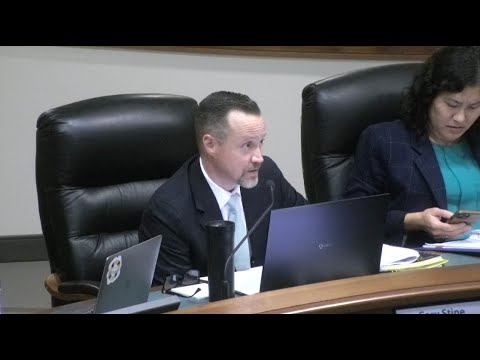
Chief Business Officer Gary Stein told trustees the district's enrollment appears to have stabilized this year with a net gain of 22 students and attendance assumptions rising to 95 percent — both modestly positive signs for revenue. But Stein said the larger budget pressure stems from many positions originally funded with one‑time state and federal money (including COVID relief) that are now encumbered by the general fund. "As that one‑time money disappears, those staffing costs move into the unrestricted fund and create a structural imbalance," he said.
Stein described management steps already taken and under consideration: stricter position control, evaluating every vacated role for need before backfilling, pausing selected discretionary textbook adoptions, and prioritizing programs funded by ongoing streams. He said higher state cost‑of‑living adjustments (COLA) would materially help: a hypothetical 4 percent COLA for 2025‑26 would reduce the projected deficit by roughly $3 million. The district also flagged an initiative to pursue third‑party billing for certain behavioral‑health services that could yield new revenue if implemented and staffed properly.
Trustees pressed staff on the primary drivers of the $12.4 million gap. Administrators said staffing represents roughly 85–90 percent of the district's budget and that class‑size changes at the high‑school level and new program staffing (for TK expansion, the Orange County School of Computer Science, and the Universal Sports Institute) were major contributors. Stein said the district has healthy reserves — presenting an ending fund balance of about $108 million, with $60.5 million unrestricted — but that relying on reserves is not a sustainable long‑term plan.
Board members asked for several follow‑ups. Staff committed to a budget study session before the second interim in March, to produce a program‑level accounting of start‑up costs for new initiatives (OCSCS, USI, Parkview, BVVA) and to return with a clear list of positions now funded by general resources. Trustees also asked for more frequent ASB training and tighter controls on ASB cash handling in response to recurring audit findings.
The board voted 5‑0, with the student board member voting aye, to accept the first interim report and a positive certification. Staff said the district will present a midyear LCAP update in February and reconvene budget discussions through March and into the 2025‑26 adopted budget process.