Get Full Government Meeting Transcripts, Videos, & Alerts Forever!
Get email alerts on the Over Criminalization topic
No spam. Unsubscribe anytime.
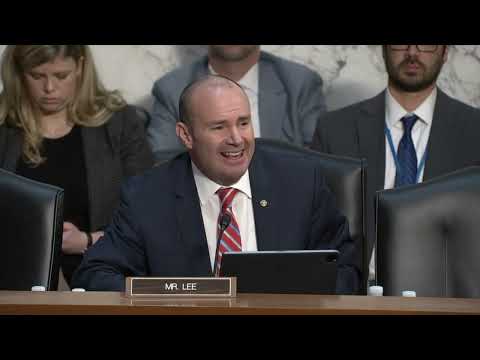
Witness at hearing warns of 'over-criminalization,' cites CRS estimate of 'at least 300,000' federal crimes
Summary
An unidentified witness told a hearing that delegated regulatory penalties have produced 'at least 300,000' federal crimes, raising constitutional and mens rea concerns and urging cooperation on reform if confirmed.
An unidentified witness urged lawmakers at a hearing to address what they called "over criminalization," citing a Congressional Research Service reply that said the number of federal crimes is "unknown and unknowable, but at least 300,000."
The speaker said members of the committee had asked the CRS to count federal crimes and that the agency's response was "stunning," arguing that many criminal penalties arise when federal regulations incorporate sanctioning language without Congress enacting statutes directly.
"The answer is unknown and unknowable, but at least 300,000," the witness said, adding that regulatory criminalization is compounded by the annual expansion of the Federal Register and the Code of Federal Regulations, which they described as "around a 100,000 pages a year."
The speaker framed the issue as a constitutional problem, referencing Article I, sections 1 and 7 of the U.S. Constitution and arguing that lawmaking that effectively creates criminal offenses should proceed through both houses of Congress and the president. They warned that many delegated criminal provisions lack a clear mens rea, saying the mental-state requirement is often "absent, or at least so murky that nobody can tell what it means."
Those defects, the witness said, produce "huge problems for defendants and for the liberty interests of the American people." The speaker asked that, if confirmed, they be invited to work with the committee on these issues and to share any thoughts on solutions.
A second speaker replied, "Yes, senator," offering acknowledgment but no substantive response in the transcript excerpt provided. The hearing record in this excerpt does not include any formal motions, votes, or specific legislative proposals tied to the remarks.