
Lewiston council and regional partners probe causes of empty retail space and call for coordinated roundtable
Get AI-powered insights, summaries, and transcripts
Subscribe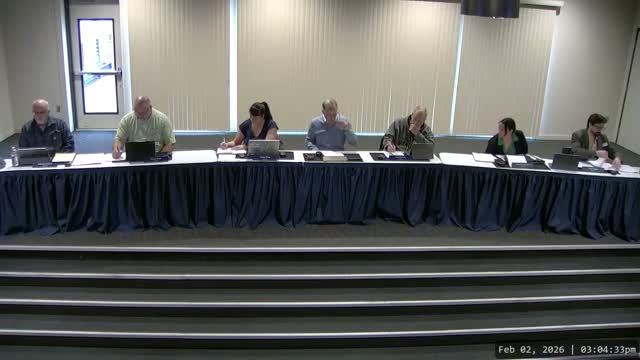
Summary
Councilors heard county and regional experts on vacant retail properties and agreed to pursue a coordinated roundtable and targeted data collection to identify barriers — from covenants and long-term leases to infrastructure, housing and market demand — that hinder reuse and recruitment.
Councillors and invited regional partners on Thursday examined why Lewiston and the surrounding valley have persistent vacant retail properties and explored steps to encourage reuse and recruit new businesses.
Councillor Spickelmeyer opened the discussion by saying he wants a practical, data-driven approach to understand why retail spaces remain empty and to identify the city’s role in resolving those barriers. He invited county and regional officials, developers and the chamber of commerce to brief the council.
Dan Anderson, a regional property analyst, told the council the county does not maintain a routine inventory of vacant commercial buildings for tax purposes and that most properties stay on tax rolls and are appraised based on their potential use, not current occupancy. "They are still on the tax rolls and they are still paying taxes," Anderson said, noting long-term leases, noncompete clauses and landlords seeking higher rents can keep properties vacant.
Patty Weeks, Nez Perce County clerk, said some shopping‑center covenants explicitly restrict government uses or other activities, meaning legal restrictions on a building’s permitted uses must be checked property-by-property.
County Commissioner Joe Gish described a different angle: the county has used abatements to recruit light manufacturing, citing an abatement granted to Cascade Plastics. Gish argued population growth driven by high‑paying jobs is the most durable solution to support retail, estimating the Cascade Plastics project could generate 30 jobs and roughly $1.3 million in annual base salaries when fully staffed.
City staff described actionable steps the city is already taking. Dustin Johnson, Public Works director, said infrastructure gaps—water, sewer, storm and transport—often limit redevelopment and outlined an East Lewiston network analysis and planned public checklists and standard drawings to simplify permitting. Shannon Grohl, Community Development director, reported FY25 building permits valued at about $97 million (roughly $59 million commercial) and highlighted permit-review changes and reduced parking requirements intended to speed projects.
Mark, the chamber director, flagged downtown sewer concerns, parking access and façade conditions as deterrents to retailers and emphasized housing shortages—particularly rentals under $2,000 per month—as a primary factor employers evaluate when relocating staff. Regional economic development experts urged adaptive reuse of large vacant blocks and a focused task force rather than broad, expensive retail‑recruiting campaigns.
The council agreed on next steps emphasizing coordination: several members supported a council‑led roundtable that would include Valley Vision, the chamber, county staff, developers and local businesses to inventory vacant sites, assess barriers (covenants, infrastructure, permitting, price expectations) and pursue targeted actions such as streamlined permit checklists, clearer incentive information and potential abatement outreach. Councillor Spickelmeyer closed the item by thanking guests and urging the city to help convene stakeholders for the roundtable effort.
The council did not take a final vote on policy or impose fees; members described the roundtable and improved permitting clarity as initial steps to pursue further analysis and potential code or incentive changes.