
Committee directs amendments to H559 after debate over parole-board training, appointments and legal support
Get AI-powered insights, summaries, and transcripts
Subscribe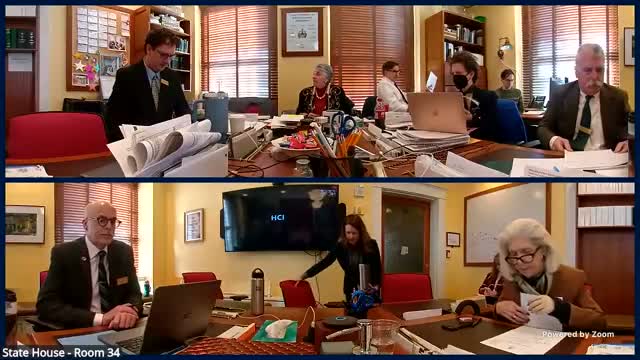
Summary
Legislative counsel will draft amendments to H559 to add the parole-board chair to training responsibilities, remove language about "making determinations of parole," require governor consultation with chair/director on appointments and drop proposed term limits; members also flagged a $25,000 legal-counsel funding gap.
The Institutions Committee reviewed outstanding provisions of H559 on Tuesday and instructed legislative counsel to prepare an amendment addressing training, appointments and governance for the parole board.
Hillary (legislative counsel) walked members through section 1 of the bill, which lists powers and responsibilities of the Department of Corrections commissioner related to parole. Multiple members and parole-board director Mary Jane Ainsworth urged changes to ensure the chair and parole-board director have a formal collaborative role in providing training. "I would suggest striking the language 'making determinations of parole,'" Ainsworth told the committee, arguing training should focus on evidence-based topics rather than adjudicative determinations.
Committee direction: Members agreed that draft amendments should (1) add the parole-board chair to the list of parties collaborating on training; (2) remove the phrase "making determinations of parole" from the training statute; (3) add statutory language requiring the governor to consult the parole-board chair and director when appointing members and to "give consideration" to diversity of experience and geographic representation; and (4) remove newly proposed term-limit language so as not to force turnover that could reduce institutional knowledge.
Capacity and oversight questions: Several members asked whether DOC or the Agency of Human Services (AHS) has the capacity to provide the trainings the bill lists (criminogenic behavior, mental-health disorders, substance-use treatment). The committee asked staff to invite DOC and AHS representatives to the next markup so agencies can testify on capacity, technical assistance and likely costs.
Legal counsel and budget concerns: Mary Jane Ainsworth flagged a conflict and funding gap: the parole board has historically shared an assistant attorney general with DOC, but a recent $25,000 cut left the board without funds to contract independent counsel. "We don't have representation," she said, and members called for the attorney general's office to explain the arrangement and for staff to consider whether a separate budget line is needed.
Process and timeline: Hillary said she will prepare an amendment reflecting the agreed changes and will circulate it before Friday's session. The chair and members asked that DOC, AHS and the attorney general's office be asked to appear when the new draft is discussed.
Next steps: Legislative counsel will submit the amendment in advance of Friday's meeting; the committee will hear agency testimony on training capacity, budget needs and legal representation before finalizing statutory language.