Get Full Government Meeting Transcripts, Videos, & Alerts Forever!
Get email alerts on the Climate Action Plan topic
No spam. Unsubscribe anytime.
SFPUC and Environment Department preview Climate Action Plan update, outline water and building goals
Summary
SFPUC staff and the Department of the Environment presented draft goals for water supply, healthy ecosystems and building decarbonization as part of the city’s five‑year Climate Action Plan update; commissioners and public commenters pushed for larger upfront financing and equitable programs to accelerate electrification.
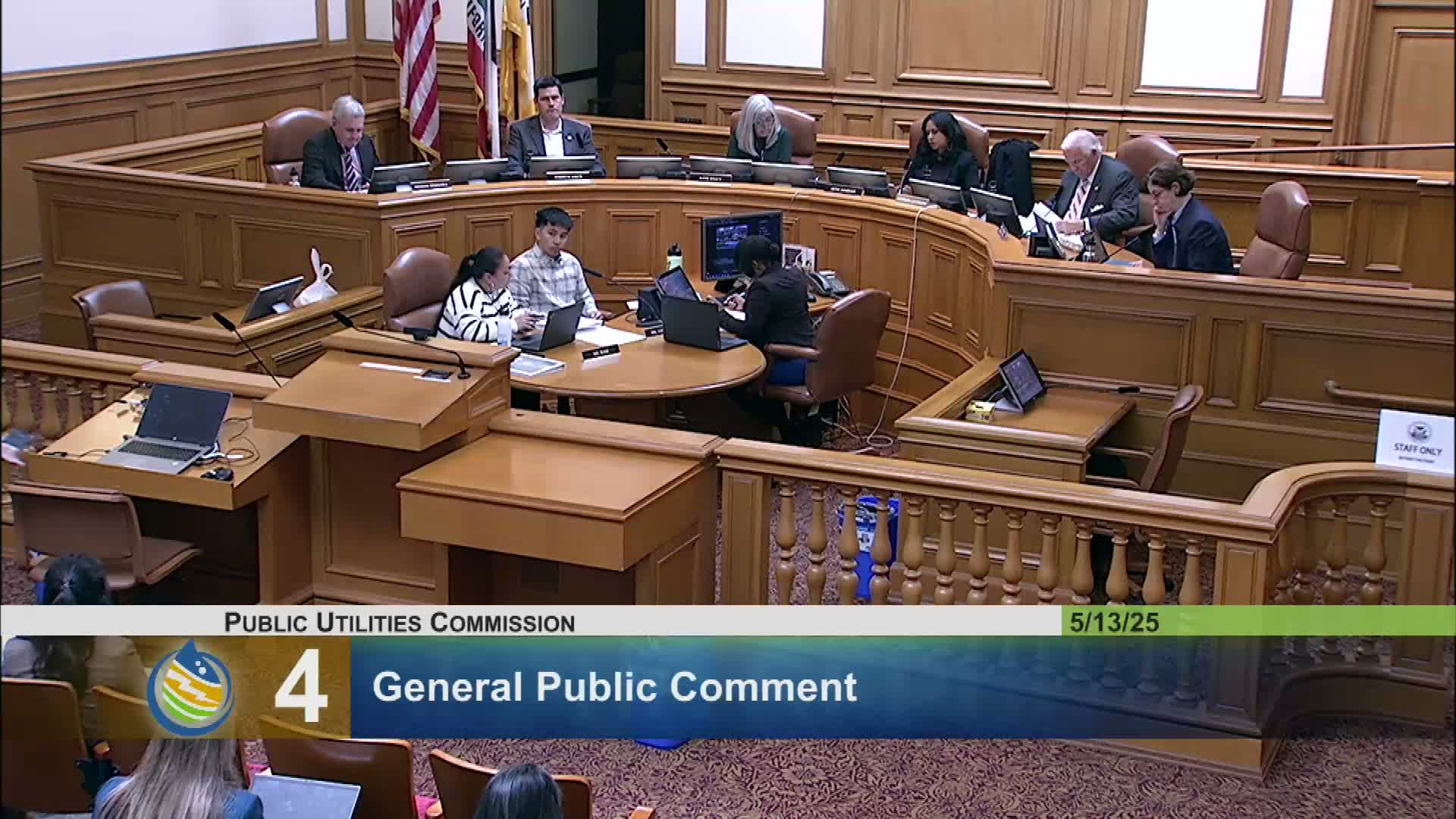
San Francisco Public Utilities Commission staff on May 13 presented the city’s draft Climate Action Plan update, outlining targets and near‑term programs to reduce greenhouse gas emissions in water, buildings, energy and transportation.
The presentation described two water‑supply goals: keep indoor residential water use below the state’s 2030 standard of 42 gallons per capita per day and develop new local supplies, including up to 2.5 million gallons per day of recycled water and up to 4 million gallons per day of groundwater by 2045. Taylor Nikudian of the PUC’s Water Resources Division said staff will pursue on‑site reuse grants, a purified‑water demonstration facility by 2030 and expanded groundwater use in parts of northern San Mateo County.
The plan’s healthy‑ecosystems chapter calls for advancing ecological restoration, increasing biodiversity and managing stormwater with green infrastructure. Sarah Minnick of the Wastewater Enterprise highlighted a target to manage 4,400,000 gallons of stormwater per year by 2030 through capital projects, programs and grants.
On buildings and energy, Kathryn Spalding and Barbara Hale of the Power Enterprise described programs to accelerate electrification, including a forthcoming customer bill‑credit for heat‑pump water heaters and municipal fuel‑switching pilots. Spalding said the PUC aims to continue offering 100% renewable electricity and to support decarbonization of the city steam loop — the known "Jesse Street steam loop" — by converting gas‑fired boilers to renewable supply.
Commissioners pressed staff on program design and affordability. Vice President Arce asked whether the steam‑loop decarbonization referenced the Jesse Street project; staff confirmed it does and said the project is in the capital plan. Commissioner LeBarone asked whether drilling additional wells is feasible; Assistant General Manager Steve Ritchie said opportunities exist in northern San Mateo County but are limited within San Francisco due to basin capacity.
Public commenters and climate advocates urged the PUC to expand upfront incentives and financing for building electrification. Susan Green, a Clean Power SF customer and member of the San Francisco Climate Emergency Coalition, cited a regional report estimating billions would be required to electrify building stock by 2040 and urged zero‑interest loan programs and scaled public funding. Cindy Comerford of the Department of the Environment described the Climate Equity Hub, which provides free heat‑pump water heaters up to $10,000 for households under 80% area median income and coordinates rebates and workforce development.
Why it matters: the Climate Action Plan update — required by city ordinance every five years — sets the policy framework for municipal programs and capital investments that will determine how quickly San Francisco reduces emissions in buildings and transportation. Commissioners asked staff to return with more detail as the city integrates community feedback; the public engagement period is expected to continue through mid‑June with a draft release planned for later in the year.
Next steps: staff said outreach and equity analysis will continue through summer public engagement; the SFPUC will incorporate feedback and return with program details and budget implications as the plan advances toward a formal authorization later this year.