
Peoria council deadlocks on settlement with Paradise/Boyd over casino redevelopment; motion fails 5-5
Get AI-powered insights, summaries, and transcripts
Subscribe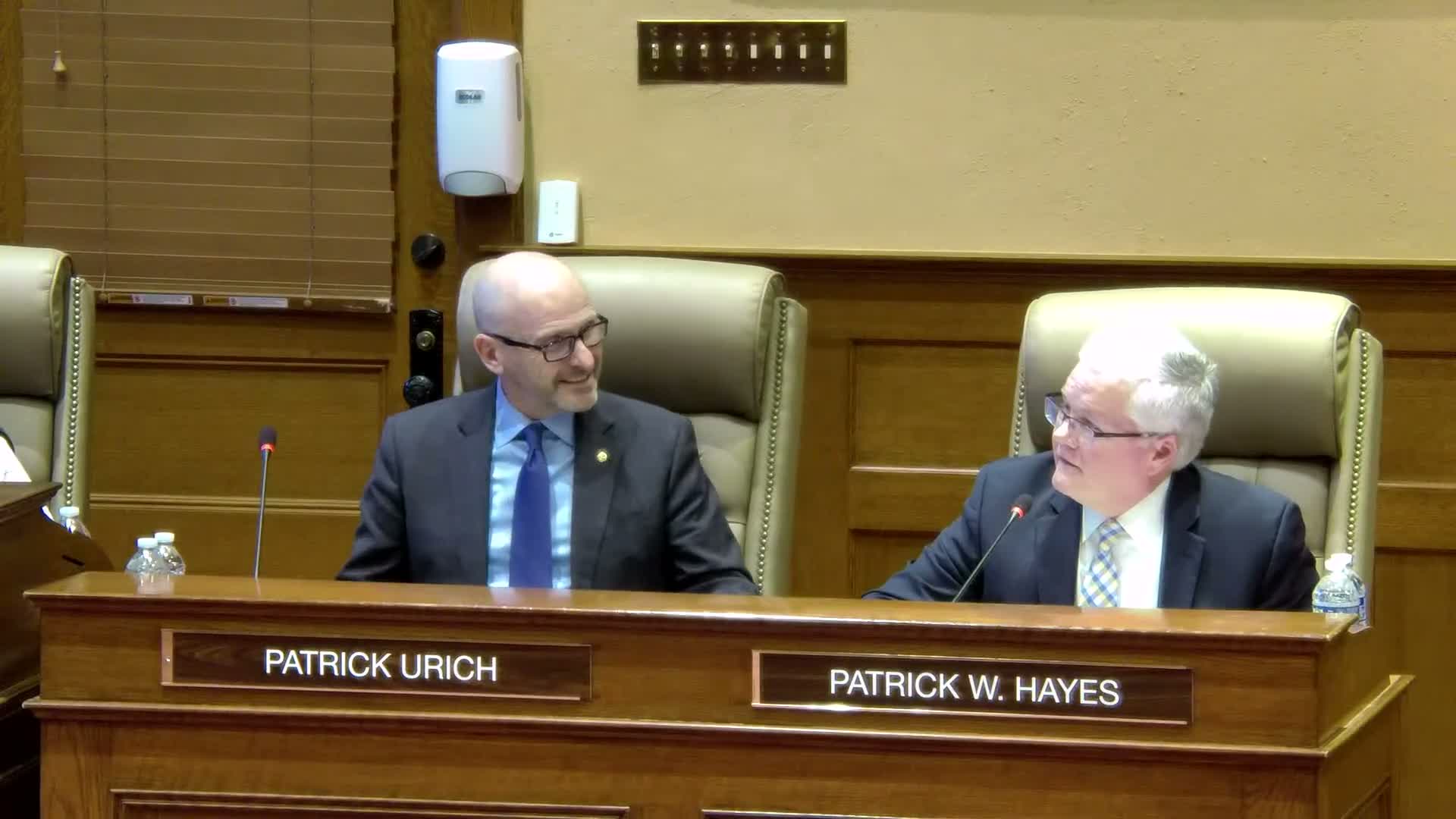
Summary
After hours of debate about litigation risk, potential revenue and civic pride, the Peoria City Council split 5-5 on Feb. 2 and declined to approve a settlement that would have given the city 2.25% of adjusted gross revenues from Boyd/Paradise’s proposed redevelopment plan. The Illinois Gaming Board is scheduled to consider the plan Feb. 5.
Peoria’s City Council on Feb. 2 failed to approve a settlement with Paradise Gaming Corporation (a Boyd Gaming affiliate) that would have resolved Peoria’s objections to a redevelopment plan before the Illinois Gaming Board and provided the city with a continuing 2.25% share of adjusted gross revenues from the property.
Corporation Counsel Hayes outlined the agreement to the council, saying it would require Peoria to withdraw formal objections to the Dec. 11, 2025 redevelopment plan and, if approved by the gaming board, would obligate the company to pay the city 2.25% of adjusted gross revenues beginning the first full quarter after the project was completed. Hayes said the payment is framed as consideration for settling disputed claims and is not characterized as a tax; the settlement would apply only to the plan presented to the board and would not bind other properties or future redevelopment efforts.
Hayes described the time pressure for the special session: the Illinois Gaming Board had placed Boyd/Paradise’s plan on its Feb. 5 agenda for final consideration, and Boyd insisted any binding terms intended to be effective for Boyd were resolved before that hearing. He also told the council the draft binds assignees and successors and submits dispute jurisdiction to U.S. District Court for the Northern District of Illinois or Cook County courts.
Council members pressed for financial context and legal risk. Hayes offered numerical examples: if adjusted gross revenue (AGR) stayed near recent levels of roughly $60 million annually, 2.25% would yield about $1.35 million a year; at $80 million AGR, the city’s share would be about $1.8 million a year. Hayes and the city manager said the city historically places IGA-derived dollars into capital projects and that how any settlement proceeds would be used would be a future council budget decision.
Opponents warned of precedent and argued for litigation. Councilmember Valpula and others cited the 1991 intergovernmental agreement (IGA) with East Peoria and state law language they said clearly reserves land-based casino locations to Peoria; they argued Boyd/Paradise is exploiting uncertainty in the gaming board’s longstanding definition of “riverboat.” Corporation Counsel Hayes and outside litigation counsel told the council Peoria has a “significant” chance of prevailing in court but warned that a court victory might not require Boyd to relocate or build a land-based casino in Peoria and that litigation would be costly and lengthy. Hayes estimated trial litigation could approach seven figures and appellate steps about $100,000 per stage, with each appellate level taking roughly 12–18 months.
Supporters of the settlement framed the choice as a pragmatic, fiduciary decision. Councilmembers who favored approval said the guaranteed revenue stream—illustrated by the $1.35 million–$1.8 million examples—would address urgent local budget needs such as pension obligations, capital projects and social services without raising taxes. "This is our win," Mayor Ali said, calling the settlement the closest practical path to capture revenue for Peoria and noting the uncertainty, cost and time of protracted litigation.
The council took a motion to approve the proposed settlement (mover: Councilmember Gordon Young; seconder: Councilmember Allen). The motion failed on a roll call vote recorded as five yays and five nays; the clerk read the nays as Councilmembers Valpula, Kelly, Riggenbach, Euler and Carmona. The record did not list every yes vote by name in the transcript.
No members of the public signed up for the Citizens Opportunity period. The council then voted unanimously to adjourn and convene an immediate closed executive session under the Open Meetings Act to discuss pending or probable litigation and to approve closed-session minutes.
What happens next: the Illinois Gaming Board is scheduled to consider Boyd/Paradise’s redevelopment plan on Feb. 5. With the settlement rejected, Peoria may pursue litigation challenging the board’s or Boyd’s position; counsel warned that even a successful legal challenge would not guarantee a land-based casino in Peoria and could leave the city without the settlement payments while incurring substantial legal costs.
Reported speakers (selected): Corporation Counsel Hayes, Mayor Ali, Councilmembers Gordon Young, Allen, Valpula, Euler, Carmona, Vespa, Reichenbach, and the City Manager.
The council’s split leaves open both options—settlement or litigation—while the gaming board’s Feb. 5 agenda creates an urgent external deadline that will shape Peoria’s next steps.