Get Full Government Meeting Transcripts, Videos, & Alerts Forever!
Get email alerts on the Impact Fees topic
No spam. Unsubscribe anytime.
West Haven adopts new impact‑fee ordinance raising transportation, stormwater and parks fees
Summary
The West Haven City Council on Jan. 21 adopted Ordinance 02‑2026 establishing new impact fees for transportation, stormwater and parks/trails; staff said the ordinance sets maximum fees while allowing the council to adopt lower actual charges and creates an administrative review process for appeals.
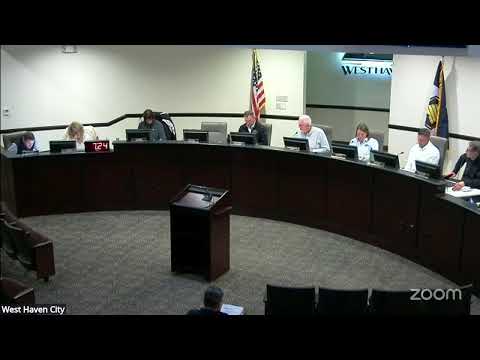
The West Haven City Council voted Jan. 21 to adopt an ordinance establishing impact fees for transportation, stormwater and parks, following a staff presentation and council questions.
City manager Sean Warnke and city consultants described the legal framework and studies that underlie the ordinance, including the impact fee facility plan and a proportionate‑share analysis. Warnke said the ordinance authorizes maximum fees but that “you could always adopt a lesser fee.”
Staff listed sample changes during the presentation. For transportation, staff said the proposed increase for a single‑family home would be $688 and that the maximum fee the city could adopt for a single‑family detached house is $2,814. For commercial development, staff said the city uses trip‑based calculations and that the cost per trip rose by $73 to $298 per trip. On stormwater, staff explained the methodology will move from a per‑acre demand unit to an impervious‑square‑foot basis and cited an example increase of $35 for a single‑family lot on a quarter acre. For parks, recreation and trails, staff presented what it called a “significant impact fee increase,” citing an example rise of roughly $3,117 and presenting a maximum parks fee in the $5,000 range.
Warnke described an administrative review path for property owners with concerns: the city manager would have authority to interpret the ordinance and, if unresolved, parties could request a hearing officer’s decision. Warnke said consultants preparing the impact‑fee analyses are required by state law to sign affidavits attesting the studies comply with statute.
After questions about level‑of‑service standards and speed limits from council members and an explanation from consultants about why an LOS D standard was chosen for urbanized areas, the council moved and adopted Ordinance 02‑2026. The roll call recorded affirmative votes from council members Lehi, Saunders, Dixon and Schwab and the motion carried.
The ordinance includes the impact fee facility plans and impact fee analyses that staff discussed. City staff said the ordinance sets the framework for accounting and appeals and that detailed implementation (including any fees set below the maximums presented) will follow through administrative action and budget processes.
The council took the vote after a public hearing in which no members of the public spoke on the ordinance. The ordinance will be posted with the supporting studies; staff said a 90‑day runway (notice) is included to give applicants time to adjust pending fees and permitting processes.