Omaha council approves Saddle Creek mixed-use redevelopment with $9M TIF amid neighborhood objections
Summary
After extended public testimony, the City Council approved rezoning and a tax-increment financing request for the Saddle Creek Market redevelopment—a five‑phase, market‑rate project that includes 223 residential units—while neighbors and council members pressed developers on affordable housing, parking and community engagement.
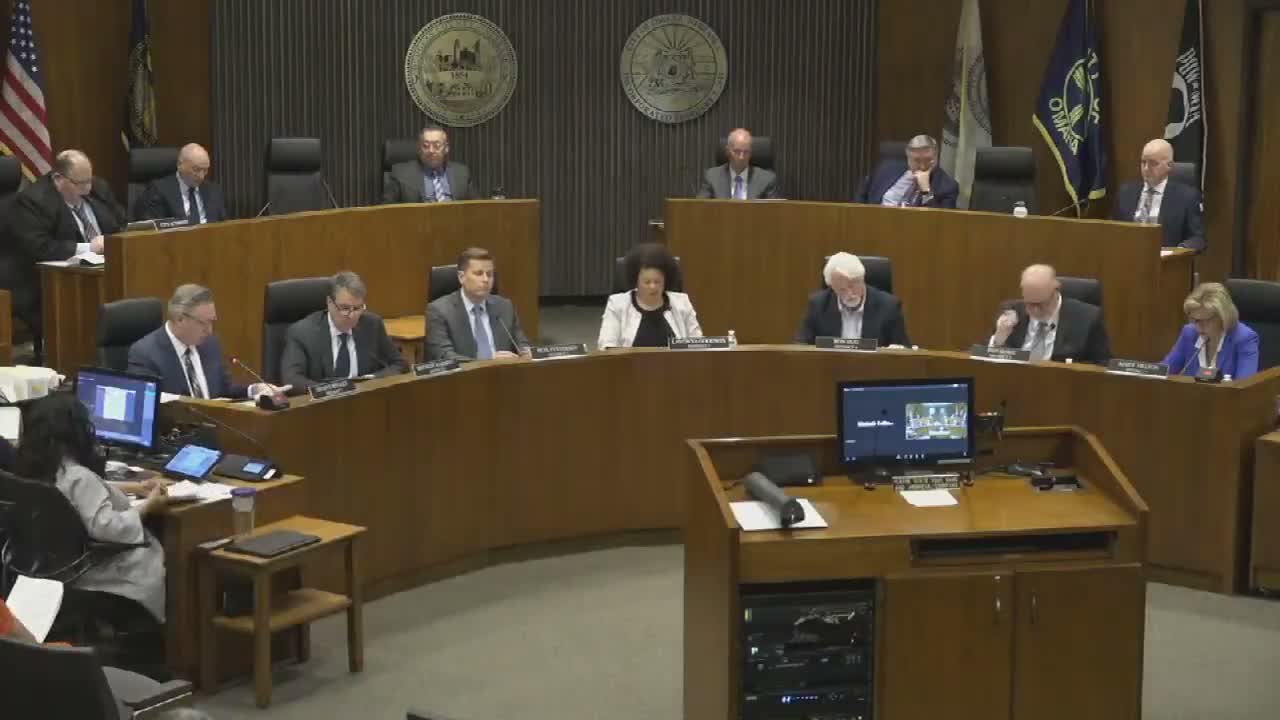
Council President Brinker opened a lengthy public hearing before the council approved rezoning and a redevelopment plan that includes a $9,005,590 TIF request for the Saddle Creek Market project.
Bob Griffith, the applicant’s attorney, told the council the proposal is a five‑phase mixed‑use redevelopment with about 223 market‑rate apartments, roughly 60,000 square feet of large‑format retail space and up to $1,000,000 in public improvements such as sidewalks and landscaping. "The ROI inclusive of TIF and EEA is only about 3 and a half percent," Griffith said, arguing that the project would not move forward "but for" TIF and EEA support.
Developer Mitch Holen described plans for two levels of buried parking, new storefronts and a phased timeline. "We're gonna lop off the front 20 feet of that building... we'll do new storefronts for three to four tenants," Holen said, adding that work on the first phase is planned to start in 2026.
Neighbors and small‑business owners urged caution. Jessica McCallie, a resident and business owner, said the neighborhood wants to preserve local businesses and cultural character and criticized the speed of the process: "This feels very rushed," she said. Nick Kohler, a long‑time Dundee resident, cited local vacancy rates and said he feared another luxury complex might sit largely empty.
Council members pressed developers and planning staff on several points. Council member Festersen asked about Family Fare’s lease status; Don Seaton of City Planning said he had been told Family Fare’s decision to leave was not finalized and that its lease runs through February 2028, but he could not confirm the supermarket’s final intentions. Council member Festersen also pressed the developer on design and the redevelopment agreement as primary tools to address neighborhood concerns.
Affordable housing was a central theme. Council member Festersen and others said the project contains no dedicated affordable units; Griffith and Holen said financing constraints and lender reluctance limit the ability to include deed‑restricted affordable units, and that the project would be marginal without incentives. "You will not get the financing if you have any kind of deed restriction on affordability," Holen said. Several council members signaled interest in exploring TIF policy changes to incentivize affordability in future projects.
After discussion of design commitments, parking strategies and tenant protections, the council approved the rezoning and redevelopment plan by roll call as recorded for items 20–22. Planning staff and the TIF committee had recommended approval. The council vote on the rezoning and the associated TIF package passed according to the clerk's roll call recorded in the meeting.
Next steps: Council members noted a redevelopment agreement and detailed design work will return to the council for further review and that the redevelopment agreement will provide opportunities to negotiate specific community commitments and implementation details.