
Conference committee debates scope and wording of S.23 synthetic-media disclaimer
Get AI-powered insights, summaries, and transcripts
Subscribe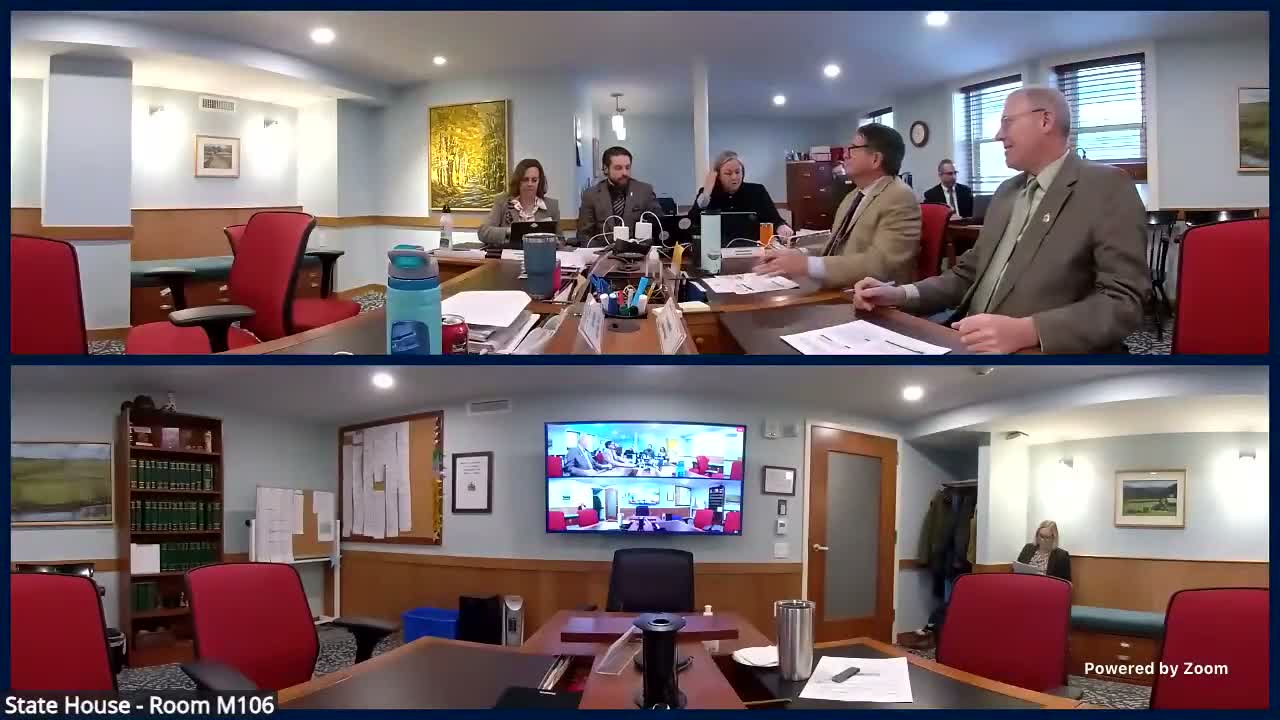
Summary
Legislative counsel proposed changing S.23's required disclaimer from "artificial intelligence" to "digital technology" to match the bill's synthetic-media definition; lawmakers debated whether protections should be limited to political candidates or apply more broadly to individuals, raising First Amendment and enforceability concerns.
Legislative counsel on Friday urged the conference committee reconciling S.23 to use broader wording in the bill's disclosure requirement and members spent the session debating whether the law should cover only political candidates or any individual.
Rick Segal of the Office of Legislative Council told committee members the draft report uses a "strike all" approach and that, if adopted, members in each chamber would vote the report up or down. Segal proposed changing the required disclosure language so it reads that "this media has been manipulated or generated by digital technology," rather than specifically naming artificial intelligence, arguing the change would better match the statute's definition of "synthetic media." "If a person makes this deceptive ad that they have to put a disclaimer on, it's possible that they did not use AI," Segal said. "They use Photoshop. They use some other editing software that is not AI. It is still deceptive. It is still synthetic media, but it's not AI."
The drafting choice reflects a practical concern: the draft defines synthetic media as media altered by digital technology, which can include AI but is not limited to it. Several committee members voiced support for the wording change as more accurate and consistent with the bill's definitions.
The main unresolved question before the panel was scope: should the statute prohibit deceptive synthetic media that injures the reputation of a political candidate, or should it also cover synthetic media depicting any individual that "attempts to unduly influence the outcome of an election," as the draft's second subdivision would do. Segal read the two subdivisions into the record, noting the distinction: one provision targets depictions that harm a candidate's reputation; the other targets deceptive election-related misinformation about an individual that could materially mislead voters about logistics or timing.
Lawmakers debated a narrower and broader framing. One legislator suggested an intermediate category — terms like "prominent individual," "public-facing individual" or an "interested party" — but members and counsel warned that such labels can be subjective and difficult to apply across age groups and audiences. "Prominent would be maybe it would work, but, yeah, like you said, you probably want to include who is prominent to a 13 year old is not going to be prominent to a 70 year old," Segal observed.
Several members expressed constitutional caution about broad language. One lawmaker said, "I'm really hung up on the free speech thing," arguing that expanding the statute beyond candidates could invite litigation and require state resources to defend the law. Segal acknowledged the legal risk, citing other states that have enacted similar measures and referencing a California case as an example of the kind of judicial scrutiny such laws can face. He noted that under Vermont law, a court could sever an unconstitutional subdivision while leaving other parts of a statute intact, but that courts weigh each challenge on constitutional grounds.
Members also discussed practicalities such as the length of a required spoken disclaimer in broadcast ads and whether to explicitly include false information about ballot questions. One member warned that adding "public question" language could muddle the statute and broaden its reach in unintended ways.
The committee recessed for five minutes so members could consult with colleagues and return with guidance on whether to preserve the candidate-only language, adopt the broader individual standard, or try to craft a middle-ground definition.
The committee left unresolved whether the final conference report will adopt the narrower candidate-based protection or the broader standard that would sweep in deceptive synthetic media about non-candidates; members asked counsel to weigh enforceability and constitutional risk before the group's next meeting.