Farmington proposes extra supervisors, therapists and nurses in preliminary special-education budget
Loading...
Summary
The Farmington Board of Education heard a preliminary special‑services budget Feb. 28 that would add a secondary special‑services supervisor, an additional care‑team member, OT and nursing capacity and other targeted hires offset by reduced consultant spending; state seed-grant funds of about $30,000 will support curriculum work.
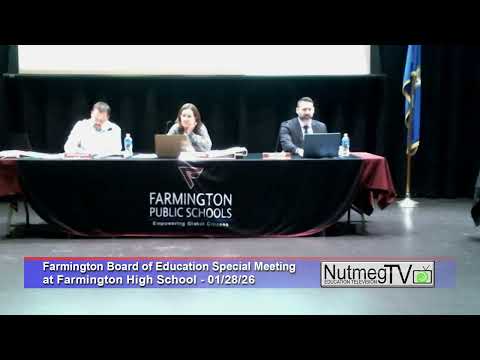
Farmington Director of Student Services Wendy Shepherd Banish outlined a preliminary special‑education budget that would add supervisory and clinical capacity and shift work from outside consultants into in‑district staff.
Banish, who opened her presentation by saying "an ounce of prevention is worth a pound of cure," told the board that Farmington’s special‑education prevalence has been relatively flat around 12–13 percent while the state rate has risen. She said the district served about 528 special‑education students in 2025 and 556 this year and that the mix of needs now includes more autism, speech/language and medically complex students.
Why it matters: Administrators said those changes drive higher costs and a greater need for supervision and specialized services. Banish proposed adding one additional care‑team member and a secondary supervisor (splitting elementary and secondary supervision) so the director can focus on proactive programming and family responsiveness. She also proposed hiring an occupational therapist (with a certified assistant), a 0.4 FTE increase in speech/language services, a 0.5 nurse and a 0.5 school psychologist assigned to the high school. To offset those costs, the district would reduce outside consultant lines and rely on natural attrition in some paraeducator roles.
Banish listed legislative context the board should consider: state proposals that encouraged instructional coaches with protected time for PPTs and site visits, and new guidance aimed at creating more consistent tuition and billing for out‑of‑district placements. She said the state created a Special Education Expansion and Development ("seed") grant of about $70 million statewide and that Farmington’s share is "a little over $30,000," which administrators expect to use for specialized curriculum and program development.
Board members asked how the district counts students. Banish clarified that 554 IEP students plus additional students served under Section 504 bring the district’s workload closer to 25 percent of the student population when combined with ongoing consultation and pre‑referral work. Board members and administrators discussed when it makes financial and programmatic sense to bring services in‑house rather than paying consultants; administrators said in‑house positions improve continuity and quality once district need passes a threshold.
What’s next: The board will review these proposals in more depth at a budget workshop on Saturday. Administrators said they expect to outline offsets and where grant and operating funds would be applied to make the proposals largely sustainable.
Quotes: "An ounce of prevention is worth a pound of cure," Banish said, framing the emphasis on early intervention and in‑district programming. "We can apply more revenue back from the excess‑cost grant" to offset new supervisory costs, she added.
Ending: The presentation concluded with the board thanking staff for the overview; the district’s budget workshop on Saturday will show line‑by‑line offsets and staffing details.