Get Full Government Meeting Transcripts, Videos, & Alerts Forever!
Get email alerts on the Land Development Code topic
No spam. Unsubscribe anytime.
Oviedo Council unanimously adopts Ordinance 17-62 to fix land development code glitches
Summary
The Oviedo City Council adopted Ordinance 17-62, a technical update to the city's land development code intended to correct implementation inconsistencies and adjust zoning classifications; the Local Planning Agency recommended adoption and the measure passed unanimously.
The Oviedo City Council on Monday adopted Ordinance 17-62, a technical update to the city's land development code that rezones a set of parcels and corrects implementation inconsistencies staff described as a "glitch."
Planning staffer Mister Copp told the council the change was prompted after the 2024 code adoption when staff "encountered different things along the way" and found items that needed adjustment to make the code implementable. He said the Local Planning Agency held a public hearing and recommended adoption. "This ordinance number 17-68 ... is what we call a glitch ordinance," Copp said, noting the update also incorporated a previously discussed change to fence requirements.
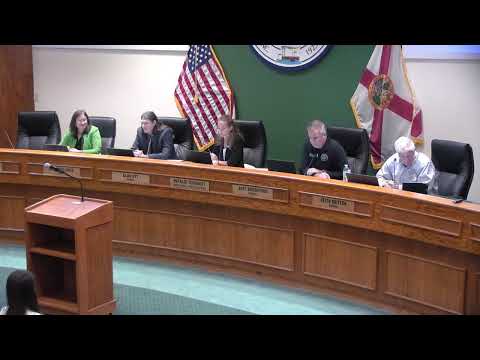
The public hearing drew no speakers. An unidentified councilmember moved to approve Ordinance 17-62; another unidentified councilmember seconded the motion. After brief council comments that the item had been discussed on prior occasions and that affected parties were comfortable with the outcome, the clerk called the roll. Councilmember Boddeford, Councilmember Britton, Mayor Sladek, Deputy Mayor Teukert and Councilmember Ott all voted aye and the chair declared the motion carried.
The ordinance reading as presented lists amendments to multiple articles of the land development code (including administration, development agreements, zoning districts, specific uses, nonconforming situations, streets and sidewalks, landscaping/tree requirements, parking, signs, environmental preservation, recreational facilities, and definitions) and rezones specified parcels — for example, from industrial (I) to public lands and institutions (PLI) and from various residential classifications to downtown neighborhood (DN) or other residential categories. The staff recommendation emphasized corrections for consistency with the city's comprehensive plan and codification of scrivener's errors.
The council also adopted the consent agenda and handled routine reports and announcements. The ordinance becomes effective as provided in its text.