Lifetime Citizen Portal Access — AI Briefings, Alerts & Unlimited Follows
Energy secretary warns offshore wind near population centers could create "radar masking" risk
Loading...
Summary
Energy Secretary Chris Wright told a television interviewer that five planned offshore wind projects along the U.S. Northeast coast raise national-security concerns, saying a ship among turbines could mask the approach of a large drone swarm and that the administration is "very, very focused" on those risks.
Energy Secretary Chris Wright said the administration is closely scrutinizing several proposed offshore wind projects because of potential national-security risks.
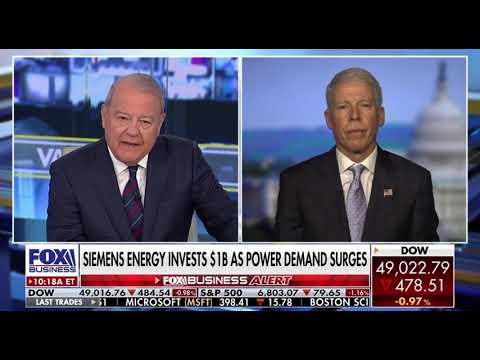
"If you wanted to bring a huge drone swarm into the United States, what a perfect way to do it," Wright said during a television interview, arguing that placing a ship in the middle of an offshore wind farm could "mask" that approach from radar. Wright identified "the 5 projects in question" as sited along the "heavily populated Northeast coast" and said the administration is "very, very focused on the national security aspects of offshore wind farms right near major population centers." He added that officials are "going to look to see if there are solutions to avoid that problem, but it's not clear there are solutions."
The remarks came after the host referenced President Trump's recent legal defeats in efforts to block offshore wind; the host asked whether the president would keep fighting the projects and why wind would be treated as a security issue. Wright framed his comments as a strategic concern rooted in the evolution of warfare and unmanned systems, citing the Russia-Ukraine conflict as an example of how drones are being used in modern conflicts.
Wright's statements in the interview present the administration's rationale for heightened scrutiny of offshore wind siting near population centers. He described a hypothetical use of maritime access and radar interference to conceal hostile unmanned activity but did not cite a publicly disclosed technical study or specific incidents in U.S. waters during the interview. The host did not follow with requests for independent evidence or technical assessments before moving the conversation to a different topic.
The interview did not record a formal policy action or vote; Wright said only that the administration would seek solutions and remained focused on the national-security questions. The conversation ended without a detailed timeline for any regulatory steps or interagency review.