
APS board accepts interim goal 4.2 progress report showing small gains in social‑emotional measures
Get AI-powered insights, summaries, and transcripts
Subscribe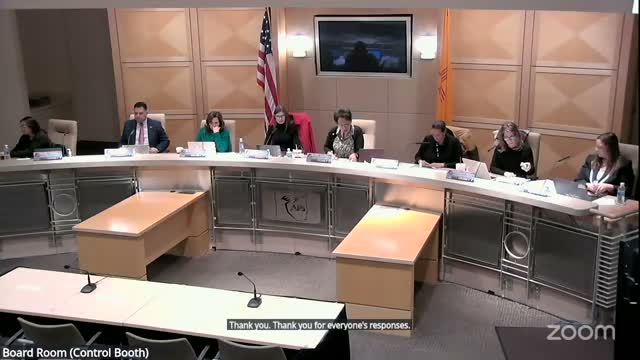
Summary
The Albuquerque Public Schools board voted to accept the progress monitoring report for interim goal 4.2 (grades 6–12), after district staff presented self‑reported survey gains and described strategies including restorative practices, advisory lessons and school‑level implementation.
The Albuquerque Public Schools Board of Education voted unanimously on Feb. 4 to accept the administration’s progress monitoring report for interim goal 4.2, which tracks students’ development of skills, habits and mindsets in grades 6‑12.
District presenters told the board that APS is on track to meet its four annual targets for the goal. “Based on our most recent district‑wide survey results from 2025, APS is on track to meet all 4 annual targets for interim goal 4.2,” a member of the presentation team said. The presentation cited self‑reported increases on district surveys: social awareness rose from 54% to 60%; self‑efficacy from 38% to 43%; perseverance from 49% to 53%; and self‑regulation from 65% to 68%.
Why it matters: Goal 4 was developed from community engagement and is intended to measure nonacademic attributes that the district’s community identified as essential for life success. The monitoring reports are designed to show whether strategies and resources are producing observable changes in student behavior and readiness.
Board members pressed the administration on measurement and implementation. Member Courtney Jackson asked how the district would ensure that gains measured by self‑report translate into observable changes in behavior, engagement and readiness; district leaders pointed to specific strategies such as restorative approaches, redesigned advisory programs, targeted interventions and jump‑start mentor programs that pair older and younger students. The superintendent’s team said advisory lesson content is a mix of Panorama materials, teacher‑generated lessons and district resources, and that school instructional councils determine adoption at each site.
On funding and staffing, the administration said schools generally reallocate existing budgets and use stipends for training teams rather than receiving new full‑time positions; the district emphasized ongoing support from school climate managers and a train‑the‑trainer model for a four‑day culture‑of‑care training sequence.
The board accepted the report after a motion by Member Jackson and a second; a roll‑call vote recorded the board’s assent and the motion carried. The acceptance is an acknowledgment that the report met the board’s criteria for goal, data, interpretation and evidence of strategy.
What’s next: District staff said they will continue to disaggregate data by grade and school, provide follow‑up numbers on advisory usage and teacher feedback, and report back on any adjustments to training or resources based on school‑level uptake and student responses.