
Finance Committee authorizes up to $3.5 million borrowing for roads, sidewalks and municipal buildings after extended debate over priorities and private streets
Get AI-powered insights, summaries, and transcripts
Subscribe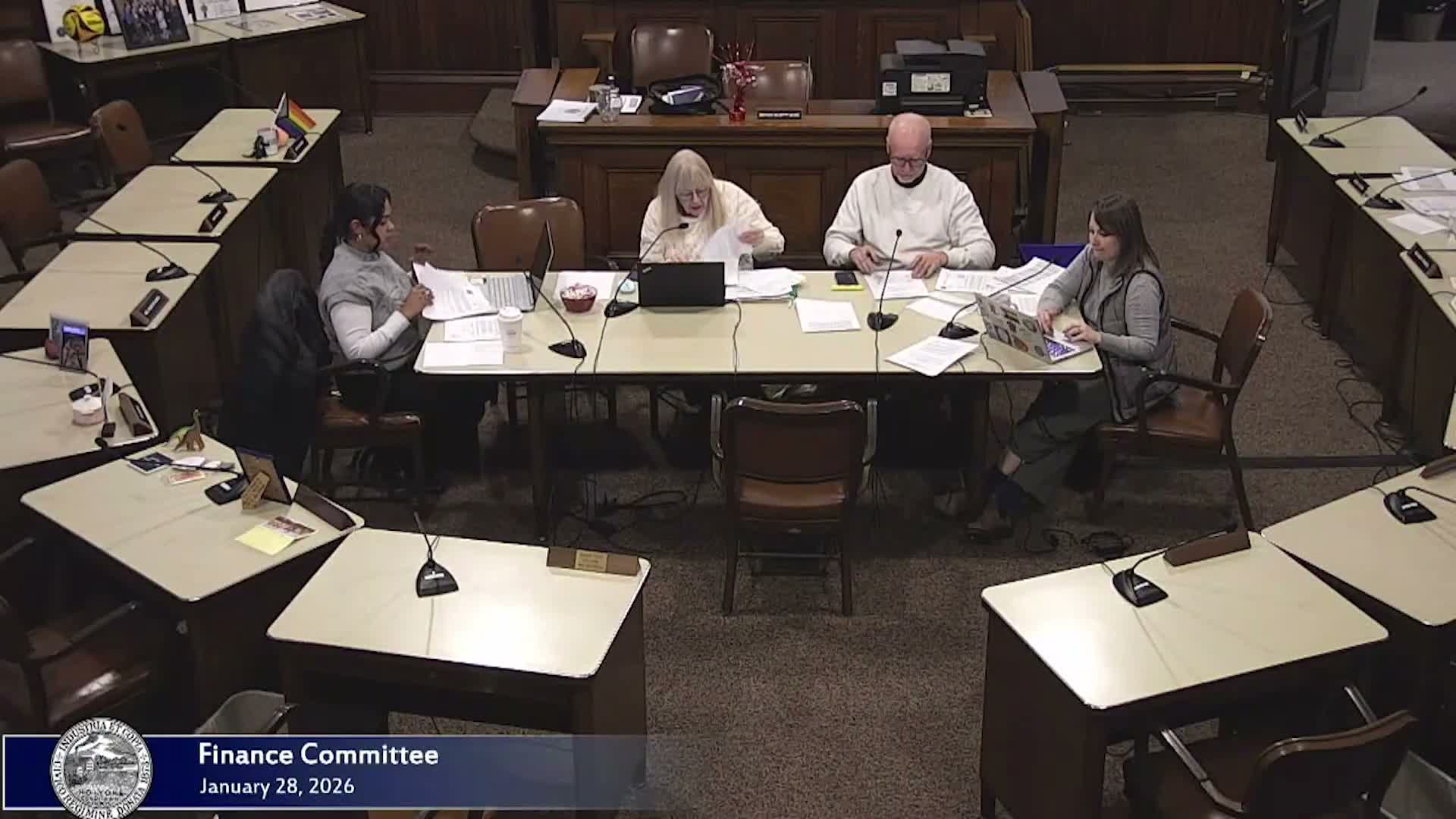
Summary
The Finance Committee approved an order authorizing the treasurer and mayor to borrow up to $3,500,000 (Mass. Gen. Laws ch. 44 §7) to fund roads, sidewalks and municipal building work; the committee directed staff to share an itemized facilities report and sought ward-level and private-street cost breakdowns before final allocations.
The Holyoke City Finance Committee voted Jan. 29 to approve an order that authorizes the treasurer, with the approval of the mayor, to borrow up to $3,500,000 under Mass. Gen. Laws ch. 44 §7 for demolition, remodeling, reconstruction, engineering, construction, and equipping of city facilities, roads and sidewalks.
Mayor and staff framed the request as a flexible authorization to supplement Chapter 90 paving funds and to complete outstanding ARPA‑funded municipal building work. City Engineer Victoria Houle told the committee that approximately $2,000,000 of the request would supplement road and sidewalk work (to be combined with roughly $1,000,000 in Chapter 90 funds) and that about $1,500,000 was targeted for municipal buildings, although staff said those splits could change depending on grants or other funding sources.
Houle outlined paving treatments and cost estimates, citing 2‑inch and 4‑inch mill‑and‑pave options and a partial reconstruction approach for severely deteriorated segments. She listed candidate streets in poor condition—Cabot (Maple to Reis), Lincoln (Northampton to Hamden), North Hampton (Ingleside to Whiting Farm) and South Hampton (Frost to Mountain)—and said geotechnical work by Beta Group supports treatment recommendations for major arterials. Houle also described potential, discretionary uses for private roads if the bond language allowed it, but warned funds used to benefit private owners could raise legal and tax‑exempt concerns and may require a special act or ordinance carve‑out.
Councilors pressed the mayor and staff for clarity on how much of the $3.5 million would be spent on public roads versus private streets and how the municipal building allocation would be used. Councilor McGrath Smith cited prior cost tallies that suggested the combination of major road repairs plus selected private roads could total $3.5 million; Treasurer/bond counsel cautioned that private‑road work poses additional legal complexity because tax‑exempt borrowing that primarily benefits private property owners may be viewed as an impermissible subsidy. Staff committed to provide a detailed budget breakdown, ward‑level candidate lists and a facilities conditions report to inform final allocation decisions.
After extended discussion the committee approved the order and authorized the mayor to go out to bid. The roll‑call vote recorded in the transcript listed Councilor McGrath Smith, Councilor Sullivan, Councilor Devine, Councilor Massenet and Councilor Anderson Burgos as voting ‘‘Yes.’’ The authorization equips staff to pursue contracts and refine priorities (including the potential to use some funds for private roads if legal constraints and homeowner agreements allow it) and will allow the city to proceed with bid schedules for spring and summer work.