
Longmeadow unveils FY27 level-service budget proposal of $46.25M; committee approves routine minutes, consent agenda and to enter executive session
Get AI-powered insights, summaries, and transcripts
Subscribe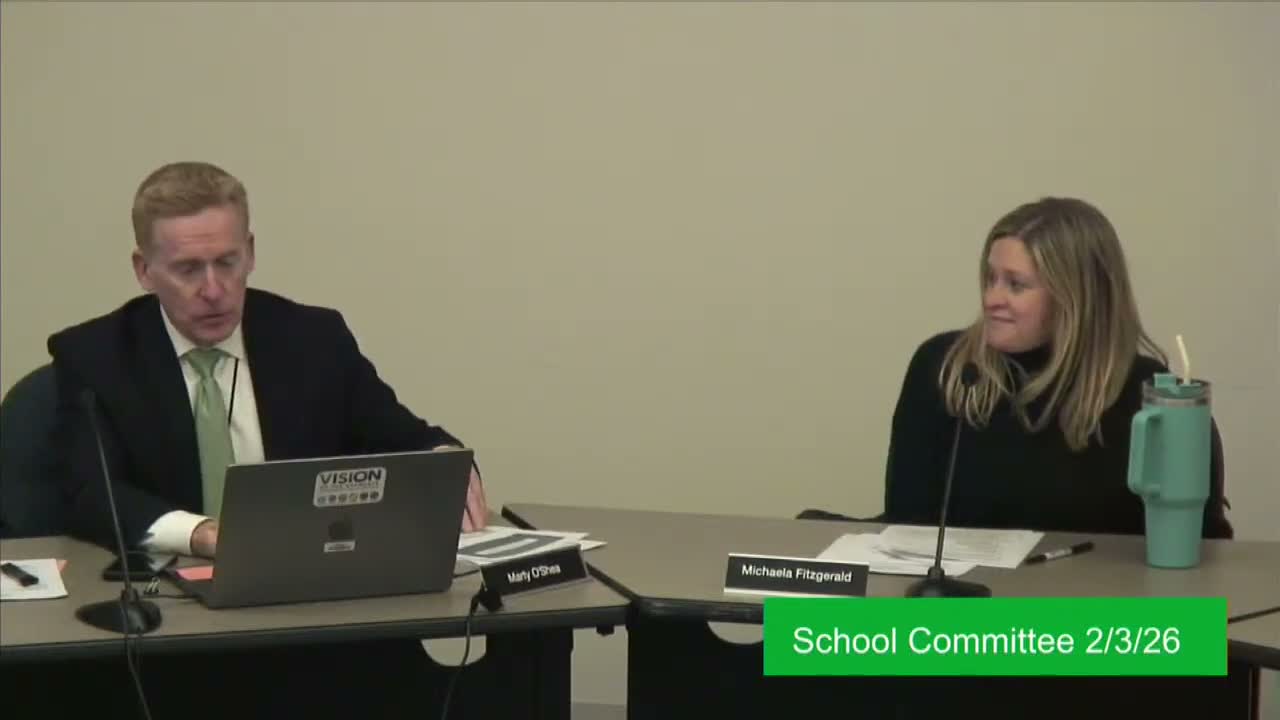
Summary
Administrators presented a FY27 level-service budget recommendation totaling $46,247,249 (roughly a 3% increase). The committee approved two routine votes (minutes, consent agenda) and unanimously voted to enter executive session for collective bargaining and related strategy.
Administration presented a recommended FY27 level-service budget totaling $46,247,249 and described it as designed to sustain existing programming while responding to enrollment and contractual obligations. The presenting administrator said the proposal represents "a level-service budget" that maintains existing services and aligns spending with strategic priorities.
The administration called out major cost drivers: meeting contractual obligations ("just over $1,300,000"), rising utility costs and information-technology and software services shared between town and schools. The presenter said the FY27 recommendation projects a net increase of about $1.2 million over FY26 and estimated the requested increase from the town general fund at roughly 2.86–3 percent. Enrollment was noted to have declined from about 2,850 (2015–16) to 2,638 in 2025, and administrators said they project modest further declines based on New England School Development Council forecasts.
State aid was discussed: the presenter said the governor's January 28 budget would increase Chapter 78 (state aid) for Longmeadow by an estimated $200,850 (about $75 per student) for FY27, but cautioned that final state aid numbers will depend on the Legislature and are not settled until later in the budget cycle. Administrators also flagged multiple uncertainties that could change the recommendation before final votes: collective bargaining outcomes, final state aid, health insurance costs and federal grants.
Staffing and positions: the presentation noted staffing responding to enrollment trends (the district began FY26 with 452 positions, projects about 449 FTEs for FY27) and described modest adjustments in tutors and a para position tied to individual student needs. The presentation emphasized most of the budget is people: salaries represent roughly 80 percent of costs.
Votes at a glance - Approval of minutes (motion to approve Jan. 6 and Jan. 27 minutes): moved, seconded and approved by roll call (members recorded Yes). - Consent agenda (three building-use requests for March events and a bingo night): moved, seconded and approved by roll call (members recorded Yes). - Motion to enter executive session (purposes: collective bargaining strategy for units B and D; strategy with respect to collective bargaining or litigation; approval of minutes): moved, seconded and approved by roll call; the committee indicated it would not reconvene to open session.
Next steps: the administration said a required public hearing on the budget is scheduled for Feb. 10; the committee is expected to deliberate and vote on the budget on Feb. 24, and the town meeting where the town and school budget may be approved is scheduled for May 12. Administrators repeatedly noted that FY27 numbers may change as final state aid, bargaining results and health insurance costs are confirmed.