
Wayne County board selects Truist Bank for $9 million Rosewood school financing
Get AI-powered insights, summaries, and transcripts
Subscribe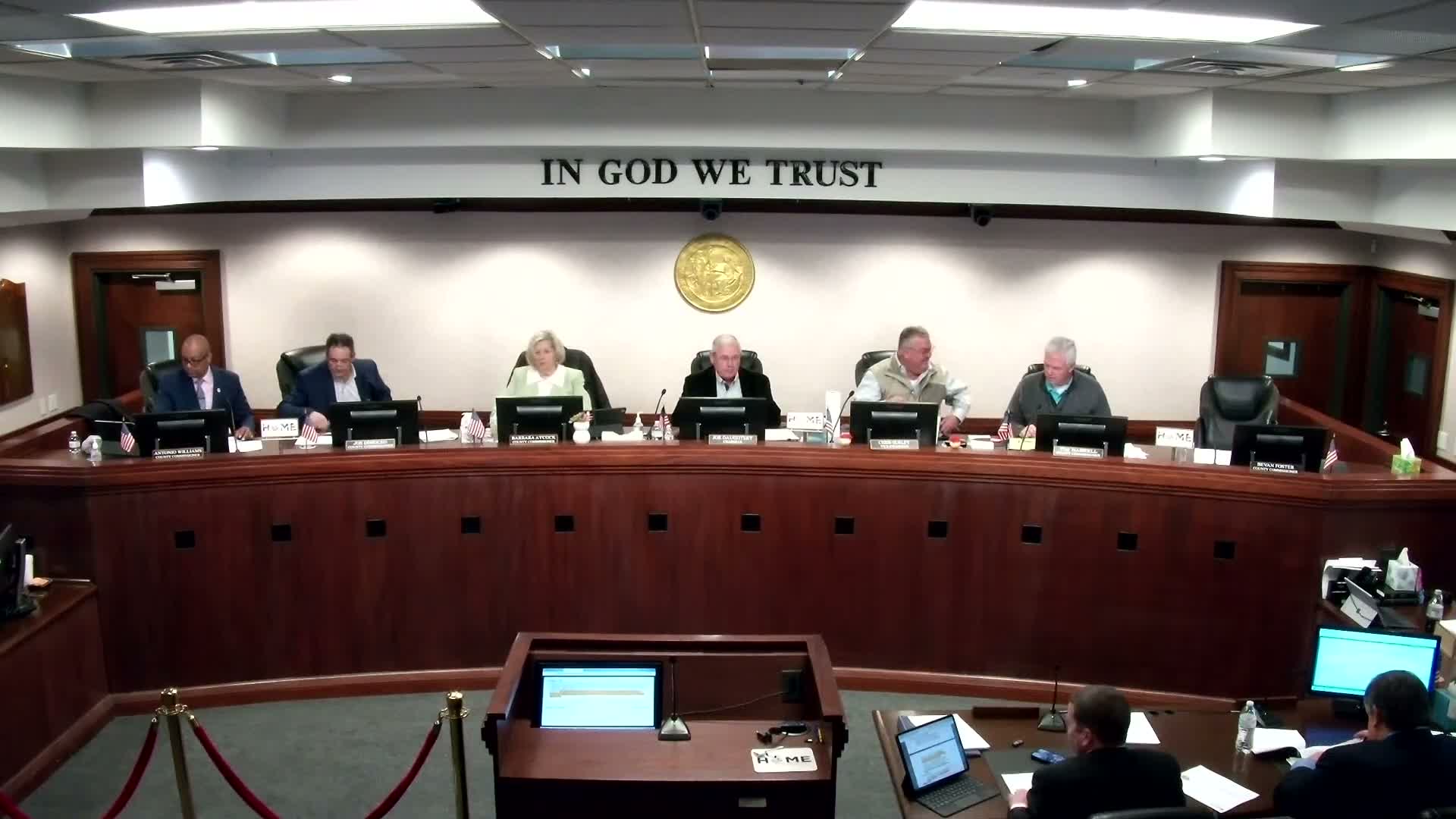
Summary
After reviewing five bids, Wayne County staff recommended and the board unanimously selected Truist Bank to provide installment financing for Rosewood Middle and Rosewood Elementary, citing a slightly lower rate and lower closing costs; the Local Government Commission review remains part of the schedule.
Wayne County commissioners unanimously approved selecting Truist Bank as the lender for installment financing to fund improvements at Rosewood Middle School and Rosewood Elementary School.
Ted Cole of Davenport & Company told commissioners Davenport issued an RFP seeking up to $9,000,000 and received five proposals. He said Truist offered the lowest fixed 20-year rate, quoted at 4.30%, while Webster Bank’s competing proposal was 4.32%. Davenport recommended Truist based on the lower rate and lower closing costs, noting Truist would not require title insurance — an estimated $15,000 savings — and would hold project proceeds in a Truist account during construction.
The board had earlier held a public hearing on the proposed installment financing; no members of the public spoke. Commissioners adopted a resolution making findings and determinations about the financing and later, after Davenport’s presentation and a brief question-and-answer session, moved to select Truist as the lender. The motion passed unanimously.
Cole outlined key terms relevant to the county’s timetable and flexibility: Truist’s rate lock would extend through a March 21 closing, and Davenport has submitted the required application to the North Carolina Local Government Commission (LGC) for review. Davenport reported that Truist’s prepayment provisions would allow full-payoff beginning roughly a year after closing subject to a 5% penalty that steps down over time to a par prepayment (no penalty) beginning around 2031; Webster’s prepayment language was more restrictive in the early years.
On costs and modeled totals, Davenport used a planning model of a 20-year term. The Truist scenario showed a project principal near $8.8 million, a placeholder cost-of-issuance of $135,000, a bank attorney fee of $7,000 and total debt-service on the modeled schedule of about $13,054,000 over 20 years at the 4.30% rate. Cole said the county’s debt-service model already accounts for planned borrowings and anticipated projects, and staff said the additional FY27 debt service would be absorbed within the sales-tax-backed modeling referenced during the meeting.
Next steps: Davenport asked the board to notify the chosen bank promptly so documentation can be prepared, noting the LGC typically considers such financings on its March calendar; Davenport said final county approval and LGC approval were expected around March 3 with closing possible by March 20–21 if the schedule holds.
The board’s vote to select Truist was unanimous; no public comments were recorded on the financing at the hearings held by the board.