
Wayne County approves response to state financial-performance concern, will present budgets at department level
Get AI-powered insights, summaries, and transcripts
Subscribe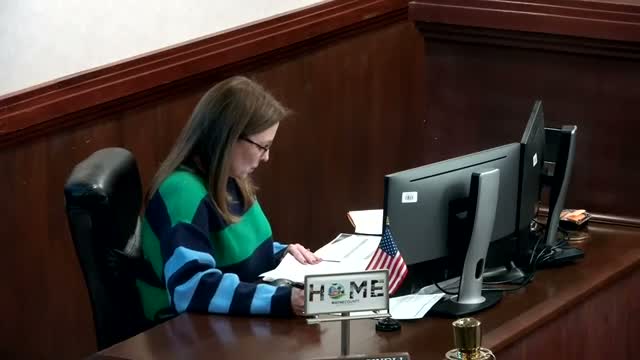
Summary
The Wayne County Board of Commissioners approved a staff-prepared response to the Local Government Commission’s financial-performance indicators of concern and agreed to present future budgets rolled up to department level rather than the object-level detail that triggered the LGC concern.
Wayne County commissioners voted on Feb. 3 to approve staff’s response to a Local Government Commission (LGC) letter identifying a financial-performance indicator of concern related to expenditures recorded after the fiscal year end.
County finance staff told the board the county “overspent at the object level,” meaning individual line items in some funds showed post‑year-end charges that, when recorded back into the prior fiscal year, caused a violation that the LGC requires the county to address. The staff memo before commissioners cited four affected areas: public safety, human services, debt service and the county’s internal service fund for self‑insurance.
The finance presentation said the apparent violation resulted from subsequent transactions—bills received in July or August for services incurred in June—that must be recorded back to the fiscal year when the service occurred. Staff proposed a corrective approach: retain full internal detail and the existing budget‑amendment policy (the board’s policy requiring approval for amendments of $5,000 or more), but present and adopt the annual budget ordinance grouped at the department level instead of listing every object‑level line item. “We would like to propose to you … roll up the object level up to the department level,” staff said.
Several commissioners pressed for more transparency and asked for the specific dollar amounts by department and which budget amendments, if any, were not processed prior to fiscal‑year close; staff said there were no unprocessed budget amendments and offered to provide the requested dollar figures. Finance staff also said one driver of the problem was a large self‑insurance claim and higher hospitalization costs that became apparent only after year‑end.
Commissioner (speaker 13) moved to approve the staff response to the LGC; the board approved the motion and staff said the letter requires the signatures of a majority of commissioners before submission to the LGC. The meeting record shows the vote tally as “61” (reported in the record); staff indicated a majority signature is required. Following the vote, staff said it would present a revised budget ordinance at the next meeting and continue processing budget amendments per existing policy.
Why it matters: The LGC process is intended to enforce statutory budget and accounting rules and, in this case, requires a formal county response and corrective action to avoid continued oversight. Changing the budget‑ordinance presentation affects how the public sees detailed spending in the official adopted budget; staff emphasized that internal detail and the county’s amendment process will remain available, while commissioners warned grouping could reduce transparency.
The board’s next procedural steps include obtaining required signatures on the LGC response, submitting the letter within the LGC time frame, and considering a revised budget ordinance at the next meeting. Staff also said the borrowing schedule for Rosewood school projects will proceed alongside those steps.