
Lakota Local board debates returning public comment to meetings, favors phased approach
Get AI-powered insights, summaries, and transcripts
Subscribe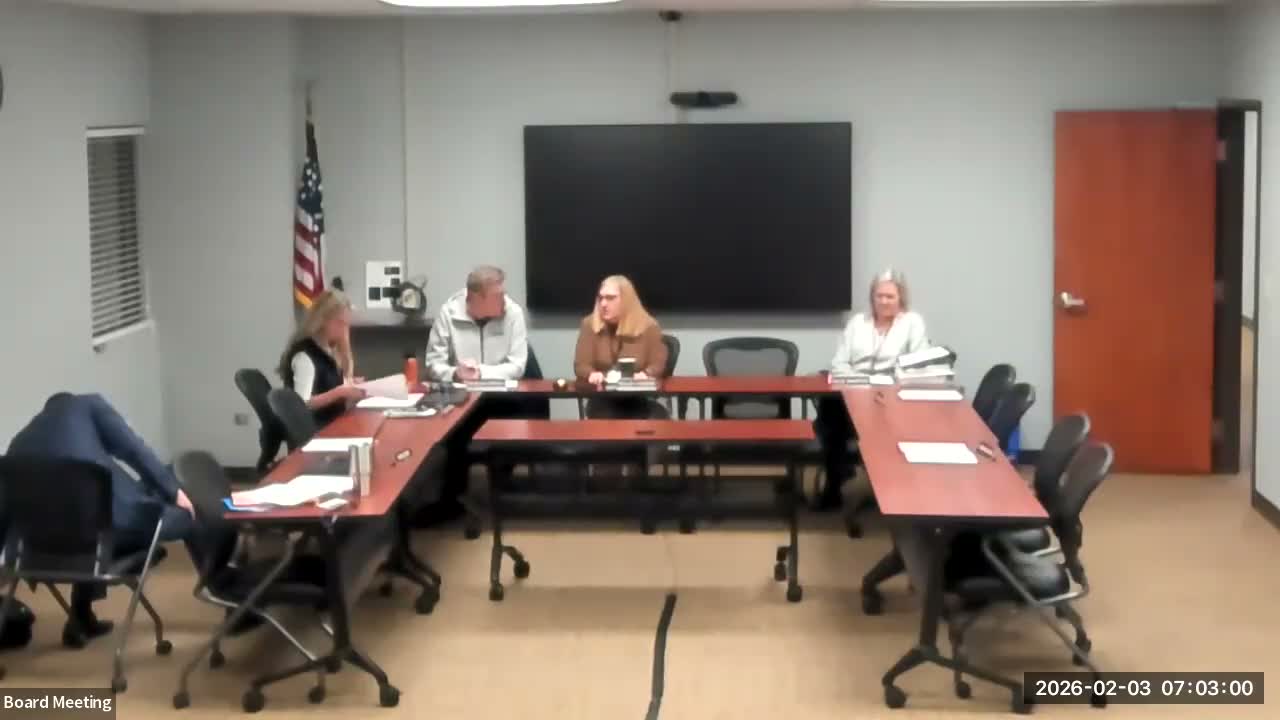
Summary
At a Feb. 3 Lakota Local Board of Education work session, trustees discussed restoring public comment to regular meetings using a Neola template as a legal baseline, debated on-site sign-up and protections for staff, and tasked the policy committee with drafting two implementation options before a formal vote.
Dr. Whiteley opened the Feb. 3 board work session by framing the item as a policy discussion about public comment, not a public-comment session: “So we're not having a public comment, like, session today. We are talking about the idea of public comment through the lens of our existing policies.”
The board reviewed packet materials that included a Neola template described as a legally vetted starting point and a series of historical policy drafts. Several trustees said the committee reached no firm consensus on whether public comment should occur before meetings (a listening session), at the start of the regular meeting, or both. One trustee summarized the committee’s leaning: eliminate the advance paper sign-up and instead allow people to sign up when they arrive while staff verify addresses and eligibility on site.
Why it matters: trustees said the district must balance accessibility and community engagement against legal and operational risks. A board member who served on the policy committee noted extensive litigation in Ohio on public-comment issues and urged caution; another warned that recorded comments that include derogatory statements about staff can damage reputations and open the district to legal challenges. “When derogatory statements about staff appear in recorded minutes, employees’ reputations have taken a hit even if it’s completely invalid,” a trustee said.
Board members proposed a staged approach. Options the policy committee was asked to prepare include (1) keeping public comment before the meeting but moving sign-up into the meeting and vetting eligibility on arrival, and (2) returning public comment to the start of the meeting with procedures to protect students and staff (for example, scheduling community spotlights before public comment so students can leave if necessary). Trustees suggested practical constraints such as time limits (three minutes per speaker), use of digital sign-up to maintain records, and training for presiding officers and staff on consistent enforcement.
Legal context and limits: multiple speakers recommended the Neola template as a defensible baseline because it reflects practices across many Ohio districts and has been reviewed by legal counsel. Trustees also noted conflicting legal guidance from conferences and recent case law; one remarked that “no district has 100% protection,” so any policy change should be phased and, when departing from the template, should receive additional legal review. Members also discussed pending state legislation (referred to as HB 609 in the discussion) and said the board should remain alert to legislative changes that could affect local policy.
Redirection and personnel issues: trustees agreed redirecting personnel complaints to the district’s complaint process or, when appropriate, to an executive session can limit public airing of staff matters. Several members emphasized that recapping public comments for the record (by the superintendent or board president) could capture concerns while reducing verbatim reputational harm, but others cautioned that recaps can misrepresent speakers and themselves create disputes.
Next steps: the board directed the policy committee to draft two concrete implementation options (an iterative, short-term option and a fuller in-meeting option) and return the proposals for full-board consideration and potential vote. Before leaving, the board voted to enter executive session for negotiations under Ohio Revised Code 121.22(g)(4). The meeting reconvened and was adjourned without additional public action recorded.
The discussion laid out practical trade-offs—accessibility, legal exposure, and administrative execution—and set a follow-up process. The policy committee’s two-option recommendation is expected to return for the board’s formal consideration.