
Senators at Senate Committee on Finance Press for Tougher Drug Pricing Reforms, Call for Transparency on Pharma Deals
Get AI-powered insights, summaries, and transcripts
Subscribe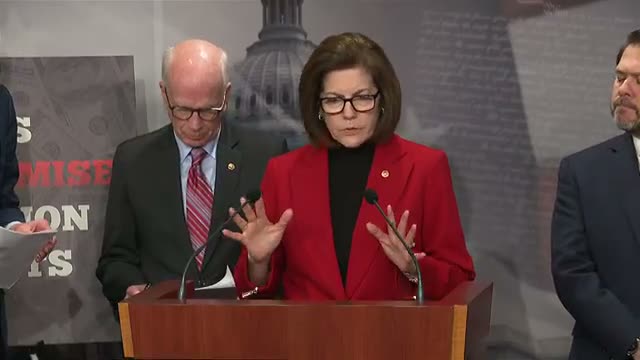
Summary
Senators at the Senate Committee on Finance urged stronger measures to lower prescription drug costs, highlighted newly passed PBM reforms, and criticized the administration's dealings with pharmaceutical companies; they said Medicare negotiation, reference pricing and targeting intermediaries are priorities but reported limited bipartisan buy-in.
At a Senate Committee on Finance event, a group of senators laid out plans to tighten rules on drug prices and said they will pursue additional reforms to ensure savings reach patients.
Unidentified Speaker 3 (Senator, first seen SEG 010) opened by saying that when she speaks with constituents "one of the most important issues I hear is about the high cost of prescription drugs," adding that many Americans are "forced to choose between getting the medication they need, paying their utility bills or putting food on the table." She noted Congress had just passed new pharmacy benefit manager (PBM) transparency measures and framed those reforms as the start of broader work to reduce costs.
The senators emphasized three policy priorities. Unidentified Speaker 1 (Senator, first seen SEG 099) said the Inflation Reduction Act (2022) "brought big pharma to the negotiating table" and called for "supercharging" Medicare's negotiating authority so that negotiated savings lower patients'out-of-pocket costs at the pharmacy. He also vowed to "go after" middlemen and distributors, citing an estimate that roughly $5.4 trillion will be spent on health care this year and that about half flows to intermediaries.
Unidentified Speaker 2 (Senator, first seen SEG 006) urged use of reference pricing and other negotiation tools, saying such approaches are common in other countries and that Republicans have so far failed to enact concrete legislation to match campaign rhetoric. Unidentified Speaker 4 (Senator, first seen SEG 327) shared a constituent case in which a Medicare Advantage enrollee faced a $471 charge for a three-month inhaler supply to underscore the human impact of high retail costs.
On administration policy, speakers accused the current administration of exempting some drugs from negotiation and of meeting with pharmaceutical executives while failing to produce consumer price relief. "They're letting big pharma off the hook," Speaker 3 said (first seen SEG 010). Speaker 1 cited research he said showed "948 drugs saw their price increase faster than inflation" and named Keytruda as an example of a high-sales oncology drug used to illustrate the scope of spending growth.
When asked about next steps, senators said nothing is off the table. In response to a question about whether the PBM legislation would be followed by action on group purchasing organizations (GPOs) or other intermediaries, Speaker 1 said reforming distributors and suppliers is part of a larger agenda and that more items will be pursued while the matter is "fresh in people's minds." Reporter Zack Brennan (Envoy's News) asked whether senators had reviewed Most-Favored-Nation (MFN) deals between companies and the administration; Speaker 1 said inquiries have been made and that they expect to "have something to say about it pretty soon."
No formal votes or amendments were recorded during the session. Senators said they had circulated a "dear colleague" letter describing legislative goals and emphasized a desire to see bipartisan, concrete proposals; several speakers said they have not yet seen a workable bipartisan coalition. The session concluded with senators offering to remain available for questions and follow-up.