
Utah Senate approves slate of bills on school tech, towing, digital evidence and more; resolutions on nuclear and permitting advance
Get AI-powered insights, summaries, and transcripts
Subscribe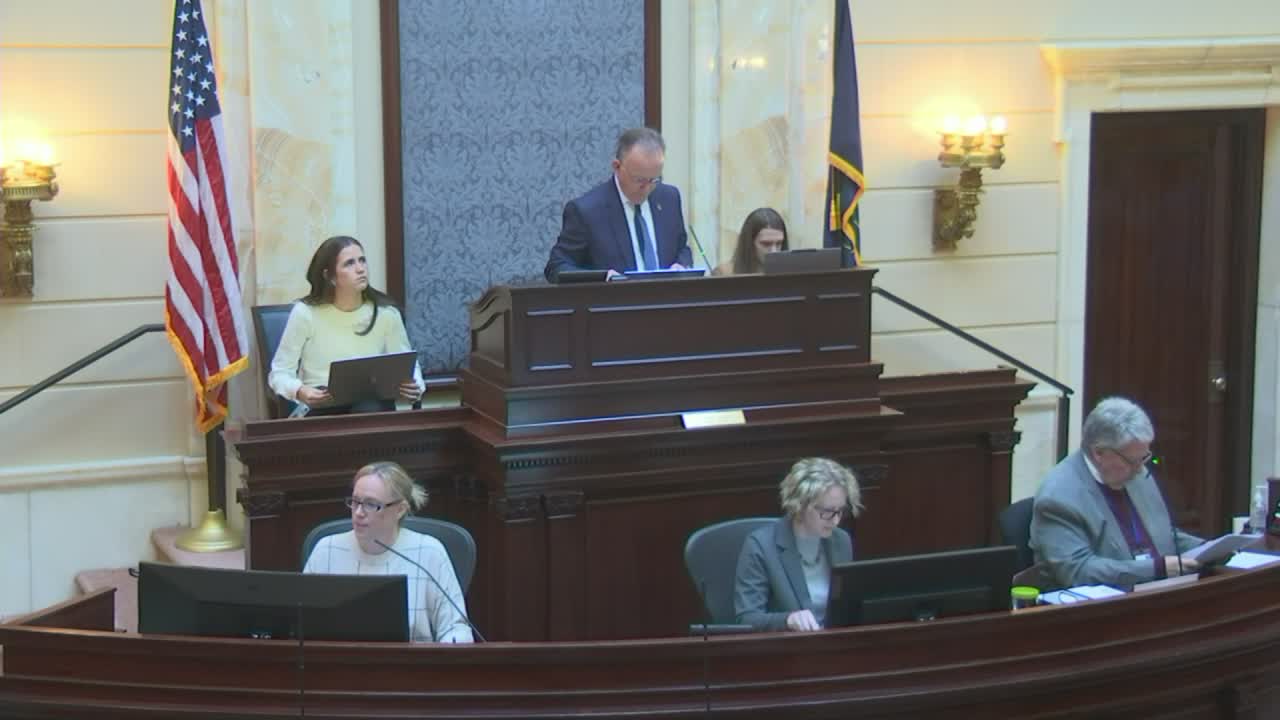
Summary
On day 16 of the 2026 legislative session the Utah Senate passed several bills and concurrent resolutions, including measures on tow-yard regulation, school-technology transparency, digital-evidence processing, investor-education fund carryforward, and health-care platform exemptions; it also adopted two concurrent resolutions on nuclear energy and permitting discussions with federal agencies.
The Utah State Senate passed a series of bills and concurrent resolutions during its day 16 session, advancing measures on public safety, education technology, law-enforcement forensics and energy policy.
Senators approved first substitute Senate Bill 191, tow-yard amendments, which codifies practices used by the Utah Department of Transportation motor carrier division and establishes a mandatory waiting period for a tow operator who removes themselves from the towing rotation to rejoin it. Senator Ibsen moved the bill and the Senate recorded 27 yeas, 0 nays and 2 absent; the bill will be transmitted to the House for consideration.
Senate Bill 88, a bill to require local education agencies to provide parental portals that show what websites students access on school-provided devices and how much screen time they have, passed after debate. Sponsor Senator Fillmore described the measure as a transparency and access bill; Senator Reby opposed the bill on fiscal grounds, calling it an unfunded mandate. The roll call was 21 yeas, 6 nays, 2 absent; the bill will go to the House.
First substitute Senate Bill 19, which the sponsor described as a stakeholder-driven rewrite to reduce backlog at the Regional Computer Forensics Laboratory (RCFL), also passed. Senator Weiler said the bill aims to enable local law-enforcement agencies to perform mobile-device forensics or partner regionally so RCFL resources are preserved for more complex devices. He stressed that the current version removes fees on municipalities; Sen. Reby and Sen. Eby questioned whether shifting responsibilities to local agencies would create unfunded obligations. The measure passed 26 yeas, 1 nay, 2 absent and will be transmitted to the House.
Senate Bill 82, an amendment affecting the securities investor-education, training and enforcement fund administered by the Department of Commerce, was framed by Senator McKell as a commonsense change to allow the department to carry forward $500,000 to $1,000,000 in residual balances so programs are not forced to spend to zero at year-end; the bill passed 28 yeas, 0 nays, 1 absent.
Senate Bill 89, which exempts advanced practice clinicians from duplicative provisions in last year’s health-care services platforms law, passed the Senate and will be sent to the House.
On policy resolutions, the Senate adopted Senate Concurrent Resolution 1, expressing support and intent for Utah to pursue agreements with federal authorities and the Nuclear Regulatory Commission on additional elements of the nuclear fuel cycle; and Senate Concurrent Resolution 4, directing state-federal discussions intended to streamline permitting for oil, gas and mining with the Bureau of Land Management. SCR 1 passed 26–1 with 2 absent; SCR 4 passed 24–3 with 2 absent.
Votes at a glance
- First substitute Senate Bill 191 (Tow-yard amendments): Passed 27–0–2 (yea–nay–absent). Sponsor: Sen. Ibsen. Purpose: codify UDOT towing-rotation practices and waiting period. - Senate Bill 88 (School technology amendments): Passed 21–6–2. Sponsor: Sen. Fillmore. Purpose: require parental portals showing device usage; fiscal concerns raised as unfunded. - First substitute Senate Bill 19 (Digital evidence amendments): Passed 26–1–2. Sponsor: Sen. Weiler. Purpose: decentralize mobile-device forensic access to reduce RCFL backlog; sponsor said no new municipal fees. - Senate Bill 82 (Investor education fund amendments): Passed 28–0–1. Sponsor: Sen. McKell. Purpose: allow $500K–$1M carryforward to avoid year-end spend-downs. - Senate Bill 89 (Health care services platforms amendments): Passed (vote recorded in session). Sponsor: Sen. Fillmore. - Senate Concurrent Resolution 1 (Nuclear energy): Passed 26–1–2. Sponsor: Sen. Owens. - Senate Concurrent Resolution 4 (Permitting for oil, gas, mining): Passed 24–3–2. Sponsor: Sen. Winterton.
What the sponsors said
"This bill codifies rules that the UDOT motor carrier division has put in place over the years," Sen. Ibsen said about the tow-yard bill, describing the statutory language that formalizes a waiting period to re-enter towing rotations. Sen. Fillmore said SB 88 reflects stakeholder requests and a focus on parental access to school-provided technology; Sen. Reby said she supported the policy but opposed the bill because the fiscal note was zero and she considered it an unfunded mandate on local school districts. Sen. Weiler said SB 19 removes a prior municipal fee and uses existing RCFL capacity while enabling local and regional partners to handle many mobile-device extractions.
What’s next
Passed bills and resolutions will be transmitted to the Utah House of Representatives for consideration. Several bills (including SB 135 and SB 110) were 'circled' (held) for further drafting. The Senate recessed until 2 p.m. to continue work later in the day.
Ending note
The Senate’s actions paired several technical regulatory changes with policy measures that may shift responsibilities to local governments; several senators voiced concern about fiscal impacts and the need for implementation detail as bills move to the House.