
Evanston health staff brief committee on communicable disease surveillance and MDRO risks
Get AI-powered insights, summaries, and transcripts
Subscribe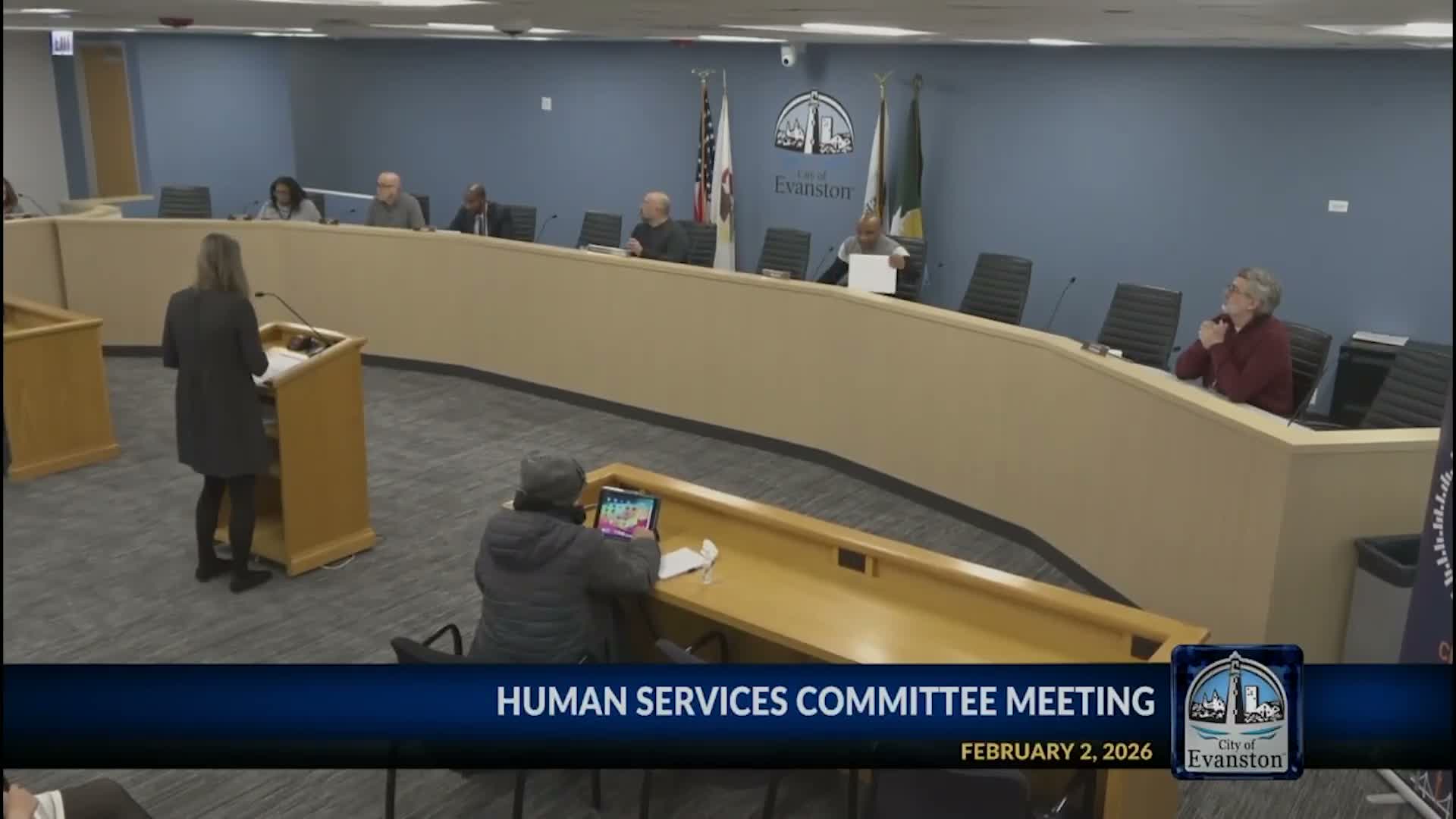
Summary
Evanston's Health and Human Services staff presented a communicable disease report and an overview of multidrug-resistant organisms (MDROs); the committee accepted the report and asked clarifying questions about outbreak definitions and reporting thresholds.
Evanston Health and Human Services staff on Feb. 2 presented the department's communicable-disease surveillance work and warned about the public-health threat posed by multidrug-resistant organisms (MDROs). The committee voted to accept and place the report on file.
Elizabeth Lassiter, senior communicable disease surveillance specialist, described the city's role as a certified local health department, the flow of reportable-condition notifications from providers and laboratories, and how the department applies case definitions set by public-health authorities. Lassiter said the department received more than 1,100 reports of reportable conditions in 2025 but noted that 2025 data were still preliminary.
Dr. Sarah Franks told the committee "MDROs represent one of the most urgent public health threats worldwide at this time," explaining that bacteria and fungi that are resistant to multiple antibiotics and antifungals can spread silently via colonization across hospitals, long-term care facilities and other health settings. Franks described surveillance tools the department uses, including case investigations and point-prevalence surveys, and said those activities help detect hidden spread and direct infection-control measures.
Committee members asked whether changes in outbreak definitions affected recent counts; staff said the state sets many outbreak definitions and thresholds, and those thresholds were adjusted from the pandemic period to be higher for respiratory viruses now that COVID-19 has become more endemic. Staff described point-prevalence surveys (the communicable-disease team has conducted seven since 2022) as a way to snapshot colonization or infection prevalence in facilities.
Following the presentation, the committee took a voice vote to accept and place the communicable-disease and MDRO report on file. Staff advised continued surveillance and partnership with hospitals, long-term care facilities and other public-health agencies.
The committee did not take further action on policy or funding in this meeting.