Panel advances bill to raise and index teacher residency stipends, broaden hiring flexibility
Loading...
Summary
The House committee gave HB30 a do‑pass recommendation after sponsors and education groups said indexing residency stipends to beginning teacher pay and raising amounts for degree‑holders will improve recruitment and retention; witnesses warned funding choices could reduce slots or shift stipends elsewhere.
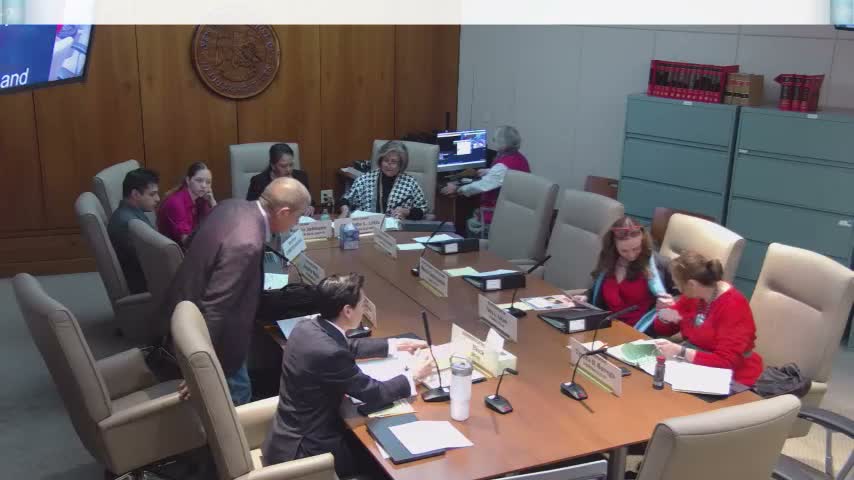
Representative Sarah Nana introduced House Bill 30 on changes to the Teacher Residency Act and the committee advanced the measure with a do‑pass recommendation.
The bill would index residency stipends to a beginning (level 1) teacher salary and raise stipend levels for residents who already hold degrees or alternative licensure. "We're changing it to 65% of a level 1 teacher's pay," the sponsor said, describing the revised stipend framework and arguing residents should be paid at a level that keeps pace with teacher salaries.
Why it matters: Supporters said paid, yearlong residencies — modeled on medical residencies and paired with experienced master teachers — produce better‑prepared educators who stay in classrooms longer. "Residencies really redefine teacher preparation by making sure that we have a model that combines theory and practice throughout a whole year," said Ellen Bernstein, president of the Albuquerque Teachers Federation.
Legislative analysts and supporters said the indexing change would reduce the need for repeated statutory adjustments as beginning teacher pay rises. Annie Armitage of the Legislative Education Study Committee summarized the bill's two central changes: indexing stipends to beginning teacher salary and encouraging teachers who enter through alternative pathways to complete a one‑year residency before accepting full employment.
Committee members asked how the 65 percent figure was chosen and whether the approach would protect stipends from inflation. Witnesses said the figure reflects recommendations from the New Mexico Alliance for Teacher Residencies and that indexing stipends to a beginning teacher salary would cause future stipend increases to track any legislative increases to that salary, but the bill does not separately tie stipends to the consumer price index.
Funding questions: DFA and PED staff told the committee that the current GROW appropriation provides about $20 million a year for clinical practice activities, including residencies and stipends, but that the fund is limited. Staff outlined three options to cover higher stipend costs: fund fewer residents, reduce semester student‑teaching stipends, or use leftover residency dollars now used for related activities. Members noted those tradeoffs could reduce the number of residency slots unless additional appropriations are made.
The committee recorded a do‑pass recommendation on HB30 after a voice vote with no recorded opposition. The bill now moves on through the legislative process for further consideration.
Speakers quoted or referenced: Representative Sarah Nana (sponsor), Ellen Bernstein (Albuquerque Teachers Federation), Annie Armitage (Legislative Education Study Committee).