Get Full Government Meeting Transcripts, Videos, & Alerts Forever!
Get email alerts on the Budget Reserves topic
No spam. Unsubscribe anytime.
Sioux Falls council adopts reserve targets, sets 3% sales-use tax fund cushion
Summary
The Sioux Falls City Council on Dec. 9 adopted a fiscal policy setting a 25–35% general fund available balance goal and a 3% reserve for the sales and use tax fund (roughly $3 million), adding a 10-year general fund forecast and requirements for mayoral justification when reserves are used; the measure passed 4–3 after debate.
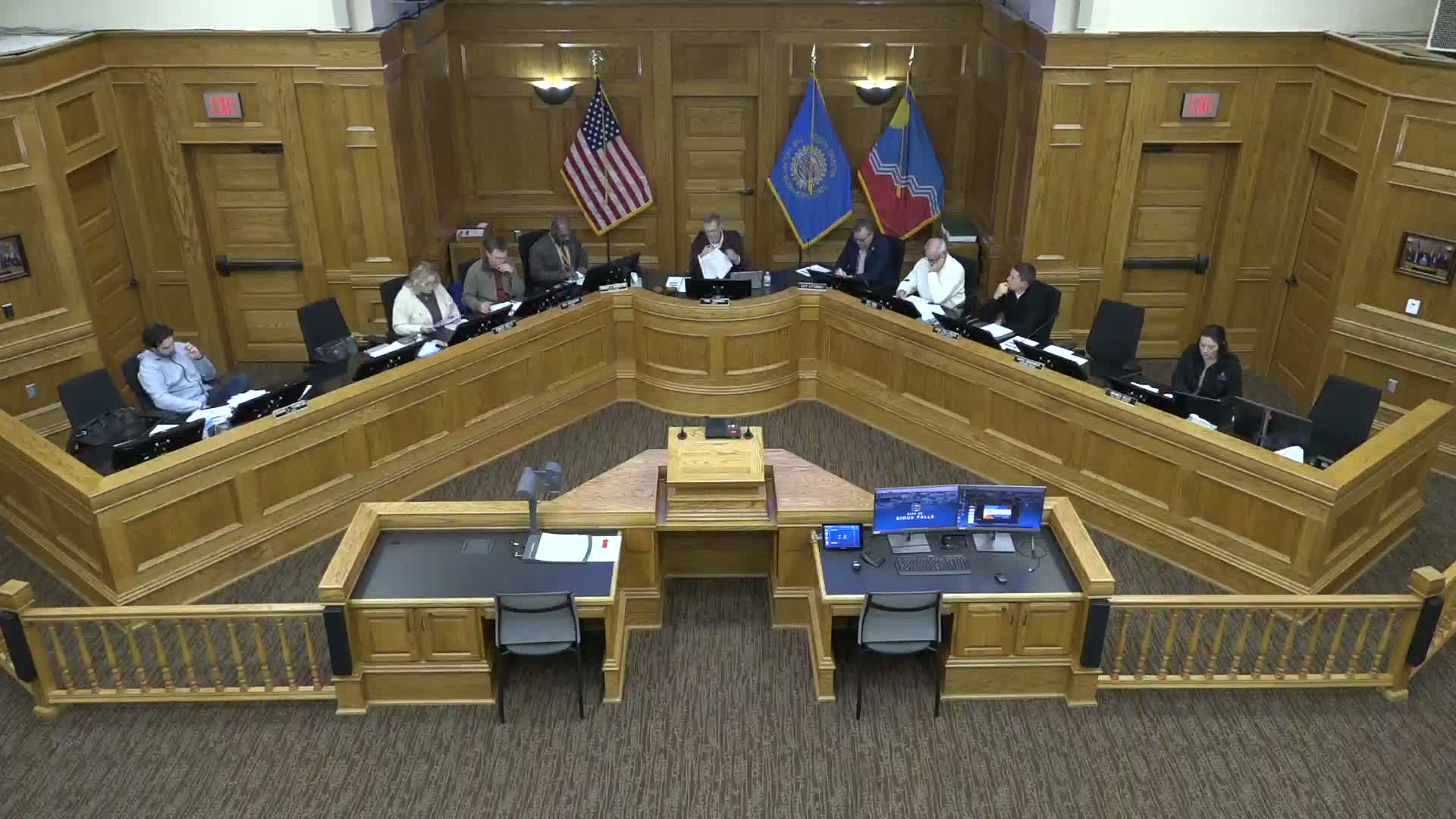
The Sioux Falls City Council voted 4–3 on Dec. 9 to adopt a resolution establishing a 25–35% general fund available balance target, adding a 3% reserve for the sales and use tax fund and requiring a 10‑year general fund forecast and mayoral justification if reserves are used.
Tim Condo of the City Finance Department told the council the recommended minimum general fund reserve is 25%—roughly three months of operating expenses—with a suggested upper benchmark of 35% as a performance indicator. Condo said finance also recommended a new sales and use tax fund reserve equal to 3% of budgeted second‑penny sales tax revenue, which he estimated at about $3,000,000 based on current budgets.
"The 25% is really the minimum reserves," Condo said, adding that the range and the 10‑year forecast are tools to protect services, cash flow and the city’s bond rating. He described the proposal as an update to existing policy the council has amended in previous years (2007, 2009, 2010 and 2017).
During public comment, Tim Stanger asked whether the reserves are invested to earn a return and criticized how the Westside Fitness Center purchase was handled, saying residents were not consulted. "I didn't hear him talk about it. Just curious on if that was a thing," Stanger said of whether reserves are invested.
Council discussion focused on the forecast window, long‑term planning and credit implications. Councilor Barranco asked whether the change would affect future bond ratings; Condo said the policy supports continued strong ratings. Councilor Bassey questioned the utility of a 10‑year forecast given changing leadership over that period and how it complements the five‑year capital improvement program; Condo responded that the forecast is a guidance tool to avoid decisions that could harm long‑term fiscal health.
Councilor Kors announced he would vote no. Kors said he supported the 3% sales/use tax reserve but opposed embedding a 10‑year forecast and a 25–35% range in formal policy because it could constrain deliberations during budget season and shift focus away from challenging revenue projections. Kors said the council’s existing practices had produced a strong fiscal position and cautioned against hardwiring long‑range assumptions into policy.
On roll call the resolution passed 4–3: Barranco — Yes; Bassey — No; McCouris — No; Sigourney — No; Sale — Yes; Spellerberg — Yes; Thomason — Yes.
The resolution also specifies that if the mayor proposes using amounts below the minimum reserve thresholds the mayor must provide a written justification to the council and a plan to restore the reserves. The council adopted the resolution as presented.
What happens next: Council policy will take effect per the resolution and finance staff said they will incorporate the sales/use tax reserve and 10‑year forecast into budget presentations going forward.