Get Full Government Meeting Transcripts, Videos, & Alerts Forever!
Get email alerts on the Prevention Grants topic
No spam. Unsubscribe anytime.
MTSU prevention office reports 880 clients served, plans grant-writing intensive
Summary
Sarah, senior program coordinator with MTSU’s Office of Prevention, Science and Recovery, told a Rutherford County committee the office’s grantees served roughly 880 people in Quarter 1, highlighted large service counts for Interfaith Dental and other partners, and said an intensive grant-writing workshop for applicants will be held ahead of the state’s Dec. 13 deadline.
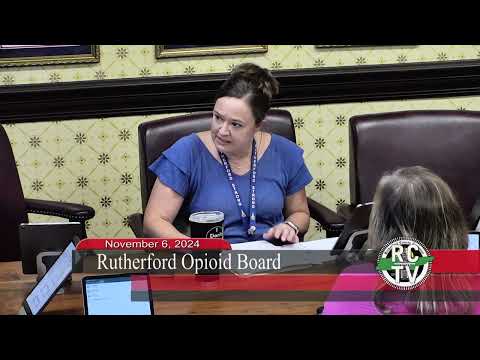
Sarah, senior program coordinator with the Middle Tennessee State University Office of Prevention, Science and Recovery, presented preliminary Quarter 1 results to a Rutherford County committee, reporting that the office’s grantees served approximately 880 individuals across multiple projects and that data visualizations from the office’s data team will be available next month.
"I've got some preliminary reports to share on our quarter 1 grantees," Sarah said, adding that the grants team expects a visualization that will summarize service counts and demographics. She also announced she is now the office’s senior program coordinator and will be the committee’s primary point of contact.
The presentation outlined service and demographic breakdowns: an approximate 60/40 female-to-male split, roughly 10% of services for children, substantial counts in the 36–46 age band, and a notable 65-plus population receiving services. Sarah flagged data-quality issues: about 200 service records lacked ZIP codes and will require follow-up with grantees to clarify whether those cases represent people without a permanent residence.
Sarah highlighted several grantee results. Child Advocacy served 89 people (42 adults and 47 children), with the adults participating in a structured home-visit program; staff reported 24 adults meeting case-management goals and showing reduced substance use. Interfaith Dental served 622 clients; 31 received work-ready dental services, and the organization completed substance-use disorder and opioid-use-disorder training for staff. PC4S reported about 15 new households and roughly 22 referrals for wraparound services, and eight adults completing a caregiver-strain index all reported decreases in household strain.
On grant administration, Sarah urged prospective applicants to prepare drafts for a working, in-person grant-writing intensive: "Bring your laptop, bring a friend, bring your data," she said. The state’s Cycle 2 application window was reported to open Nov. 12 and close Dec. 13; MTSU will host an intensive, invite-focused workshop for current grantees with limited seating for additional agencies and will coordinate with UT Smart on statewide training resources.
Members and Sarah discussed the status of a partially funded applicant, Kamari House. Sarah said Kamari House was previously approved for 50% of its request and is approaching a full drawdown; the committee directed staff to require a full application and an outcomes presentation documenting results before releasing remaining funds, with that presentation expected at the December meeting.
Sarah and members also described outreach to surrounding counties and collaboration with UT Smart and other statewide partners to share best practices and increase awareness of grant opportunities. A representative from Murfreesboro described the city’s co-responder program and the Community Investment Trust’s nonprofit funding efforts and offered continued coordination to avoid duplicative funding.
The presentation is set to continue with more complete data at the committee’s next meeting, when MTSU’s data science team will provide a visual summary of grantee impacts.