
Wausau seeks DNR response on biosolids class A designation as permit is finalized
Get AI-powered insights, summaries, and transcripts
Subscribe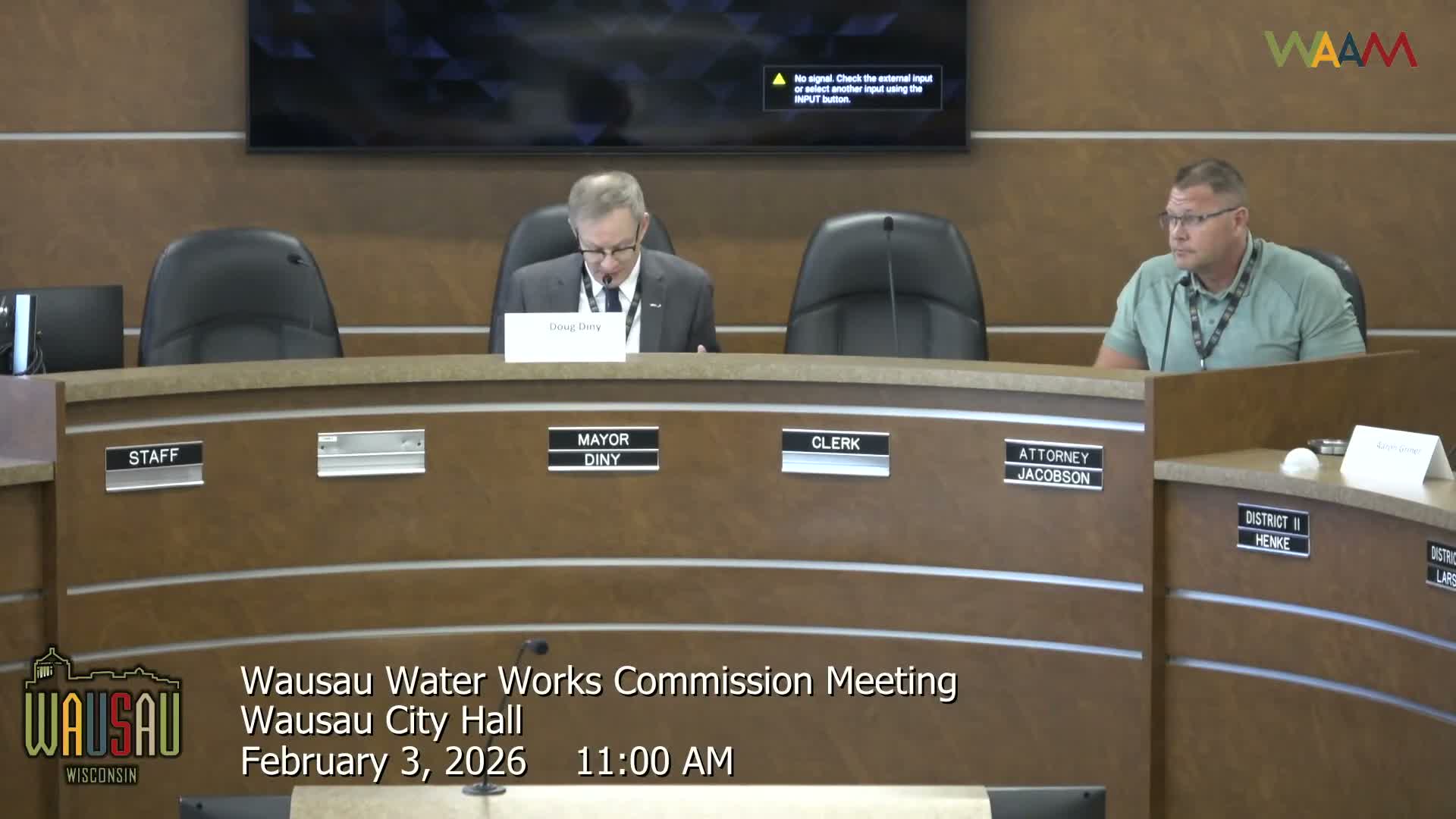
Summary
City staff told commissioners Feb. 3 that a final wastewater permit is pending while the DNR has not yet approved a class A biosolids designation because of a backlog apparently tied to a single reviewer; staff submitted comments and asked for a timeline and said they would escalate with legal and agency contacts.
In a wastewater permit update, staff reported the public comment period closed Dec. 22 and that the city submitted formal comments to the Wisconsin DNR seeking permit clarifications, including requested sampling frequency and biosolids designation. Ben told the commission he submitted the city's comments to DNR staff (Angela Parkhurst) and asked the DNR to retain once-per-week e.coli monitoring rather than increasing to twice weekly.
Ben described a separate but consequential problem: the city has not yet received a final class A biosolids designation for its sludge because the DNR's biosolids coordinator has not completed reviews. "The hold up all along has been with the biosolids coordinator department," Ben said, and he characterized the situation as a single-person backlog affecting multiple utilities. Commissioners expressed frustration; Forrest called the situation "dereliction of duty" and asked whether legal or legislative avenues could help. Ben said other utilities had taken legal action without success and that staff have already reached out internally and to DNR leadership.
The permit submittal also raised an operational testing question: DNR had proposed twice-weekly e.coli sampling, but Ben argued the city's expired permit required sampling once a week and that the city had data and sludge management plans supporting the city's request. He said the city has been performing additional testing as a safeguard despite the lack of final approval and that DNR already has the utility's trending data and sludge management plan.
Commissioners directed staff to keep the item on future agendas and to pursue additional outreach, including asking the city's legal department to send formal correspondence. Ben agreed to reach out to Angela Parkhurst and to provide an update at the next commission meeting.
The most immediate outcome was procedural: staff will continue to press the DNR for a timeline, document ongoing testing and management practices, and report back to the commission at the next scheduled meeting.