CMSD presents "Building Brighter Futures" plan to council committee, says consolidation will save about $30 million a year
Loading...
Summary
Cleveland Metropolitan School District CEO Dr. Warren Morgan told a City Council committee that the board-approved Building Brighter Futures plan will consolidate schools (reducing operations from 61 preK–8 to 45 and 27 high schools to 14), expand program access for most students and save roughly $30 million annually while the district completes implementation planning and community engagement.
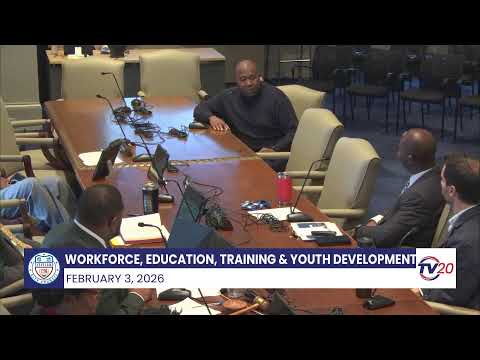
Dr. Warren Morgan, CEO of the Cleveland Metropolitan School District, laid out the history, reasons and expected outcomes of the board-approved Building Brighter Futures plan at a Feb. 3 public hearing before the City Council’s Workforce Education, Training and Youth Development Committee.
Morgan said the plan responds to long-term enrollment declines, building-condition problems and the expiration of federal pandemic dollars. He told council the district has room for roughly 50,000 students in its existing facilities while current enrollment is far lower, and that birth-rate declines—not only transfers to charters—have driven the drop in pupil numbers. "36% is not okay," Morgan said, referencing the district’s measure of college-and-career readiness added to the state report card.
The district described the final, board‑approved recommendations: reduce the number of operating preK–8 schools from 61 to 45 and the number of traditional high schools from 27 to 14. Morgan said some campuses with multiple schools will be consolidated and specialty programs (arts, Montessori, IB, single‑gender models) will be preserved where possible; he cited the planned merger of Dyke School of the Arts with Mound School of the Arts as an example.
Morgan said the plan is intended to expand or preserve opportunities for impacted students: 100% of students from schools ending instruction would have equal or expanded academic or extracurricular opportunities, 96% would attend a school with an equal-or-higher star rating and 95% would be in a school of equal or better condition, assuming families choose their assigned “welcoming” school. He said the plan will produce recurring operating savings of at least $30,000,000 annually; combined with an immediate $5,000,000 cut already taken, Morgan said the measures represent roughly $35,000,000 in recurring savings.
On enrollment and choice timelines, Morgan said the district opened its Choice portal on Jan. 5 and reported about 4,000 completed selections so far. He said the district is tracking roughly 5,000 students identified as impacted and nearly 3,000 eighth‑grade applicants who must pick high schools; the district set a Feb. 27 deadline for choices to aid fall staffing. To support families, the district assigned 33 school‑choice navigators to affected schools and is conducting outreach with the city’s communications office and principals.
Transportation rules will not change, Morgan said: students who live 1–3 miles from school remain eligible for district transportation, under‑1‑mile students must walk, and districtwide specialty transportation will continue. As a transitional accommodation, students from impacted schools who live beyond 3 miles will receive transportation for two school years (the 2627 and 2728 school years), Morgan said.
Morgan described implementation as a multi‑phase process that included broad community engagement (regional meetings, virtual forums, school staffings and town halls). He said Phase 3—implementation planning for staffing, programming and facilities—is the hardest part and will require central‑office budgeting decisions after the Feb. 27 enrollment window closes.
On finance, Morgan noted recent credit upgrades and said the district improved its cash position by approximately $196,000,000 through recent fiscal measures. He described state reporting and budget presentations that will track savings and program investments publicly; he said the board inserted accountability measures into the Building Brighter Futures approval and that budget updates will be presented to the board in February and later in May and August.
Morgan and his team emphasized supports for students with disabilities and English-language learners: by law receiving/welcoming schools must provide required IEP accommodations and multilingual supports, and the district’s special-education and multilingual departments are tracking placements and family communications.
The presentation ended with Morgan seeking council and community partnership on reuse planning for closed facilities and on safety and transition work.
Looking ahead, the district committed to provide council with requested data and to offer regular updates on implementation and budget tracking. The hearing included lengthy council questioning and public comment focused on neighborhood impacts, building reuse and program continuity.