
Board hears budget preview showing roughly $12.1 million gap; AIB response and root‑cause analysis underway
Get AI-powered insights, summaries, and transcripts
Subscribe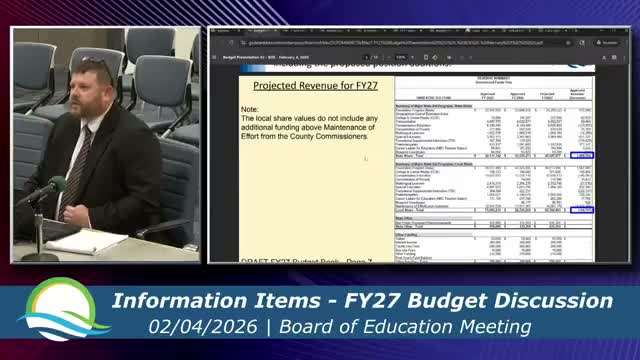
Summary
CFO Rob Watkins presented the FY27 draft budget and state aid estimates, which left a projected $12.06 million shortfall; interim assistant superintendent reported district work on AIB‑requested root‑cause analyses for low proficiency areas.
The Queen Anne's County Board of Education received a budget update showing projected revenues and proposed expense increases for fiscal year 2027 that together produce a projected deficit of about $12.06 million.
Rob Watkins, interim chief financial officer, said the draft budget combines state aid estimates with proposed district requests and raises the district’s request from roughly $127.5 million to about $141 million. The district estimates a $1.48 million increase in state aid but still projects a net shortfall that would require additional funding from county commissioners or other adjustments to balance the budget.
Watkins said the bulk of proposed increases are for salaries, fixed charges and staffing and that 83% of the budget is devoted to personnel costs. The draft budget includes 37 position requests and program improvements; the administration labeled some items as potentially deferrable if balancing is required.
Separately, interim assistant superintendent Jennifer Schreckengost updated the board on the district’s response to a December AIB notice that cited low third‑grade ELA and fifth‑grade math performance and minimum school funding concerns. The district said it has conducted district‑level and school‑level root‑cause analyses with principals and specialists, submitted a draft to the AIB for early feedback, and will deliver a more defined action plan by April 1. Administrators acknowledged the additional monitoring and reporting burden on school staff and described steps to use specialists and calendar time to support implementation.
Next steps: the board scheduled further budget work sessions and said it would consider feedback from the county commissioners and the public as it refines FY27 proposals.