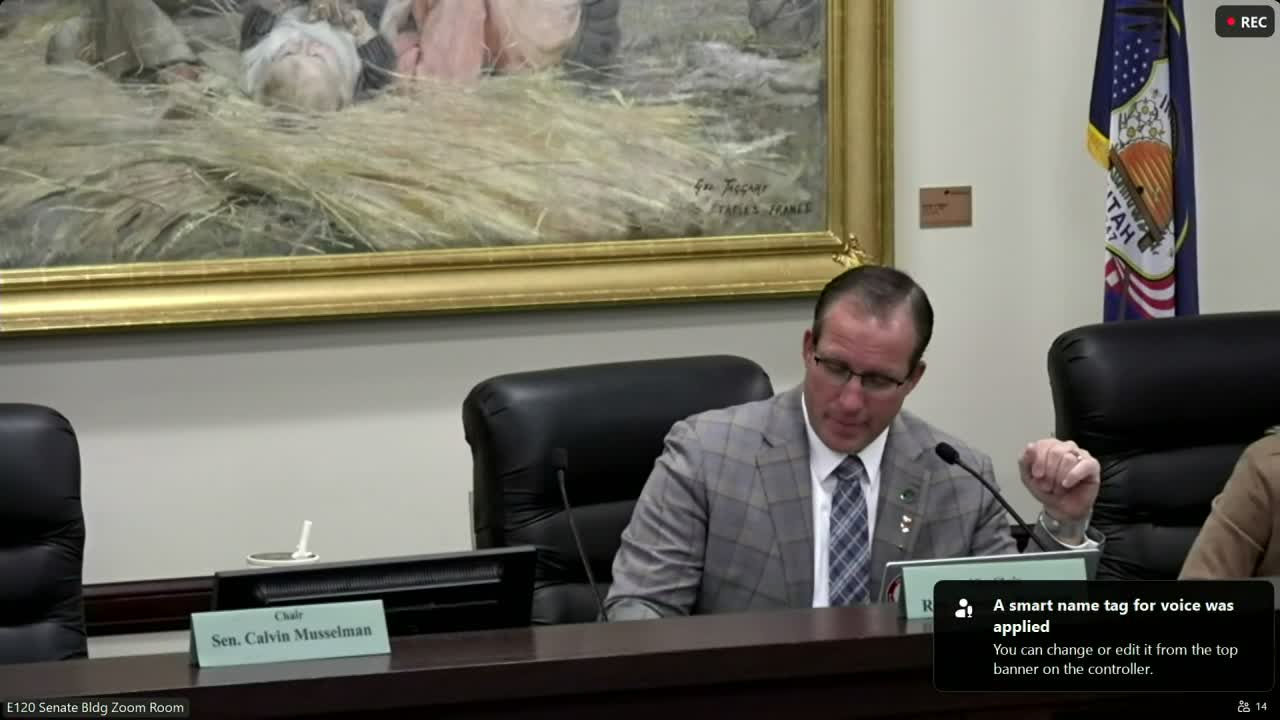
Senate president updates committee on first‑time homebuyer loan program, cites prior SB 240
Loading...
Summary
Senate President Adams told the subcommittee the 2023 program authorized under 'Senate Bill 240' has helped nearly 3,000 families buy first homes using repayable loans of up to $20,000; he described a new appropriation request in the presentation to expand the program.
Senate President Adams presented an update on the Legislature’s first‑time homebuyers assistance program, saying the 2023 measure (identified in the presentation as “Senate Bill 240”) allocated $50,000,000 and enabled first‑time buyers to use up to $20,000 per home as a repayable loan for down payments, rate buydowns, closing costs or other purchase needs. “Housing affordability continues to be probably the number 1 item for our citizens,” Adams said, and he described the program as “wildly successful,” saying it has helped nearly 3,000 families buy their first home.
Adams told the committee the program was limited to new homes and that increasing new construction has helped moderate rental prices by increasing supply. He referred to an additional appropriation during his remarks (the presentation text stated a “$10,000 appropriation”); committee materials provided during the meeting did not clarify whether that figure was intended as $10,000, $10,000,000 or another amount.
A representative from the Utah Housing Corporation, identified in the presentation as Dave Dampkins, described the authority as the state’s housing finance agency and emphasized the program’s public–private delivery: “This is not a government program per se,” he said, noting the program’s administration relies on partnerships with lenders, banks and credit unions and offering the housing corporation’s continued support if the Legislature chooses to continue funding.
No formal action or vote on the program was taken at the hearing; presenters answered committee questions and then the subcommittee moved on to other RFAs. The next steps are for chairs and staff to compile voting packets and bring funding recommendations back at the subcommittee’s scheduled voting meeting.