
Committee hears bill to add wireline facilities to critical‑infrastructure law, stiffen penalties for copper theft
Get AI-powered insights, summaries, and transcripts
Sign Up Free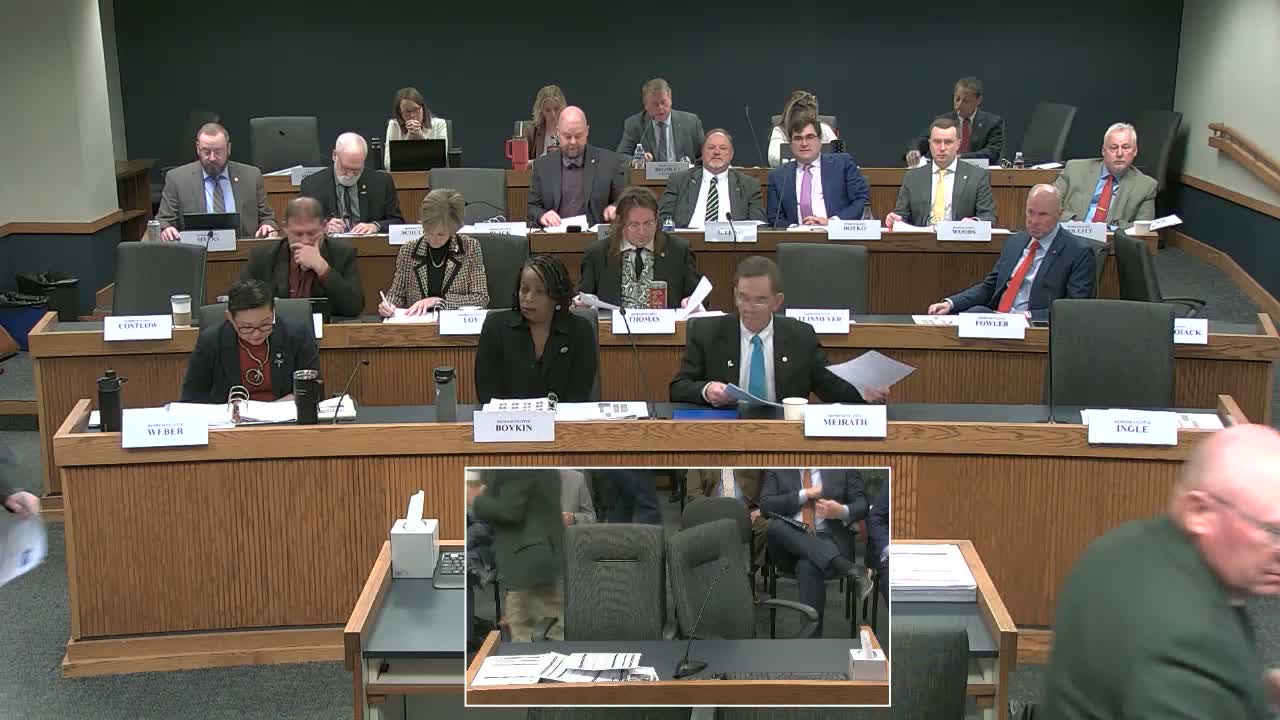
Summary
Representative John Simmons presented HB2383 to add wireline communications and related equipment to Missouri's critical‑infrastructure statutes and to increase penalties for willful damage, theft and unauthorized possession of copper and related materials; utility and telecom witnesses urged adoption.
Representative John Simmons (Dist. 109) opened a separate hearing on House Bill 2,383, which would add wireline communication facilities and related components to the state's critical‑infrastructure statute and tighten penalties for willful damage and unauthorized possession of copper, fiber and similar materials. Simmons outlined graduated penalties tied to monetary damage thresholds and to whether service was interrupted: damages under $750 are described as a class A misdemeanor in the draft; damages between $750 and $25,000 are set out as a class E felony; amounts over $25,000 would be a class D felony; and where damage impairs or degrades service the offense can rise to class C, according to the sponsor's presentation.
Industry witnesses testified in support. Doug Galloway (AT&T) told the committee that copper theft is a growing problem in Missouri, that AT&T spent "over $2,000,000 as a result of the copper theft" last year and that thefts have led to serious service interruptions, including cases that affected 911 and other public‑safety operations. Other witnesses — including municipal leagues, electric cooperatives, broadband providers and Missouri American Water — described theft incidents, service outages, and the public‑safety and economic effects in both urban and rural areas. Supporters argued stronger statutory tools would help prosecutors build cases and deter theft and recycling of stolen materials.
Committee members raised concerns about the value thresholds that could convert relatively small acts of vandalism into felony records and sought clarification about exemptions (for contractors, homeowners and legacy wiring). The sponsor and witnesses said the bill contains exemptions and relies on existing statutes that help determine value, and they suggested drafting clarifying language where needed.
The committee took no final vote on HB2383 during the hearing and closed the record after several industry witnesses testified in favor; sponsors and stakeholders were encouraged to refine statutory language and exemptions before a potential committee vote.