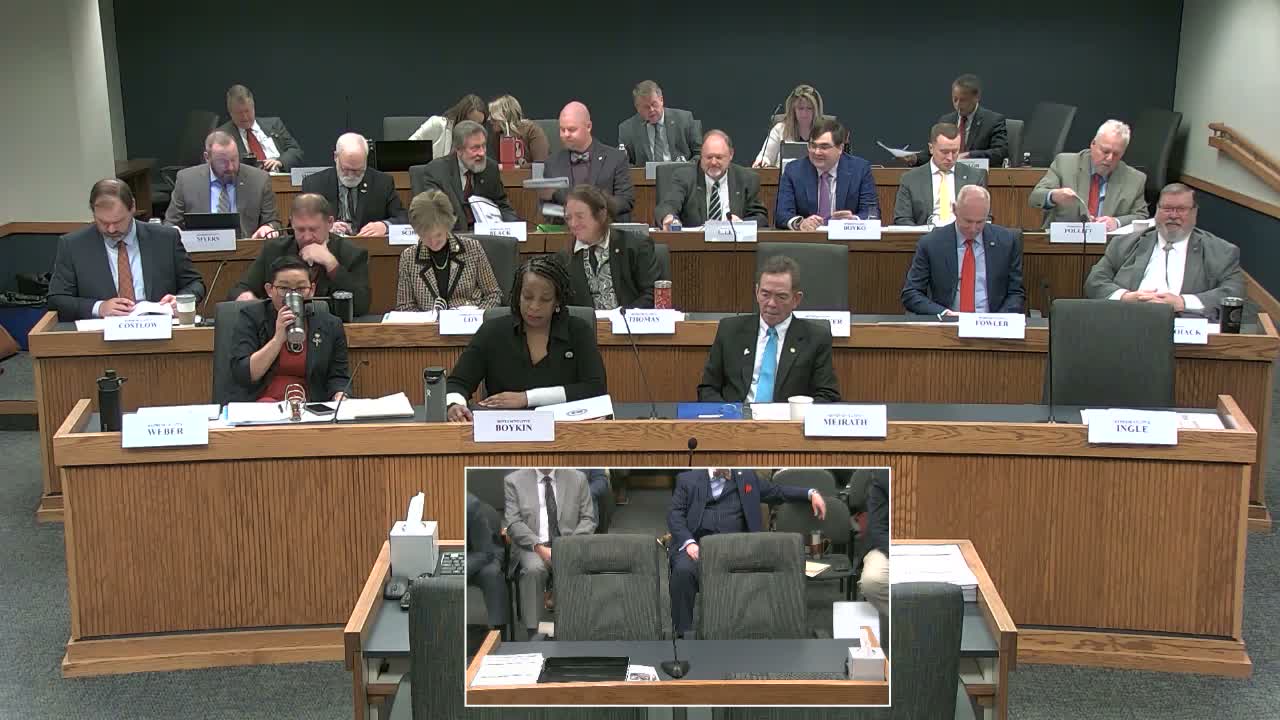
Missouri Utilities Committee hears combined anti‑spoofing and no‑call bills; carriers urge federal coordination
Loading...
Summary
Sponsors combined four bills (HB2147, HB2472, HB2546, HB2658) to extend no‑call protections to business lines, require STIR/SHAKEN authentication for VoIP, create civil remedies and graduated fines, and in one bill add criminal penalties; carriers warned against conflicting state rules with federal law.
The House Committee on Utilities held a combined public hearing on four bills aimed at reducing unwanted robocalls and call‑ID spoofing and at extending no‑call protections beyond residential numbers. Representative Koslow, who led the presentation, said the package "attempt[s] to address two different things: bolstering a no‑call registry as well as implementing some anti‑spoofing measures." He told the committee the bills would extend state no‑call protections to business lines, remove certain exceptions (including some appointment‑setter and donation solicitation loopholes), and require carriers to consult the federal reassigned‑numbers database when making outreach decisions.
Koslow also described an anti‑spoofing framework that would require STIR/SHAKEN authentication for VoIP traffic and create civil recovery for victims; two bills include graduated civil fines ("First offense is 25,000. Second offense is 50,000. Third offense is 75,000.") and HB2658 additionally includes criminal penalties for spoofing used to defraud (misdemeanor classes stated in the sponsor's presentation).
Representatives of major wireless carriers and the industry trade group urged coordination with federal authorities and warned against inconsistent state rules. Patrick Fusick of T‑Mobile, summarizing CTIA's submitted testimony, said carriers "support protecting consumers from unwanted calls and texts," but cautioned that "we have great concerns over the creation of a conflicting state telemarketing automated call laws that do not conform with federal regulations" and urged the committee to avoid a patchwork of differing state requirements. Scott Swain (Verizon) and Jeremy Keter (AT&T) echoed those points and cited the federal Telephone Consumer Protection Act and the STIR/SHAKEN protocols as part of the existing enforcement and technical landscape.
Committee members asked about enforcement, whether texts or political fundraising messages would be swept in, the treatment of prank calls and minors, and whether shifting protections to include business numbers would raise preemption issues; sponsors repeatedly said the measures will rely on carrier cooperation and the attorney general's office and proposed drafting a consolidated substitute bill that reconciles the four approaches. Support testimony from banks, chambers of commerce and municipal groups focused on fraud losses to elderly and business customers and urged stronger remedies and prosecutorial tools.
Chairman Brumley closed the hearing by urging sponsors and stakeholders to meet and produce a workable substitute for committee consideration.