Committee adopts changes to ambulance payment rules to align reimbursement with emergency care
Loading...
Summary
The House Business, Labor and Commerce Committee adopted and passed HB 269, which includes medication costs in the ambulance base rate, allows a limited annual Bureau of EMS adjustment tied to the medical CPI, and preserves prohibitions on balance billing; stakeholders including insurers and EMS chiefs supported the measure.
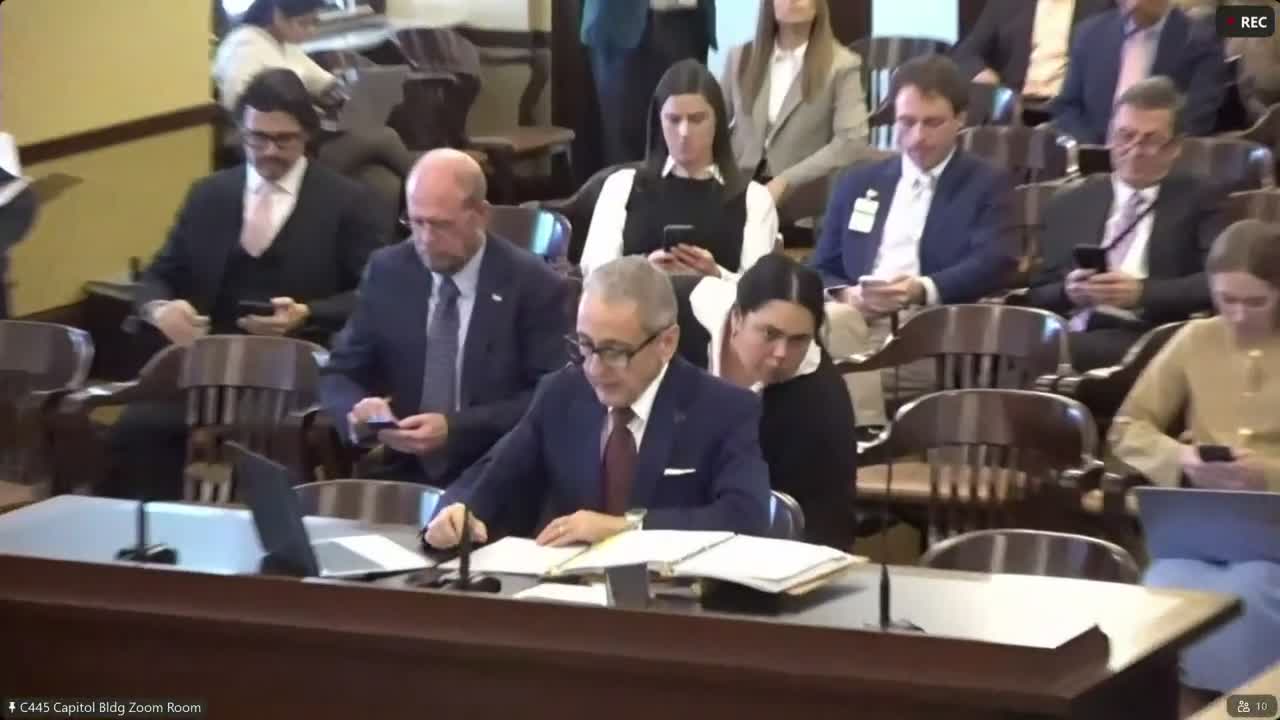
Representative Malloy presented House Bill 269 as a measure to "ensure Utah's ambulance providers are paid accurately and predictably for the care they already provide," saying the bill "aligns payment rules with how emergency medical care is actually delivered" and includes medication costs in the base rate.
The bill authorizes the Bureau of EMS to adjust the base rate once per year tied to the medical consumer price index to provide modest, predictable updates. Malloy said the bill "removes unnecessary statutory instability" and preserves existing patient protections, including the prohibition on balance billing, while not creating new taxes or appropriations.
During committee questioning Representative Dunnigan asked about the fiscal note. The sponsor identified components cited in the fiscal note: federal funds of $702,600, a general-fund amount of about $202,000, and a Medicaid portion of $41,300. (The transcript’s total figure was not stated clearly in a single undisputed line; the committee discussion focused on the listed line items.)
Multiple stakeholders testified in support. Kim Frost of Regence Blue Cross Blue Shield thanked the sponsor and described a collaborative stakeholder process. Mike Matthew (formerly Ogden City fire chief; representing Gold Cross) and Clint Smith (Draper City Fire Chief; speaking for the Utah State Fire Chiefs Association) urged support, as did Ben Armstrong of the Rural EMS Directors Association of Utah.
Representative Burton moved to adopt the second substitute and to pass the bill; the committee adopted the substitute and then passed HB 269 favorably by voice vote. The sponsor closed by thanking stakeholders and saying the bill was the result of cross-sector collaboration.
Next steps: The bill was recommended favorably out of committee and will proceed according to the legislative schedule.