
Resident urges city to probe high dioxin findings on Thomas Street; DNR to require further work in Area A
Get AI-powered insights, summaries, and transcripts
Sign Up Free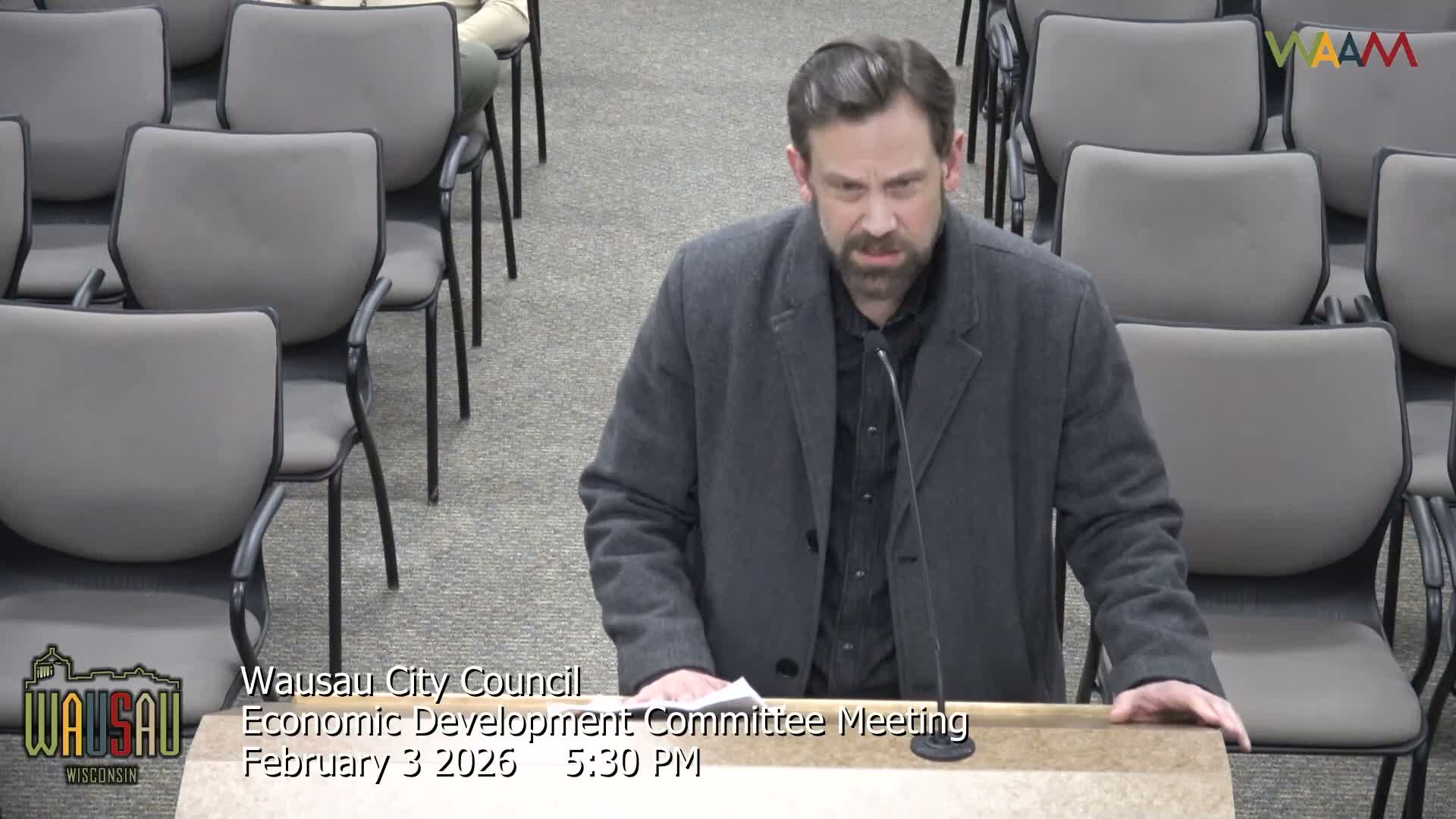
Summary
A resident cited Ramboll soil results showing high dioxin TEQ in deep samples and asked the committee to seek a TEQ calculation for groundwater; city staff said the DNR found Areas B–D need no further action but Area A requires additional investigation and cleanup planning.
Tom Killian, a Wausau resident, told the Economic Development Committee on Feb. 3 that Ramboll’s environmental report for the Thomas Street corridor identified two deep soil samples (referred to as TS SB3 and SB4) with "exceptionally high dioxin TEQ levels, in the parts per billion." He urged the city to confirm whether those levels reflect contamination from groundwater and whether contaminated groundwater has infiltrated the city sanitary sewer and the Wisconsin River sediments.
"Because the groundwater has been infiltrating into the sewer and going into the river in the neighborhood," Killian said, "it'll allow you as policymakers to know what's going into the sewer and our communities river." He asked the city’s contracted reviewer, Ramboll, and DNR to calculate the toxic equivalency (TEQ) value for groundwater so the committee could better understand environmental risk.
City staff told the committee the Wisconsin Department of Natural Resources has completed its review of Ramboll's report. Staff said testing on city-owned parcels east of Emter Street (Areas B, C and D) showed either no contamination above regulatory limits or only very minor, isolated findings not impacting groundwater, and that no further action is required for those parcels. By contrast, staff said Area A (west of Emter Street) will require additional investigation and cleanup planning and that the DNR will send responsible‑party letters outlining the city's responsibilities under state law.
Alder Killian, who said she had been informed of the results and received a copy, said about six parcels in Area A will need further investigation and urged comprehensive remediation for the neighborhood.
Staff said they expect the DNR to present a phase‑2 summary at the committee's next meeting, providing an opportunity for members to ask technical questions. The committee did not take formal action on remediation at this meeting.
What happens next: DNR presentation at a future meeting and responsible‑party letters to the city; Ramboll and DNR were asked (by a resident) to calculate groundwater TEQ values for the committee's consideration.