
Senators and representatives outline 2026 priorities for Chaska: school safety, bonding and immigration bills
Get AI-powered insights, summaries, and transcripts
Subscribe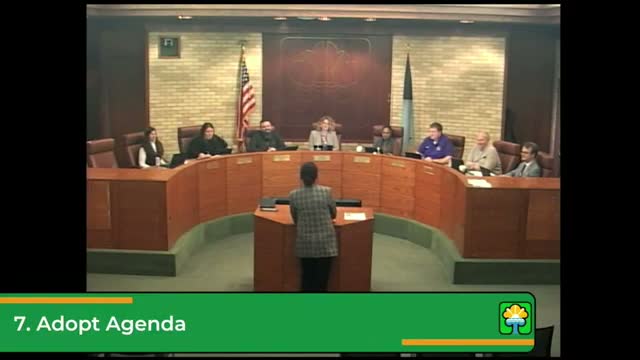
Summary
Senator Coleman and Representative Ring briefed the City of Chaska council on 2026 priorities including school-safety measures, bonding requests for local projects, regulation of high-powered e‑mopeds and proposed state responses to Operation Metro Surge.
Senator Coleman and Representative Ring visited the City of Chaska council Feb. 2, 2026, to outline legislative priorities they said will shape the upcoming session. Coleman, who said she serves as the Republican lead on education, emphasized school safety and early-grade literacy; Ring highlighted competing bonding requests and several bills aimed at clarifying vehicle rules and addressing community impacts tied to recent federal immigration enforcement operations.
Coleman told the council "the big focus is going to be on safe schools," citing concerns that some teachers report students bringing weapons, gang activity and limited local discipline tools. She said improving third-grade reading proficiency remains a priority, noting that more than half of students statewide are not reading at grade level by third grade. Coleman also described a bipartisan push to tighten oversight of public dollars and reduce fraud, including a proposal she said would require a site visit before dispersing certain funds.
Ring described a difficult capital year: she said Governor Walz recommended a $907 million bonding package while approximately $2.7 billion in requests have been submitted, meaning most projects will not be funded. Ring identified Chaska’s utility‑extension and redevelopment requests (including work around City Square West) as local priorities she is tracking and said a TIF extension could be an alternative financing tool if bonding capacity is limited.
On transportation and public safety, Ring said she is working on legislation to clarify the legal distinction between lower-powered eBikes and higher-powered eMotos, arguing the latter should be regulated like motorcycles because of safety risks. "Motors are a lot more dangerous than e bikes," she said. Ring also outlined a set of bills she and others plan to introduce related to Operation Metro Surge: requiring identification for federal agents operating in communities, restricting evictions tied to enforcement actions, allowing civil suits for certain federal civil-rights violations, and limiting state–federal collaboration that might violate residents’ rights. Ring urged local listening sessions to gather residents’ experiences and cautioned that some neighbors are afraid to report incidents.
Council members thanked the legislators, asked for updates on TIF drafting and social-district legislation, and discussed coordination on Southwest Transit and local bonding priorities. Both guests encouraged residents to use their office channels — newsletters, office hours and social media — to stay informed.
The visit closed with council members and staff expressing appreciation; no formal council action was taken on the legislative items during the meeting. The council’s next regular meeting is scheduled for Feb. 23, 2026.