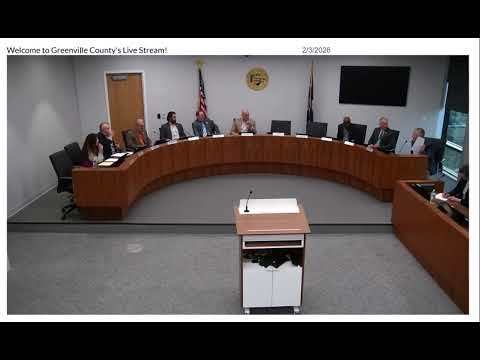
Greenville County councilors debate executive session, motion to exclude county attorney fails
Loading...
Summary
At a Greenville County Council Committee of the Whole meeting, Councilor Shaw requested an executive-session discussion about pending litigation and an employment matter. Councilors debated whether the county attorney should remain; a motion to meet in executive session without the county attorney failed and the item was left for future calendaring.
At a Greenville County Council Committee of the Whole meeting, Councilor Shaw asked the committee to enter executive session to discuss pending litigation and an employment matter, prompting a prolonged debate over whether the county attorney should remain in the room.
Shaw said he wanted to "gather some information" related to the county's litigation and that the discussion would help counsel "make educated decisions about litigation." He asked that the conversation initially be limited to counsel only or for the committee to hold a private fact-gathering session.
Several councilors said the county attorney should remain to advise on Freedom of Information Act (FOIA) boundaries and to prevent disclosure of matters that must be kept confidential. The county attorney warned that the agenda listed only an employment matter and cautioned that discussing unrelated litigation in the wrong forum could create exposure, saying, "The only thing noticed on the agenda is an employment matter. So I can only assume that the discussion will concern my employment or termination." He added that straying from noticed topics could lead to legal fees or other consequences.
Councilor Tripp objected to the idea of excluding counsel, arguing that "if allegations are raised the attorney should be there to hear what your allegations are" and to allow any person or employee a chance to answer. Councilor Fanning and others urged a short, attorney-guided session to clarify facts and quiet circulating rumors.
Counsel and councilors discussed the proper statutory basis for an executive session. One councilor cited Title 4, section 34-80 (notice of meetings of public bodies) and FOIA exception No. 2 (discussion of settlement of legal claims or the public agency's position in adversarial situations) as the likely authority for a closed discussion of litigation strategy.
Speaker 7 moved to "enter executive session pursuant to the FOIA rules number 2, with no one present but madam clerk," specifying the subject as settlement of legal claims or the public agency’s position in adversarial situations. Several councilors urged voting no on a motion that would exclude the county attorney; others said an outside counsel could be brought in if necessary.
After a roll-call process and further debate, the motion to go into executive session without the county attorney failed. No vote tallies by name were recorded in the transcript; the motion was announced as failed by the chair. Councilors discussed returning the matter to the next appropriate calendar — the Committee on Administration and Legal (CAL) was mentioned — so the item can be noticed properly and legal representation arranged as needed.
The meeting concluded without a substantive executive-session discussion on the floor item. The committee adjourned after a motion to end the meeting passed by voice vote.