Get Full Government Meeting Transcripts, Videos, & Alerts Forever!
Get email alerts on the Redevelopment topic
No spam. Unsubscribe anytime.
Quantum says garage foundation is underway at Beltway Plaza but residential financing still unresolved
Summary
Quantum Corporation told the Greenbelt City Council its team has started foundation and grading work for a permitted parking garage while financing for the first residential building — estimated at more than $100 million — remains unsettled; Quantum said mall leasing is stable but larger anchor spaces are hard to fill nationwide.
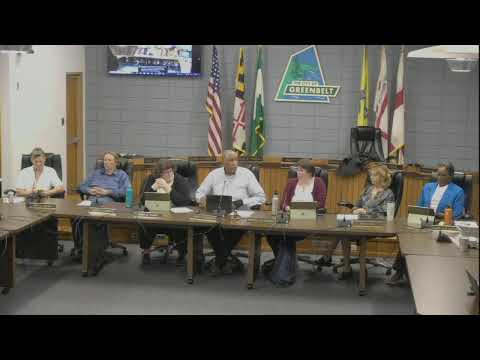
Quantum Corporation representatives updated the Greenbelt City Council on the long-planned redevelopment of Beltway Plaza on Thursday, saying they have begun the permitted foundation and grading work for a parking garage while continuing to seek financing for the residential portion of the project.
Kenny Wine, who introduced himself as "Vice President of Operations," told the council he joined Quantum about six months ago and is focused on tenant success. Quantum said grading for the garage began around July 4 and that concrete work on the garage foundation started "around Sept. 1," and that the company is using its own funds to advance that portion while pursuing a residential developer and construction financing.
Why it matters: The company framed the garage as a way to spur broader development. Quantum said the first residential building is large — more than $100 million to construct — and that financing market conditions have delayed the next phase. Company representatives said they hope to use the garage work to demonstrate momentum that will attract residential financing and developers.
What was approved and what will change: Quantum said a previously approved plan includes three residential buildings and one hotel in the rear of the site, and that the mall in front would largely remain in place during phased redevelopment. As part of the long-range concept, Quantum estimated a reduced retail footprint compared with today’s layout (a rough estimate offered by a company representative put remaining retail at about 700,000 square feet compared with the existing larger footprint).
Timeline and phasing: Quantum told the council the immediate work is the permitted garage and related foundation, with ring-road relocation and temporary access designed so the current road remains open as much as possible. The company estimated the first building would take roughly two years to construct once financing is secured. Quantum described the back portion redevelopment as a multi-year process that could unfold over seven to 10 years for later phases.
Retail and tenants: Quantum reported the mall is "pretty full" except for two large spaces (a big-lot store of about 40,000 sq ft and a former TJ Maxx of about 25,000 sq ft). The company said smaller storefront leasing has been steady and that the mall has a strong base of small local tenants; it described the property as a "community center" more than a traditional mall and emphasized ongoing merchant outreach.
Community commitments and programming: Council members thanked Quantum for community offerings hosted at Beltway Plaza, including an upstairs art and engagement space and a new workforce center. Quantum acknowledged the late CAP (Capistain) as a longtime community bridge and pledged to continue community programming such as job fairs and the Labor Day parade. Quantum also said it agreed to dedicate a former large sports-authority building to the city as part of future work.
Accessibility, biking and EV charging: Council members urged near-term improvements such as bike racks and pedestrian-friendly connections. Quantum agreed to refresh bike racks and said it had committed to adding EV charging as part of the residential redevelopment; the company also said short-term EV installations are complicated because many vendors want 30-year commitments, which conflicts with future redevelopment plans.
Housing affordability and seniors: Quantum said the first residential building will include elevators and required ADA-accessible units and that the company agreed to fund a market study (a condition tied to permits) to assess whether there is viable demand for types of housing such as senior or cooperative units. The company said it would "market" any feasible alternative housing product identified by that study but did not commit to an explicit senior-housing component in the first building.
Infrastructure and utilities: Quantum asked the city for help pressuring the Washington Suburban Sanitary Commission (WSSC) to replace an aging water main that serves the mall corridor and that the company said breaks "two to three times a year," disrupting shops and creating sediment and safety concerns.
Concerns from council and residents: Council members pressed Quantum on short-term mall improvements and overall phasing. Rodney Roberts expressed strong opposition to the scale of apartment development discussed in earlier plans and questioned city service impacts, saying the density could strain schools and public safety. Quantum countered that the initial residential product typically attracts tenants less likely to require additional schools and that on balance the tax revenue could benefit the city.
What comes next: Quantum said it will continue merchant outreach and provide more regular communications with the council and staff; detailed site-plan work for future phases will return to the city for review and the company said it will not substantially alter the approved detailed site plan without further discussion and approvals.