Get Full Government Meeting Transcripts, Videos, & Alerts Forever!
Get email alerts on the Government Transparency topic
No spam. Unsubscribe anytime.
Commission debate focuses on scope and First Amendment risk in proposed county social media policy
Summary
County attorney told commissioners the proposed social media terms-of-use is intended to set uniform standards and is "constitutionally valid," but several commissioners raised concerns about vague language allowing removal or 'discontinuing access' and whether that could lead to improper blocking of members of the public; staff agreed to clarify wording.
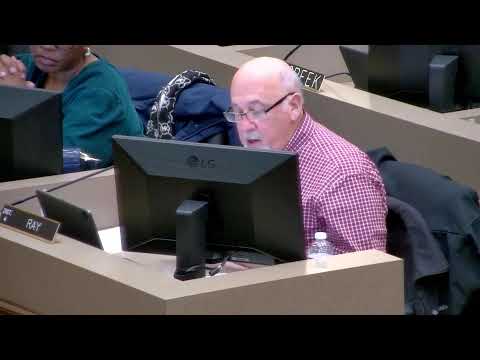
Montgomery County's proposed uniform social media consumer terms of use drew sustained discussion on Feb. 2 as commissioners pressed legal staff to clarify how the county could remove content or block users without infringing constitutional rights.
Commissioner Shelton said the draft language was too broad and could allow removal or permanent blocking of users for opinions the county 'may disagree with.' County Attorney Tim Harvey responded that the policy does not authorize arbitrary removal; rather, the document identifies categories of content that may be removed from official county social media — examples he read included threats, defamatory comments, obscene content and material that promotes illegal activity. Harvey told the board the policy "is constitutionally valid" but warned that much turns on how the policy is implemented in individual cases.
Several commissioners asked for specific clarifications: whether the policy applies to county-run official pages (it does) versus independent or personal pages maintained by officials (it does not), whether "discontinuing access" refers to a post or a user, and whether department web pages without comment fields are covered. Commissioner Bill asked whether discontinuing access targets employees or public users; Harvey said the policy covers public users and that employees have a somewhat different standard. Commissioner Knight referenced a court precedent mentioned during discussion (transcript reference 'Lintke versus Fried') when drawing the legal distinction between an entity-run page and an individual official's personal page.
Harvey said the policy lists detailed grounds for content removal and a 30-day rule for pruning old comment threads; he acknowledged the 30-day figure is arbitrary and said it was chosen to reduce indefinite comment threads, not to target any particular speaker. Commissioners suggested updating platform names and tightening wording about blocking versus removing posts. Harvey agreed to review flagged language and to work with commissioners on clarifying edits before final adoption.
The transcript does not record a final vote on resolution 26-5; commissioners moved 26-5 from the consent agenda for discussion but accepted that additional edits would be appropriate prior to implementation.
Key clarifying points discussed at the meeting: the policy distinguishes county-run official sites from personal sites maintained by elected officials; removal authority is limited to categories listed in the draft policy (threats, libel, obscenity, harassment, etc.); implementation decisions may prompt judicial review if a member of the public challenges a removal or block.