Get Full Government Meeting Transcripts, Videos, & Alerts Forever!
Get email alerts on the Transportation Safety topic
No spam. Unsubscribe anytime.
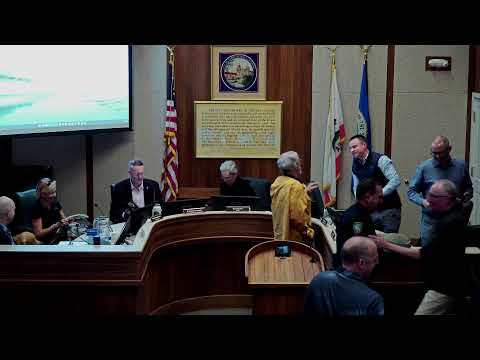
Carmel council reviews AB 413 daylighting results and debate over lowering downtown speeds; no study ordered
Summary
Police Chief reported early evidence that AB 413 daylighting has affected crash patterns downtown and recommended a traffic engineering study for speed limits and parking; council members and public offered competing views on safety, parking loss and enforcement, and the council asked staff for more data and enforcement rather than commissioning an immediate study.
The Carmel-by-the-Sea Police Chief updated the City Council on AB 413 daylighting implementation and the prospect of lowering downtown speed limits. The chief summarized collision data since daylighting began and described the law’s parking restrictions: "Daylighting...a person shall not stop, park, or leave standing any vehicle...20 feet from an approach of any marked or unmarked crosswalk or within 15 feet of any crosswalk where a curb extension is present," the chief said, reading the statute-language guidance included in the staff report.
The chief reported variable results in 2025 crash data, saying collisions remain concentrated on Ocean Avenue and increased on Mission at certain intersections; he cautioned the dataset is still small and the results are “helpful but too early” to conclude full effectiveness. The chief recommended considering a traffic engineering study to evaluate options including a 15-mph downtown core and changes to parking striping; he estimated engineering work could start around "$15,000 and up depending on what we ask of them." The chief also emphasized enforcement as part of any strategy.
Council members and residents offered contrasting perspectives. Several public commenters said daylighting had reduced green parking and harmed downtown businesses; Fred Kern urged the council to revisit the Walker parking study and to address sight-line problems at corners such as 8th and San Carlos. "If we actually followed the law to the letter, we would probably lose...200 spots," one speaker said, urging the council to seek practical adjustments to avoid harming local merchants. Other commenters and council members emphasized pedestrian safety and supported giving the policy more time to work.
During council discussion, members differed on next steps. Some favored a one-year wait for additional crash and enforcement data and greater enforcement of yellow (loading) zones to restore turnover. Others said targeted engineering analysis or a low-cost consultation could clarify whether lowering certain speed limits (for example, a 15-mph downtown core or 20-mph residential blanket) would be enforceable and effective. The chief said he found no examples of California cities that had legally shortened the statutory 20-foot daylighting distance; staff described how a traffic engineering study would be required if the city seeks to deviate from statutory distances or to set enforceable speed limits below posted defaults.
No ordinance or resolution was adopted. The council directed staff to gather additional data, increase enforcement of loading/yellow zones, refer specific problem intersections to the Traffic Safety Commission for review, and return with more information before deciding whether to retain a traffic engineer for a full study.
What comes next: chief and staff will pursue stepped enforcement and return with updated collision and enforcement data; the council indicated potential future consideration of a traffic study if additional data or a clear policy goal justifies the expense.