Get Full Government Meeting Transcripts, Videos, & Alerts Forever!
Get email alerts on the State Legislation topic
No spam. Unsubscribe anytime.
County liaison outlines funding uncertainty, school 'blueprint' gap and major bills
Summary
Pam Meister told Carroll County commissioners the legislative session is unusually fluid: the federal continuing resolution eased an immediate lapse, but the state budget and changes to school ‘‘Blueprint2019'' funding could leave Carroll with millions in local shortfalls; several high-profile bills remain in flux.
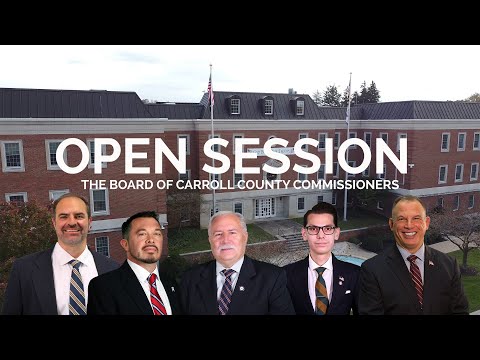
Pam Meister, the county's legislative liaison, told the Carroll County Board of Commissioners on March 20 that the state and federal budget picture remains uncertain and that several bills could materially affect local finances.
"This is different than in past years," Meister said of the General Assembly's behavior, urging commissioners to continue advocacy even for measures that have not yet crossed over. She highlighted that while the governor's proposed budget includes some increases, local jurisdictions face potential cost shifts — notably a proposed shift in teacher pension costs and changes tied to the school funding "Blueprint" formula.
Meister said Blueprint is being funded in statute at earlier (2018) levels that no longer reflect inflation or current needs, leaving Carroll County with a county-specific funding gap. She described a range of fiscal pressures: rebasing of the community college funding formula, dual-enrollment waivers that reduce local college revenue, and state proposals that could redistribute tax and pension obligations. "There's an 8 to 12% gap, maybe, depending on the jurisdiction," she said when summarizing analyses shared by MAKO.
Meister reviewed several bills of particular local interest: proposals to expand the sales-and-use tax on some services (a scaled-back version is under discussion), the Housing for Jobs Act (which would set a jobs-to-housing ratio and could trigger state land-use preemption), changes to incarceration-based medication-assisted treatment funding (House Bill 1084 / Senate Bill 942 in Meister's presentation), and a broadly discussed immigration-enforcement bill that would change the state's approach to formal agreements with federal immigration authorities. She noted MAKO's positions where relevant and said Carroll County staff circulated a memo to the county delegation about the Blueprint funding discrepancy.
Meister cautioned that the budget process is driving much of the session's timing and that some bills may be delayed or revived in special sessions. She urged the board to consider letters or testimony on items that could affect local services and financing.
The board did not take formal action on Meister's update but asked staff to continue coordinating with the Carroll County delegation and MAKO and to share any new information with commissioners.
The county legislative packet Meister referenced contains additional bill-by-bill notes and county-specific estimates.