Get Full Government Meeting Transcripts, Videos, & Alerts Forever!
Get email alerts on the Criminal Appeal topic
No spam. Unsubscribe anytime.
Appeals court hears dispute over whether vacated prior conviction prejudiced 2018 trial
Summary
In Commonwealth v. Owen Broadhurst (docket 24P766), defense counsel asked the appeals panel to recognize prejudice from a vacated prior OUI conviction without a new-trial motion, while the Commonwealth said the record is inadequate and such relief should be pursued below.
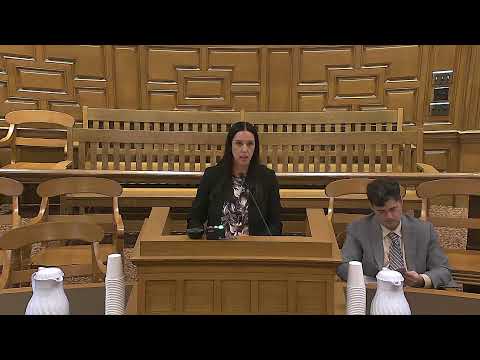
A three-justice appeals panel heard argument in Commonwealth v. Owen Broadhurst over whether a 2018 trial was prejudiced by a prior conviction that was later vacated. Defense counsel told the court the prior OUI conviction left a “conviction hanging over his head” and hamstrung plea negotiations and sentencing, and asked the court to recognize prejudice on direct appeal rather than require a motion for a new trial.
The defense emphasized the force of Hallinan, saying the Supreme Judicial Court established a presumption of egregious government misconduct in certain breath-test cases and argued that, because the prior conviction was vacated while the direct appeal was pending, the appeals court could act immediately. “He went to trial in 2018,” defense counsel told the panel, stressing the lasting practical effects on plea bargaining and sentencing exposure.
The panel repeatedly pressed the defense on preservation and record-building. Chief Justice Amy Blake and Justice William Mead asked why counsel did not move for a new trial in the trial court or seek a stay to develop affidavits and factual support, noting Hallinan relief traditionally arose from 30(b)-type motions. The record shows a resentencing motion was filed in March 2025 but the district court took no action before counsel below withdrew an admission to a second offense, the court noted.
Travis Lynch, arguing for the Commonwealth, said the appeals record is inadequate to establish prejudice and that Hallinan-based claims typically require a fuller factual record developed below. He urged that refunds of fees or resentencing under Martinez remain matters for trial-court motions, not immediate relief on direct appeal. “We don’t have an adequate record to address any of these issues,” Lynch told the panel, pointing to the absence of affidavits or detailed factual findings establishing trial-strategy impacts.
The justices also questioned factual context: the case arose from a motor-vehicle collision in which the victim suffered a concussion and there were children in the car, issues the bench said could affect a prosecutor’s willingness to negotiate. The court took the arguments under advisement.
The appeals court did not rule from the bench; the matter was submitted for decision.