
Committee advances bill to let students seek alternatives to coursework that conflicts with conscience
Get AI-powered insights, summaries, and transcripts
Subscribe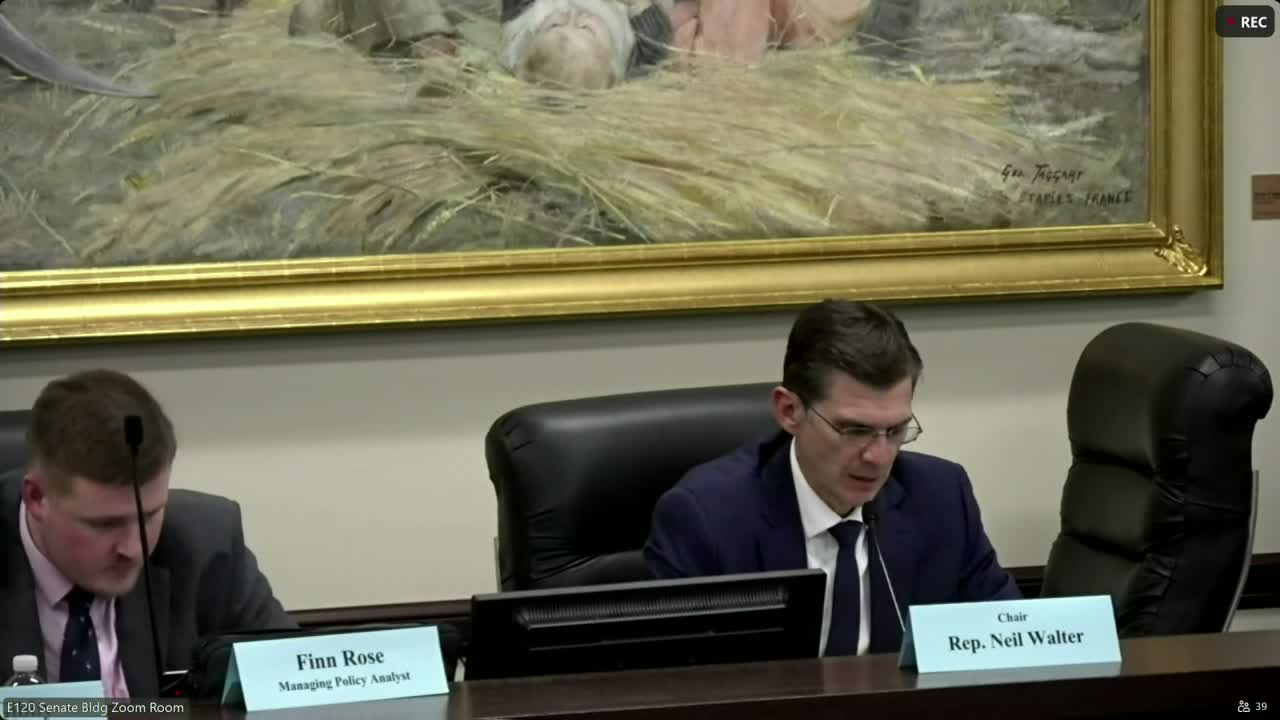
Summary
The House Education Committee approved the first substitute to HB204 by roll call (8–1). Sponsor Representative Peterson and legal expert Robin Fretwell Wilson said the bill protects students at state institutions from compelled speech and allows alternative assignments unless they cause a ‘fundamental alteration’ to required learning outcomes.
Representative Peterson explained HB204 and told the committee the bill aims to give students at state institutions a process to request an alternative assignment when required coursework conflicts with religious belief or conscience. He cited examples such as assignments asking students to advocate to a lawmaker or prepare arguments that would violate an individual's convictions.
Professor Robin Fretwell Wilson, testifying as a law professor and consultant (not speaking for the University of Illinois or the Senate), described the bill as aligning Utah state code with First Amendment protections by limiting compelled speech in classroom assignments at state institutions. She explained HB204 applies only to state institutions because it amends 53A in the Utah Code and includes a ‘‘fundamental alteration’’ standard to prevent accommodations that would change a degree or the essential learning objectives of a course.
Wilson said the bill establishes process protections, including a neutral institutional arbiter and guidance from the Utah System of Higher Education (USHE), with timelines for reasonable notice and different responses for assignments given at the start of a term versus assignments created during the semester.
Public comment was mixed. Supporters included the Sutherland Institute and the Utah Eagle Forum; opposition came from faculty and higher-education representatives including a faculty union representative and professors who raised concerns about vagueness in terms such as conscience and sincerity and potential conflicts with accreditation and required competencies in licensure programs.
After discussion and sponsor assurances about the fundamental-alteration guardrail and institutional process, the committee adopted the first substitute and voted by roll call to favorably recommend HB204 as substituted; the recorded tally was 8 yes, 1 no (Representative Moss opposed). The bill proceeds to the House floor.