
Committee approves narrow pathway allowing medically stable patients to arrange inter‑facility transport
Get AI-powered insights, summaries, and transcripts
Sign Up Free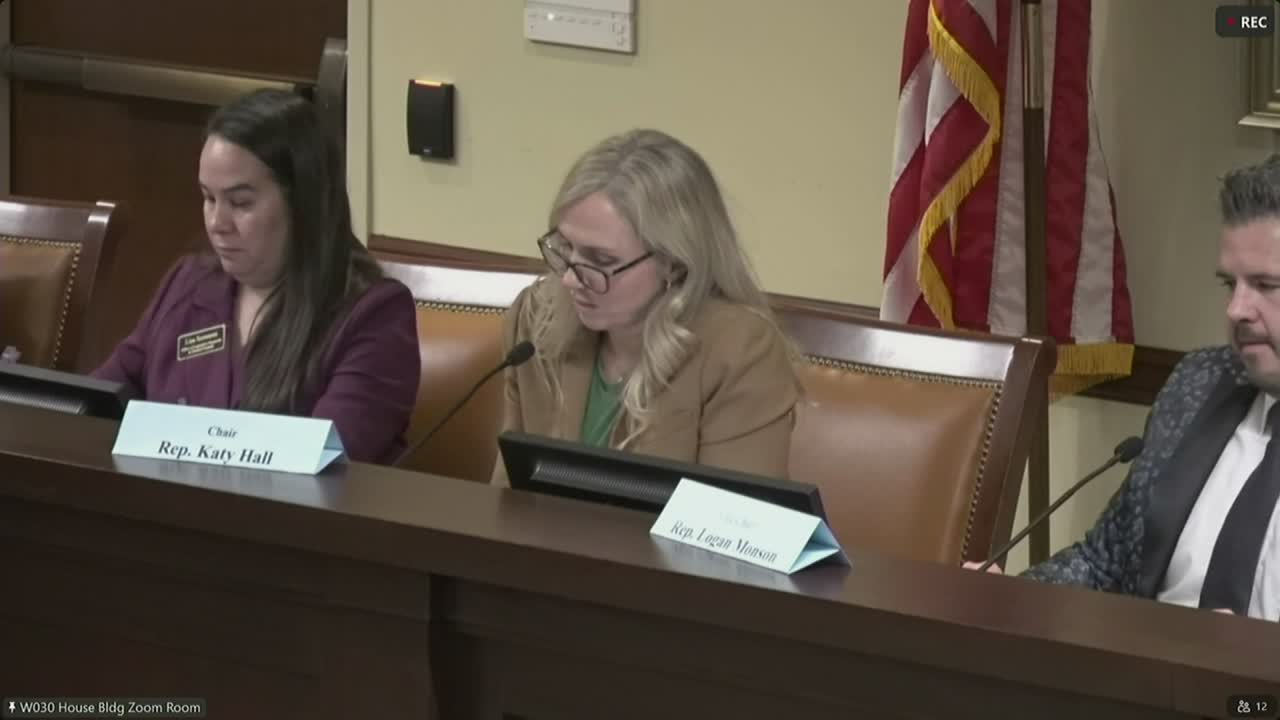
Summary
The committee adopted an amendment clarifying EMTALA carve‑outs and voted to pass HB 417, which permits medically stable patients (with physician approval) to transport themselves between facilities if they arrive within two hours, preserving a held bed.
Representative Hayes presented HB 417, which creates a pathway for medically stable patients to arrange their own transport between facilities when the treating medical team approves. The sponsor said the pathway is narrow and includes a carve‑out to preserve compliance with EMTALA for medically unstable patients.
"Any patient that is covered by EMTALA would not be touched by this bill," Representative Hayes said, adding that the amendment being offered would make the EMTALA carve‑out clearer.
Dave Gessel, executive vice president of the Utah Hospital Association, urged caution and emphasized hospitals' federal obligations under EMTALA, warning of possible enforcement consequences if transfers are not handled correctly. Gessel cited large federal fines for certain EMTALA violations and encouraged the committee to ensure the bill tracks federal obligations and protects hospitals.
Representative Monson and other members asked about the two‑hour arrival requirement, noting rural districts where travel time may exceed two hours; the sponsor said she was willing to work with members on potential geographic exceptions. The bill allows a patient to transport by any means (family member, rideshare, public transit) provided they arrive within two hours so the receiving facility does not lose its bed allocation.
Representative Clancy moved Amendment 1 to clarify EMTALA language. The committee adopted the amendment and later voted to pass HB 417 as amended with a favorable recommendation.
The sponsor said the bill is designed to be a narrow pathway for rare situations to reduce duplicative emergency ambulance transfers and avoid unnecessary costs for patients while preserving facilities' legal obligations.