Legislative committee reviews proposed cuts to contracted education initiatives and statewide technology programs
Loading...
Summary
The Public Education Appropriations Committee reviewed LFA recommendations to reduce or discontinue several contracted education programs for FY2027, including proposed cuts to competency‑based grants and early‑literacy software; USBE largely agreed but warned of staffing impacts and urged phased reviews.
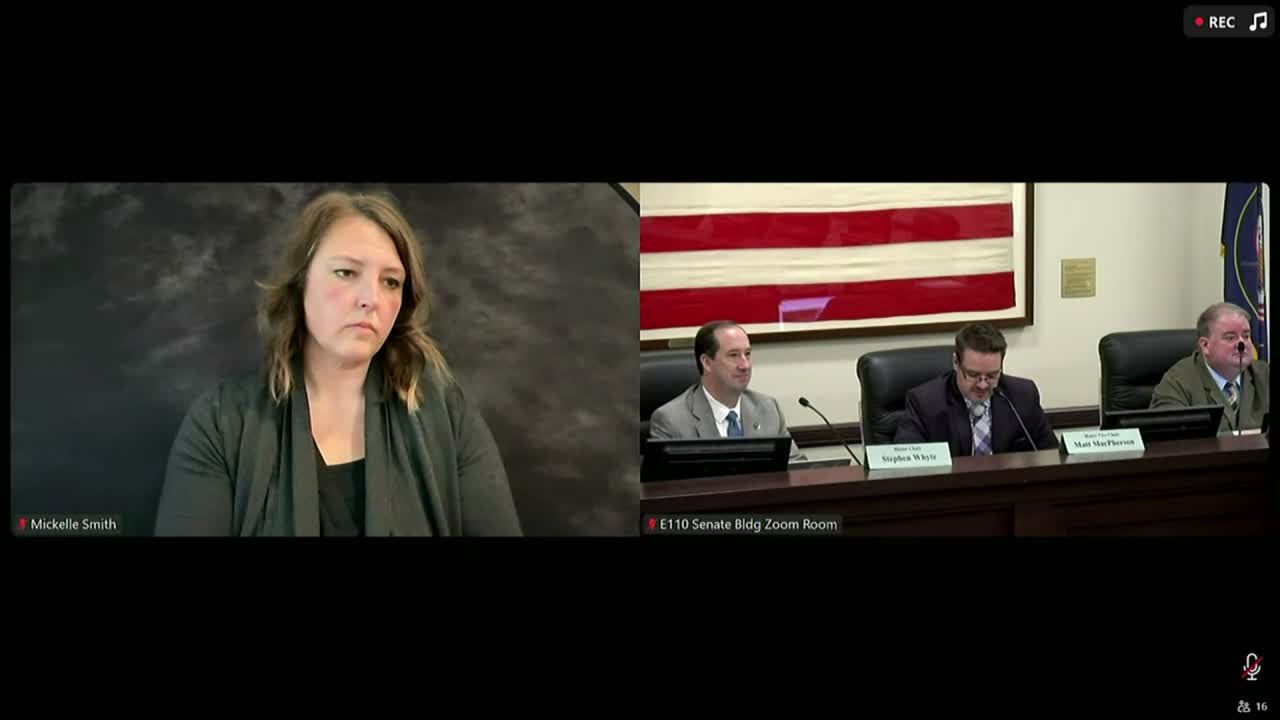
The Public Education Appropriations Committee on the morning of the hearing reviewed proposed reductions to the contracted initiatives and grants line item and the new statewide technology contracts line item for fiscal year 2027.
Kiki Hudson, legislative fiscal staff, told the committee the contracted initiatives and grants line item funds 22 active programs with a FY2027 funding base of approximately $40,300,000 and recommended multiple reductions. The largest ongoing reduction in that line item is the discontinuation of the Competency‑Based Education Grants program, an ongoing cut of $2,093,100, which LFA said is no longer essential because similar online and supplemental education options are available to local education agencies (LEAs). Hudson also recommended a one‑time reduction of $87,400 from a completed Innovation in Civics Education pilot, citing remaining balances.
Hudson described the statewide technology contracts line item (created during the 2025 interim to improve clarity) with a FY2027 appropriation of $22,900,000 and outlined specific LFA recommendations there: a $100,000 ongoing reduction for Elementary Reading Assessment software to better align appropriations with expenditures, a $500,000 ongoing reduction to discontinue the IT Academy, and a $10,753,300 ongoing reduction to close the software licenses for early literacy program. The LFA also recommended one‑time adjustments to K–12 computer science initiatives to align funding with recent surpluses.
Matt Hymas, chair of the Utah State Board of Education, and Scott Jones, USBE deputy superintendent of operations, generally agreed with the fiscal analyst’s findings but urged caution. Hymas and Jones noted the board submitted two plans earlier in the process and proposed mostly time‑limited reductions under plan 2 to allow additional review. Jones highlighted that some eliminations would result in the loss of up to one FTE at USBE and emphasized timing and contracting reasons for non‑lapsed balances: contracts can be encumbered but not fully spent in the first year of services, creating carryforward balances.
Committee members pressed staff on fidelity and usage data for literacy software, the size and cause of non‑lapsed balances, and whether LEA perspectives had been solicited. Representative Moss asked whether teachers evaluate vendors and how local decisions factor into statewide procurement; staff replied that programs are opt‑in for LEAs, with wide variation in adoption and usage across districts.
The discussion also touched on the IT Academy, where the LFA and subcommittee found the program’s current curriculum and certificates had drifted from the program’s original RFA intent (initially Microsoft Office certifications). Committee members asked how much of the $500,000 ongoing IT Academy line involved an Adobe partnership; staff confirmed Adobe contracts are part of the program’s vendor blend but said the IT Academy is multi‑vendor and the board would need to clarify future intent if the legislature opts not to cut funding.
What happens next: the committee will weigh the LFA recommendations and USBE input, and members asked staff to collect more LEA feedback before final actions. Formal appropriations or statutory changes were not enacted at the hearing.