Get Full Government Meeting Transcripts, Videos, & Alerts Forever!
Get email alerts on the Industrial Development topic
No spam. Unsubscribe anytime.
Franklin County court presses industrial authority on covenants, overlays and deed protections for new industrial park
Summary
At a Sept. 10 special meeting, Franklin County fiscal court and FACT district officials reviewed planning objectives for a newly rezoned industrial park, debated legal mechanisms (restrictive covenants, overlay district, MOU, deed language) to lock in community standards and asked staff to get formal legal opinions before closing.
FRANKFORT, Ky. — Franklin County officials, the Franklin Anderson Industrial Development Authority and county planning staff met Sept. 10 to review environmental and design objectives for a newly rezoned planned industrial district and to seek legal mechanisms that would bind future development to community expectations.
Autumn Goddard, the county planning director, outlined the development-plan process for a planned commercial/industrial zoning district and presented seven high-level objectives — including multimodal transportation, buffered vehicular areas, underground utilities or screened equipment, higher-quality and energy-efficient buildings, controlled lighting to prevent trespass, stormwater/green infrastructure and landscape buffers/tree protection. “We want buildings that are of a high architectural quality and that are sustainable and resilient,” Goddard said, describing standards that could later be made specific for covenants or an overlay.
Why it matters: the parcel at issue has been rezoned to a planned industrial district and multiple local governments have appropriated matching funds; court members and residents said they want enforceable guarantees that any eventual developer will meet community standards and that the county will retain leverage if project circumstances change.
Court members repeatedly asked whether the fiscal court or the industrial authority could require or enforce conditions beyond those the planning commission can impose. Goddard said KRS 100 ties development-plan approval to the planning commission, and that the planning commission’s authority to impose conditions is limited to what the regulations allow; enforcement of private covenants typically lies with the industrial authority or private agreements, not the planning commission. She offered to get a formal legal opinion.
Several members urged a two-part approach: put regulatory requirements into an overlay or county regulations where feasible, and use covenants, lease terms or an MOU to capture elements not permitted by zoning rules. One court member argued that the court’s “only real power lies in the money that we put towards a project,” pressing the group to make funding contingent on defined parameters. Legal counsel advised that restrictive covenants can be used where the board retains property ownership and that leases can include enforceable terms, while acknowledging limits on what can be placed permanently in a deed where state funds or grant restrictions apply.
Officials also reviewed a funding and closing timeline shared by FACT/FIDA staff: the zoning change was approved Aug. 27; municipal appropriations and option notices were processed in late August and early September; the city of Lawrenceburg adopted a $1,000,000 appropriation Sept. 2, and Anderson County appropriated $500,000 on Sept. 10 as part of a local-match package. Staff reported an intention to close on property options this month, with a target latest closing in 2025 and grant invoicing to the Kentucky Cabinet for Economic Development expected by mid-November.
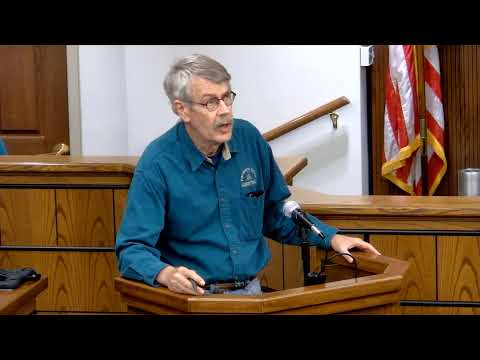
Public comment highlighted resident concerns about process and continuity. Melissa Dessel Road, whose property borders the site, asked that FACT/FIDA meetings be scheduled after normal work hours so neighbors can attend and asked what would happen to tax dollars and land ownership if pending lawsuits overturn parts of the project. Legal counsel said the purchasing entity would own the property unless deed or agreement language states otherwise, and that revisory or first-refusal language could be considered. Richard Rosen urged that any standards the county adopts be applied to all new industrial development countywide rather than only this parcel.
Next steps: staff will research overlay, MOU, covenants and deed-language options and return with legal recommendations. The fiscal court adjourned after the meeting.
Ending: Autumn Goddard and county counsel were asked to return with formal legal opinions and drafted language so the court and FACT board can consider specific, enforceable protections before property closings proceed.