Get Full Government Meeting Transcripts, Videos, & Alerts Forever!
Get email alerts on the Private Duty Nursing topic
No spam. Unsubscribe anytime.
Committee hears agency and family testimony on private duty nursing shortages and paid family-caregiver models
Summary
State agencies and family members told the House Healthcare and Wellness Committee that private duty nursing hours are often unfilled, parents commonly provide unpaid coverage, and other states (Montana, Massachusetts) use paid family-caregiver models (PCCA/CCA) with supervision and wage rules as partial solutions.
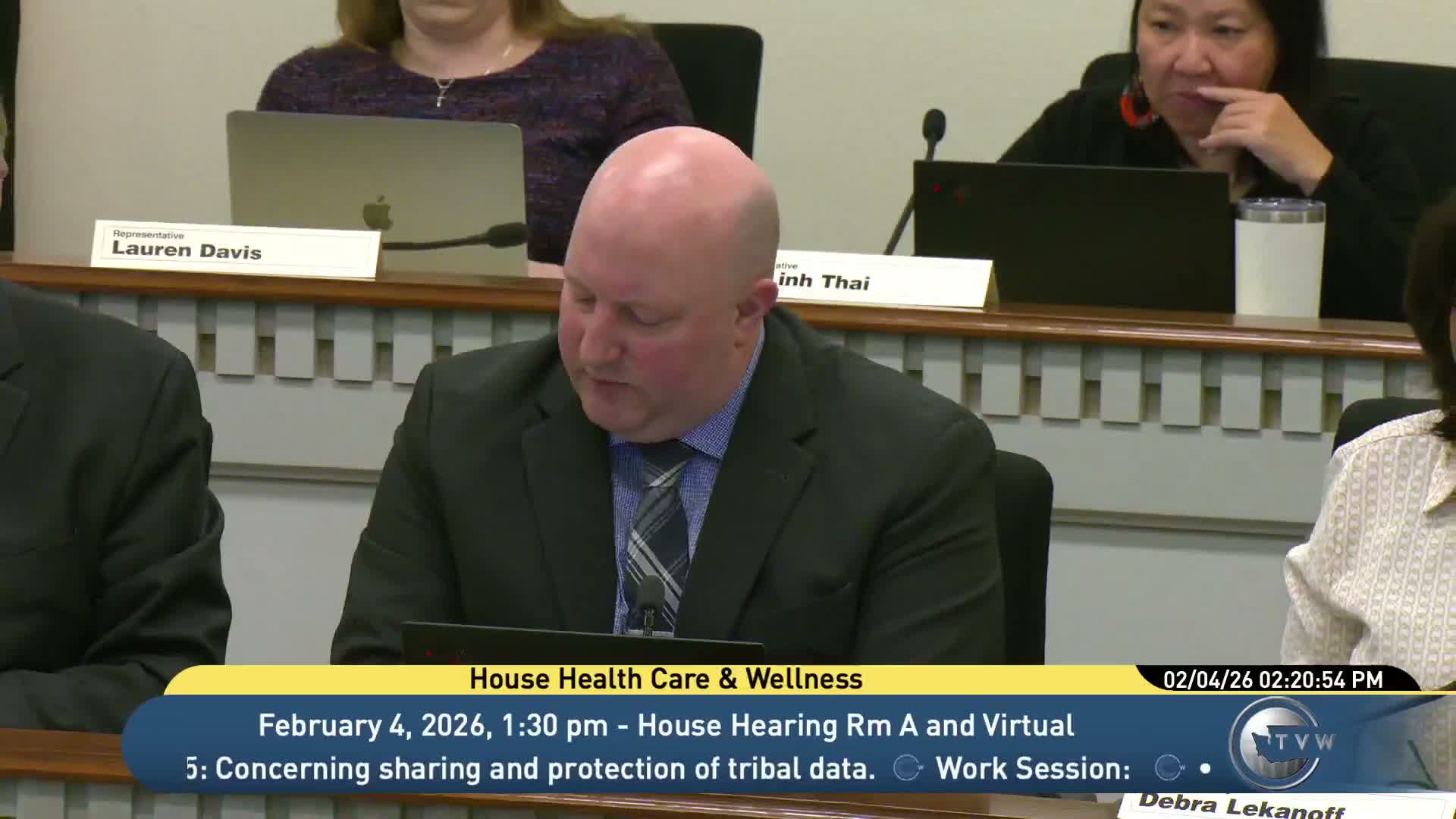
The House Healthcare and Wellness Committee heard a work session on private duty nursing (PDN) under the Medically Intensive Children's Program (MICP), receiving presentations from the Washington State Health Care Authority (HCA) and the Department of Social and Health Services (DSHS), and testimony from providers and family caregivers. Agencies and families described persistent staffing shortages, gaps between authorized and provided hours, and models other states use to compensate trained family members.
Heather Zager of the Washington State Health Care Authority summarized program structure: MICP serves children with complex medical needs through managed care organizations and a fee-for-service route administered by DSHS/DDCS; HCA provides program oversight and MCOs review prior authorizations using a standardized tool to determine medical necessity and hours. Zager said approved PDN hours range from four to 16 per day, and HCA estimated roughly 270 children receive MICP benefits across fee-for-service and MCOs (36 authorized by DDCS and 234 by MCOs). The agency noted an increase in claims paid between 2022 and 2024 and highlighted workforce shortages, especially in rural areas.
Bea Rector of DSHS Home and Community Living clarified program distinctions and payment policy: there are distinct programs and appropriation buckets for children's PDN (MICP and DDCS fee-for-service) and an adult PDN program administered by Home and Community Living. Rector said parents of minor children cannot be paid under the state's personal care services policy, although other family or non-family members may be paid in limited circumstances; the department offered to follow up with committee data quantifying authorization vs. paid hours.
Leslie Hubbard, director of clinical services at MGA Home Care, described agency challenges filling specialized PDN shifts and said parents routinely become the default unpaid fill-in, which can force them to reduce hours or leave employment, increasing family financial strain and risk to the child when fatigue or staffing gaps occur.
Parent Jamie Thompson recounted her family's experience: her son Colby, ventilator- and tracheostomy-dependent, is authorized for 16 hours per day but the family has been unable to use those hours since November 2018. Thompson urged lawmakers to consider a complex care assistant model that would allow trained family members to be compensated, provide agency oversight, and restore respite and economic stability for families.
Speakers from other states described implemented approaches. Denise Brunett from the Montana Department of Public Health and Human Services outlined Montana's Pediatric Complex Care Assistant (PCCA) model (House Bill 449, 2023) to compensate family caregivers for specialized care in frontier/rural settings without supplanting private duty nursing; PCCA services are physician-ordered, limited to members under age 21 for some tasks, and intended to fill gaps rather than replace PDN.
Annie Kausarnowski of Massachusetts MassHealth described that state's Complex Care Assistant model, launched in 2023 using state-plan authority and CMS engagement: eligibility typically requires more than two hours of continuous skilled nursing per day; the state set a rate of $11.25 per 15-minute unit ($45 per hour) and required a 65% wage pass-through so employees receive approximately $29.25 per hour; training, supervision and supervision-visit reimbursement rules were also created. Massachusetts reported growth in prior authorizations, agency participation and positive family feedback about financial support and expanded options.
Committee members pressed agencies for follow-up data on authorizations versus paid hours; DSHS agreed to provide that information to the committee. The work session closed with the committee adjourning for the day.
Next steps: agencies will provide requested follow-up data to the committee; lawmakers may consider whether a paid family-caregiver model (with training and supervision) is appropriate for Washington and how to structure rates, training and oversight.