Get Full Government Meeting Transcripts, Videos, & Alerts Forever!
Get email alerts on the Committee Roundup topic
No spam. Unsubscribe anytime.
Committee advances eight additional measures including records, 911 protections, SNAP checks and CBDC ban
Summary
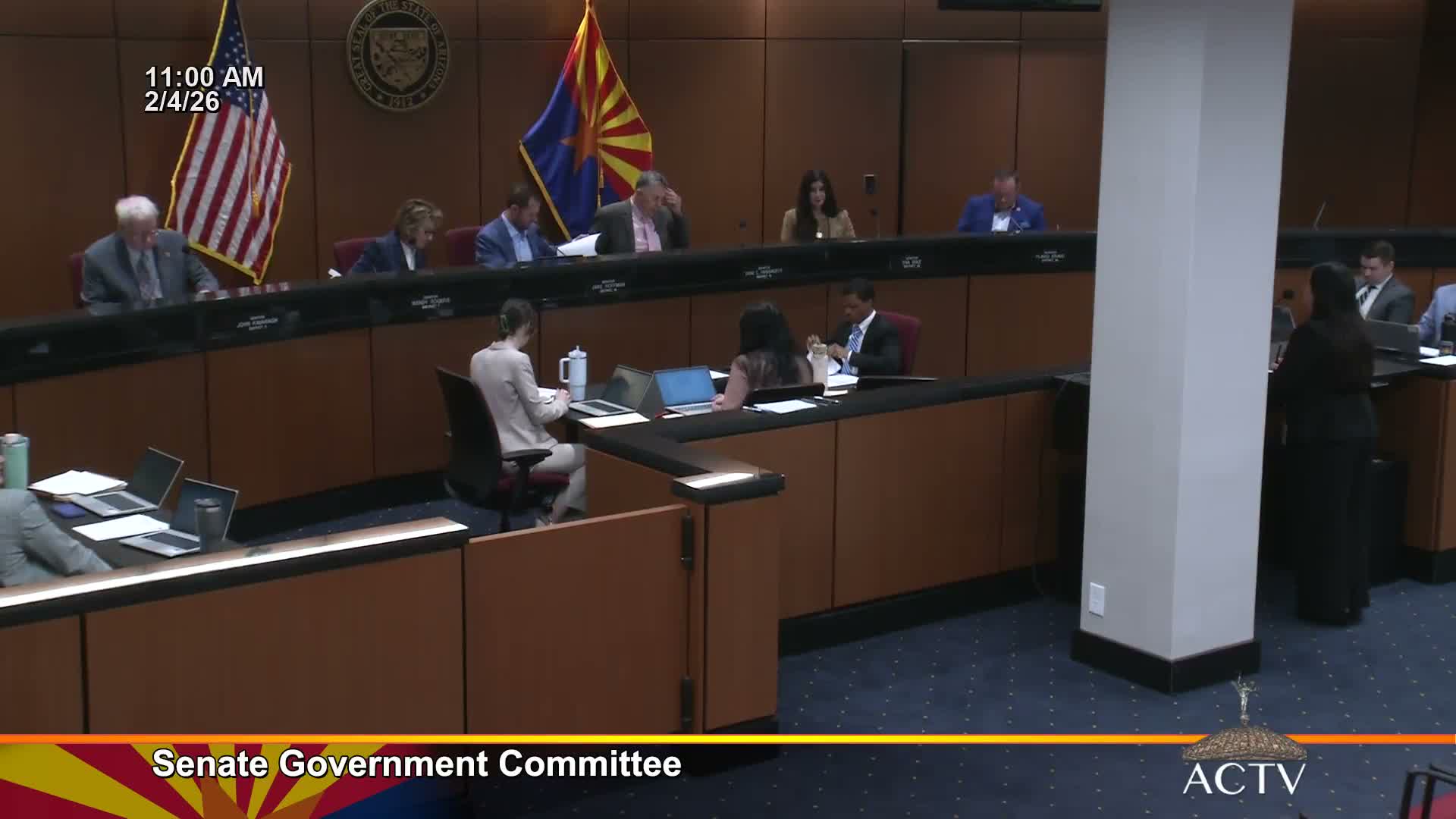
The Senate Government Committee gave due‑pass recommendations to a package of remaining bills and resolutions on Feb. 3, including SB 12‑71 (protecting business calls to 911), SB 14‑37 (electronic public records), SB 10‑02 (SNAP data checks), SB 14‑32 (ban on federally recognized CBDC), and several specialty plates and crypto study measures.
The Senate Government Committee used a condensed calendar to advance multiple bills after shorter presentations and public comment.
Key actions and outcomes:
- SB 12‑71 (Gowen): Prohibits municipalities from fining businesses based on the number/frequency of calls for public‑safety assistance or on property value lost, except for malicious or knowingly false calls. The committee moved the bill with a due‑pass recommendation (vote 6–1). Goldwater Institute testified in support and members discussed clarifying automated false‑alarm language.
- SB 14‑37 (public records): Requires that on request, public records be provided in the least expensive manner and in an electronic format when available; proponents gave examples of large copying fees for electronically‑available records. Committee moved the bill (vote recorded 7–0).
- SB 10‑02 (SNAP integrity): Would require DES to enter data matches (including ADOR lottery/tax data), run monthly/quarterly checks and post aggregated recovery data. Supporters said the bill would lower error rates and shield Arizona from potential federal cost sharing penalties; opponents warned of large implementation costs (previous fiscal notes cited tens of millions in annual costs), increased appeals, and limited effect on organized card theft. Committee moved SB 10‑02 with a due‑pass recommendation (vote 4–3).
- SB 14‑39 (specialty plate for Conservative Grassroots Network/Turning Point): After a heated exchange over whether a state‑issued plate should fund a politically active nonprofit, the committee adopted a strike‑everything amendment and gave the bill a due‑pass recommendation (4–3). Several members explained their votes.
- Several resolutions and study measures, including SCR 10‑33 (encourage ASRS/PSPRS to monitor Bitcoin ETFs) and SB 14‑32 (prohibit federally recognized central bank digital currencies as legal tender), were recommended for due‑pass after brief presentations.
Next steps: These measures were advanced to the full Senate with committee reports. Multiple speakers and members signaled intent to refine language on specific points (e.g., false alarms, fee wording and reporting requirements) before floor votes.