
Committee advances bill to end arrests for unpaid court fees, moves enforcement to civil remedies
Get AI-powered insights, summaries, and transcripts
Sign Up Free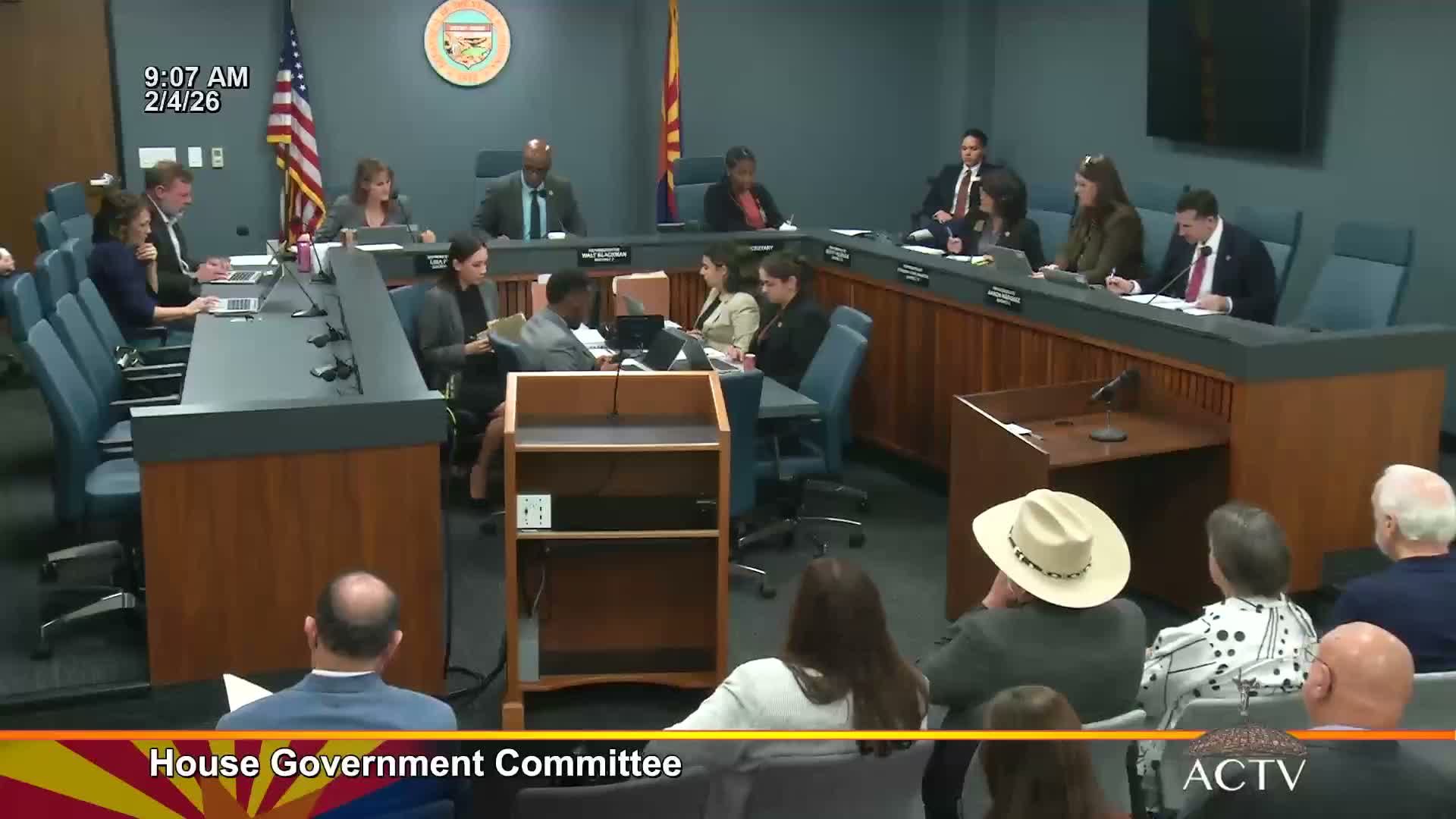
Summary
House Bill 2825, sponsored by Rep. Chris Lopez, would remove arrest warrants and contempt proceedings for nonpayment of court fees and create a civil-collection framework; committee adopted an amendment limiting motions to set aside certain default judgments and returned the bill with a due-pass recommendation.
The House Government Committee advanced House Bill 2825 on Feb. 3, recommending the measure be returned as amended to replace criminal enforcement for unpaid court fees, assessments and related costs with civil enforcement tools.
Representative Chris Lopez, sponsor, said the bill aims to prevent arrests for noncriminal failure to pay court-ordered costs and instead prioritizes less disruptive remedies such as wage garnishment. "This bill ends that practice and instead creates a more sensible approach for recouping costs outside of an arrest," Lopez said.
An amendment offered by the chair (Blackman Amendment dated 02/03/2026 11:40AM) was explained by staff and adopted; it specifies that a defendant cannot move to set aside a second default judgment entered within one year of a prior default judgment. Sean Reeve with Veritas, representing the Justice Action Network, testified in strong support and described the bill as an evidence-based reform to increase public safety while improving collection practices.
The committee recorded its decision as 7 ayes, 0 nays, 0 present and 0 absent, returning HB2825 with a due-pass recommendation. The bill retains financial obligations while changing enforcement mechanisms; supporters said it would keep people working and allow the state to recoup costs faster through civil remedies.
Next steps: HB2825 will move toward floor consideration with the Blackman Amendment incorporated in the committee version.