Get Full Government Meeting Transcripts, Videos, & Alerts Forever!
Get email alerts on the Research Tools topic
No spam. Unsubscribe anytime.
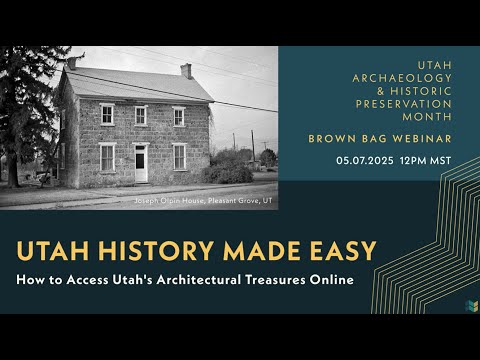
Utah SHPO webinar shows how homeowners can research and preserve historic properties
Summary
Utah State Historic Preservation Office presenters demonstrated free online tools (hub.utah.gov, Marriott Library digitized files, Sanborn maps) and offered practical tips — from title and permit searches to tax credits and grants — for residents researching and preserving historic homes.
Elizabeth Hora, public archaeologist at the Utah State Historic Preservation Office, opened a virtual brown‑bag session on researching local historic properties and handed the presentation to Deb Miller, the SHPO records manager, who demonstrated the agency’s online tools.
“I'm public archaeologist here at the Utah State Historic Preservation Office,” Hora said at the start of the session. Miller then walked attendees through hub.utah.gov, the SHPO‑managed mapping application. Miller showed how survey markers and metadata appear on the map, how links point to digitized files in the Marriott Library collection, and that the application is free and requires no login. “It's free for everybody. No login necessary,” Miller said during the demo.
Why this matters: the tools give homeowners, local preservation commissioners and volunteers a way to locate prior surveys, photographs, and nomination files that can inform restoration, grant applications or nomination to the National Register of Historic Places.
Miller demonstrated finding an address on hub.utah.gov, opening a property record that listed survey dates and a link to a Marriott Library digital file with photographs and notes. She advised consulting county recorder offices in person for chain‑of‑title and permit records when online resources are incomplete. “Go in person, make an appointment…you will get information about previous owners and the chain of title,” she said.
Alina Franco, SHPO’s certified local governments coordinator, showed how to use digitized Sanborn fire‑insurance maps to identify building footprints, materials (color coded), and map indexes for page navigation. Franco used the Presbyterian Church in American Fork as an example, explaining the index on the first page is the best place to start when the collection includes multiple plates.
The panel pointed participants to other resources for property‑level historical research: county assessor and recorder databases, historic aerials (historicaerials.com), city directories, census records and local newspaper archives. For cemeteries, panelists said SHPO maintains an interactive cemetery map and that Amy Berry oversees the cemetery program and can advise on available records.
Panelists also described practical next steps and community options: joining local preservation groups such as Preservation Utah, applying for Certified Local Government (CLG) grants, or volunteering through the Utah Cultural Site Stewardship Program (UCSF) to help maintain sites.
The session closed with a question‑and‑answer period in which the panel reiterated contact information and encouraged attendees to follow up with the SHPO staff listed in the chat for case‑specific help.
The presenters said they will post contact information and resource links in the chat for follow‑up and invited attendees to reach out for help with particular research problems.